
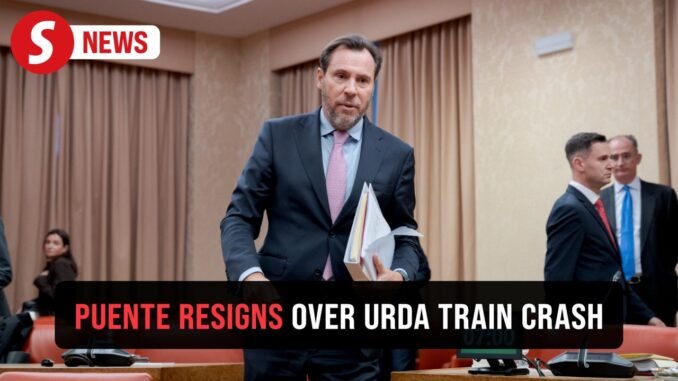

A high-ranking government official has taken responsibility for two devastating train disasters that rocked Spain within a single year — a move that has sparked conversations about accountability in leadership.
—
Spain’s Minister of Transport, Oscar Puente, has stepped down from his position following two major train crashes that occurred in less than 12 months, with the most recent tragedy claiming 69 lives and leaving over 200 people injured.
Puente made his resignation announcement while addressing lawmakers on Tuesday, November 3 — just six days after the deadly October 28 crash that occurred near Urda, a town located south of Madrid.
What Happened?
The October 28 train collision near Urda became one of Spain’s deadliest rail disasters in recent memory. With 69 confirmed deaths and more than 200 injured, the disaster sent shockwaves across the European nation and immediately put the spotlight on the country’s transport infrastructure and those responsible for managing it.
This tragic incident came on the heels of another serious train crash that had already occurred earlier within the same year — making it two major disasters under Puente’s watch as transport minister.
A Minister Takes Responsibility
Facing intense public pressure and scrutiny from lawmakers, Puente chose to do what many politicians rarely do — he owned it. Standing before parliament, he announced his decision to resign, effectively taking the fall for the failures that occurred under his ministry.
—
What Nigerians Are Saying
Back home in Nigeria, this story has sparked important conversations online and in offices across Lagos, Abuja, Port Harcourt and beyond. Many Nigerians are comparing Spain’s situation to our own transportation challenges here at home.
“Imagine if our own ministers resigned every time there was a disaster,” one Twitter user reportedly commented, echoing what many Nigerians are thinking.
Nigeria has had its own share of devastating transport tragedies — from the 2022 Abuja-Kaduna train attack to countless road accidents on our highways. Yet, accountability at the ministerial level remains a rare sight.
The Bigger Conversation: Accountability in Leadership
Oscar Puente’s resignation raises a critical question that is relevant not just in Spain but across Africa and Nigeria specifically:
Should public officials be held personally responsible when disasters occur under their watch?
In many developed democracies, ministerial resignations over public failures are not uncommon. It is seen as the honourable thing to do — a demonstration that leadership comes with consequences, not just privileges.
In Nigeria, however, we often see the opposite. Officials ride out controversies, scandals, and even tragedies with little more than a press statement and a promise to “set up a committee.”
Key Takeaways
– 69 people died* and *200+ were injured in the October 28 crash near Urda, Spain
– Transport Minister Oscar Puente resigned just six days after the disaster
– This was the second major train crash in Spain within a year
– His resignation has reignited global conversations about ministerial accountability
—
As Nigerians continue to demand better infrastructure and accountability from public servants, Spain’s example — however tragic the circumstances — offers a glimpse of what responsible governance can look like.
The question remains: when will we begin to see that same culture of accountability take root here at home?
What do you think? Should Nigerian ministers be held to the same standard? Drop your thoughts in the comments below.
For more information, check buzzUp9ja
Be the first to comment