

Summary: As Iran targets Western military bases across the Gulf, Nigerians brace for higher fuel prices with tensions threatening global oil supplies through the Strait of Hormuz.
The simmering tensions in the Middle East have exploded into direct confrontation, with an Iranian missile striking dangerously close to Al Minhad Air Base—a major military installation housing troops from the United States, United Kingdom, and Australia. The attack, which marks a significant escalation in Gulf hostilities, has sent shockwaves through international markets and raised serious concerns for Nigeria’s already fragile fuel economy.
What Happened at Al Minhad Air Base?
According to reports, the Iranian projectile slammed into a road just outside the heavily fortified Al Minhad facility, sparking a small fire and causing minor damage near accommodation quarters and a medical centre. Thankfully, no casualties were recorded, but the loud explosions that rocked the area have left military analysts worried about what could come next.
Australian Prime Minister Anthony Albanese didn’t mince words when addressing the incident: “The Iranian regime is engaging in random attacks right across the region. We know that is the case,” he stated, though he admitted it remains unclear whether the base was deliberately targeted or simply caught in the crossfire.
Australia’s Defence Department has since announced they’re revising their security protocols as the situation continues to deteriorate across the Middle East.
A Region Under Fire
This wasn’t an isolated incident. The attack on Al Minhad comes as part of a broader Iranian offensive hitting multiple targets across the Gulf. Saudi Arabia successfully intercepted a ballistic missile aimed at Prince Sultan Air Base—another facility hosting American forces—while also shooting down a drone heading toward Riyadh’s diplomatic quarter where numerous embassies, including the US mission, are located.
Kuwait, Bahrain, Qatar, and the United Arab Emirates have all reported strikes or attempted attacks on their territories. Even Dubai, the region’s glittering commercial hub, experienced missile alerts that triggered interceptor systems, with residents hearing explosions overhead.
The Strait of Hormuz: Nigeria’s Fuel Crisis Waiting to Happen
For Nigerians already grappling with high petrol prices and fuel scarcity, the most troubling aspect of this escalation involves the Strait of Hormuz—the narrow waterway through which roughly 20% of the world’s oil passes daily. Iran has effectively signalled it’s restricting access through this vital channel for the United States and its allies.
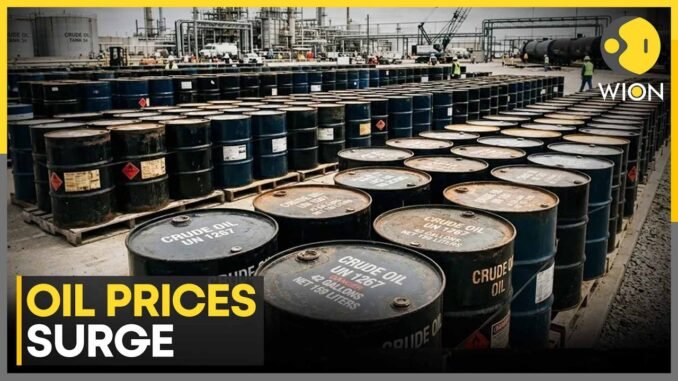
This chokepoint is critical for global energy supplies, and any prolonged disruption could send oil prices skyrocketing even higher. Major energy companies have already begun scaling back operations in the region, and oil prices have surged in response to the mounting tensions.
For a country like Nigeria that still imports refined petroleum products despite being an oil producer, this spells potential trouble. Higher global oil prices typically translate to increased fuel costs at Nigerian filling stations, pushing up transportation costs and the prices of everything from food to building materials.
What This Means for Global Markets and Nigeria
The widening conflict has already triggered alarm bells in international financial circles. Economists warn of broader economic consequences including:
– Higher consumer costs worldwide as transportation and manufacturing expenses increase
– Disruptions to global supply chains affecting everything from electronics to food imports
– Potential inflation spikes in import-dependent economies like Nigeria’s
– Currency pressure as countries compete for limited oil supplies
For Nigerian businesses that rely on imported raw materials and equipment, the timing couldn’t be worse. With the naira already under pressure and manufacturing costs rising, any further spike in global oil prices could deliver another blow to the economy.
The Bigger Picture
The current escalation reflects deepening hostilities involving Iran, the United States, and Israel, with Tehran increasingly willing to strike military installations and energy infrastructure across neighbouring states. The attacks represent Iran’s most aggressive posture in recent memory, raising fears that the region could be sliding toward a broader confrontation.
As this situation unfolds, Nigerians would be wise to prepare for potential economic ripple effects. Whether at the petrol station, the market, or in everyday business operations, the distant sound of explosions in the Gulf may soon echo in wallets across Lagos, Abuja, Kano, and Port Harcourt.
The federal government and NNPCL have yet to issue statements on how they plan to cushion Nigerians from potential fuel price increases should the situation deteriorate further. For now, all eyes remain on the Gulf—and on what happens next in this dangerous game of military brinkmanship.
For more information, check buzzUp9ja
Be the first to comment