

Summary: US intelligence officials have confirmed that Iran is not rebuilding its nuclear capabilities destroyed in the 2025 joint US-Israel military operation, contradicting President Trump’s recent claims.
In a significant disclosure that contradicts statements made by US President Donald Trump, American intelligence agencies have confirmed that Iran has made no attempts to rebuild its nuclear enrichment facilities following their destruction in a joint military strike earlier this year.
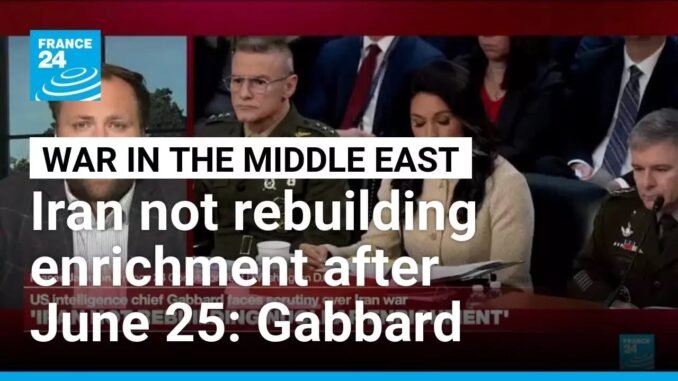
The assessment was revealed by Director of National Intelligence Tulsi Gabbard in written testimony to the Senate Intelligence Committee as part of the annual threat report submitted to the US Congress.
What the Intelligence Report Says
According to the document, the February 2025 military operation—codenamed “Operation Midnight Hammer”—successfully destroyed Iran’s nuclear enrichment infrastructure, and Tehran has shown no signs of attempting to restore these capabilities.
“As a result of Operation Midnight Hammer, Iran’s nuclear enrichment programme was obliterated. There has been no effort since then to rebuild that capability,” Gabbard stated in her written testimony.
The intelligence chief, however, did not repeat this finding during her oral presentation before senators. When pressed by lawmakers about the omission, she cited time constraints as the reason for not presenting the full report, though she did not dispute its conclusions.
The Context: A Controversial Military Strike
The joint US-Israel military operation on February 28, 2025, targeted Iran’s nuclear facilities in what President Trump described as a response to an “imminent threat.” The American leader has repeatedly claimed that Iran was on the verge of developing nuclear weapons, justifying the pre-emptive strike.
However, this position has faced skepticism from security analysts and experts who argue that the threat assessment may have been overstated, particularly given that diplomatic negotiations were ongoing at the time of the strike.
The controversy deepened when a senior aide to Director Gabbard resigned in protest, alleging that there was no imminent threat and claiming the president had been misled by skewed intelligence interpretations and external pressures.
Iran’s Current State: Weakened But Not Collapsed
While confirming the destruction of Iran’s nuclear capabilities, Gabbard’s testimony painted a picture of a nation significantly weakened but not entirely incapacitated.
The intelligence assessment noted that Iran has suffered substantial losses over recent weeks, including:
– Key leadership figures eliminated
– Military infrastructure damaged
– Operational capacity reduced
Despite these setbacks, US intelligence officials believe the Iranian government remains functional and operational. More importantly, they assess that while the country’s systems have been weakened, the core governmental structure remains intact.
What This Means for Regional Security
The intelligence community has warned that Iran, despite its current weakened state, retains the potential for long-term recovery. Analysts believe Tehran could eventually attempt to rebuild its military capabilities, including:
– Ballistic missile programmes
– Drone manufacturing facilities
– Conventional military infrastructure
This assessment suggests that while the immediate nuclear threat may have been neutralized, the broader security concerns surrounding Iran’s military ambitions remain relevant for the long term.
The Bigger Picture
For Nigeria and other nations watching these developments from afar, the situation highlights the complex nature of international security in the 21st century. The discrepancy between political rhetoric and intelligence assessments raises important questions about decision-making processes that lead to military action.
The situation also underscores the importance of diplomatic channels and international cooperation in addressing nuclear proliferation concerns—lessons that resonate globally as nations navigate an increasingly complex geopolitical landscape.
As the dust settles on Operation Midnight Hammer, the world watches to see whether Iran will indeed attempt to rebuild its capabilities or whether diplomatic engagement might offer a more sustainable path forward for all parties involved.
This developing story continues to unfold as US lawmakers seek further clarification on the intelligence assessments and the decision-making process that led to the February military strike.
For more information, check buzzUp9ja
Be the first to comment