

Summary: US Secretary of State Marco Rubio has dismissed reports claiming America is pushing for Cuba’s President Miguel Díaz-Canel’s removal, calling the story fake and questioning media sources.
The United States government has strongly denied allegations that it is actively working to remove Cuba’s President, Miguel Díaz-Canel, from power.
Marco Rubio, the US Secretary of State, took to social media platform X late at night to slam a report published by The New York Times, calling it “fake” and accusing the newspaper of depending on “charlatans and liars claiming to be in the know” for their information.
What Did The New York Times Report?
The controversial New York Times article had claimed that officials in the Donald Trump administration were pressuring Cuba to remove Díaz-Canel from his position. However, the report clarified that Washington stopped short of demanding a complete overthrow of Cuba’s long-standing communist government.
Interestingly, Rubio’s response did not make it clear whether he was denying the entire story or just specific portions of it. His post on X read: “The reason so many in US media keep putting out fake stories like this one is because they continue to rely on charlatans & liars claiming to be in the know as their sources.”
The Bigger Picture: US-Cuba Relations Under Strain
According to the original report, American officials view President Díaz-Canel as a hardliner who is unlikely to carry out the kind of meaningful reforms Washington would like to see in Cuba. However, the US had not issued any official ultimatum demanding his removal.
Rubio, who is Cuban-American and served as a senator from Miami before becoming Secretary of State, has been a vocal critic of Cuba’s communist system – the same system established after the famous Cuban Revolution led by Fidel Castro decades ago.
The Secretary of State has previously stated that Cuba needs to take more “dramatic” steps beyond the recent measures that now allow overseas Cubans to invest and own businesses on the Caribbean island. This comes as Cuba faces a severe economic crisis and widespread power outages that have left many citizens struggling.
Trump Administration’s Tough Stance on Cuba
The Trump administration has significantly increased pressure on Cuba through various means, including restricting the island nation’s oil supplies. These restrictions have made Cuba’s already dire energy shortages and economic hardships even worse.
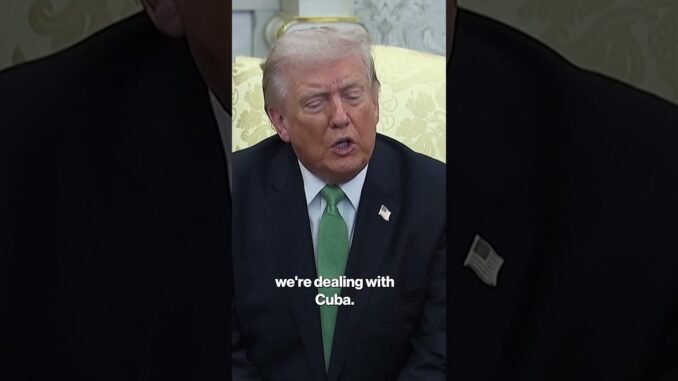
President Trump himself has hinted at the possibility of striking a “deal” with Cuba, though at other times, he has boasted about America’s power to take control of the island, which he described as weak.
Similar to Venezuela and Iran Strategy?
Political analysts observing the situation believe that Washington’s approach to Cuba mirrors its tactics in other countries like Venezuela and Iran. Rather than pushing for complete regime change, the strategy appears focused more on forcing these nations to comply with American demands and policies.
This calculated approach shows a pattern in US foreign policy under the Trump administration – applying maximum pressure while leaving room for negotiation, rather than openly calling for government overthrow.
What This Means
As tensions continue between the US and Cuba, the war of words between American officials and media outlets adds another layer to an already complex relationship. With Cuba facing economic difficulties and the US maintaining its tough stance, the coming months will be crucial in determining the future direction of US-Cuba relations.
For now, Secretary Rubio’s firm denial leaves more questions than answers about what exactly Washington’s policy toward Cuba truly entails.
For more information, check buzzUp9ja
Be the first to comment