
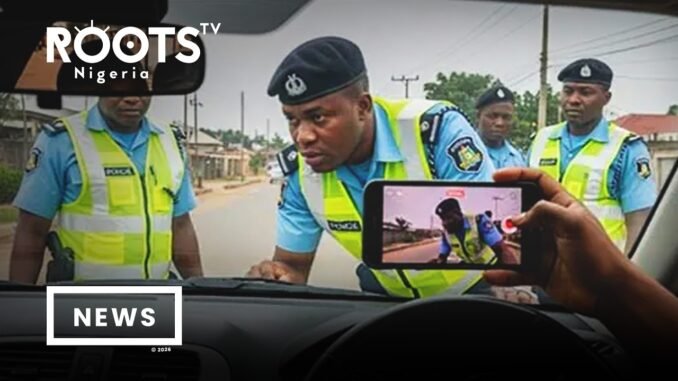

In a landmark ruling that has sent waves across the country, a Federal High Court in Warri, Delta State, has affirmed the constitutional right of Nigerians to record police officers during stop-and-search operations in public spaces. This groundbreaking judgment, delivered on Tuesday, March 17, by Justice Hyeladzira Nganjiwa, represents a significant victory for citizens’ rights and police accountability.
The Case That Changed Everything
The historic ruling followed a fundamental rights enforcement suit filed by Maxwell Nosakhare Uwaifo, a Lagos-based lawyer who experienced firsthand the intimidation many Nigerians face at police checkpoints. His ordeal on May 10, 2025, along the Sapele roundabout while traveling from Benin to Warri became the catalyst for this important legal battle.
According to Uwaifo’s testimony in court, he was flagged down by police officers who began questioning him aggressively. When he attempted to record the encounter with his phone—a natural response many of us would consider—the officers threatened him with arrest and ordered him to stop recording immediately.
The Frightening Reality of Anonymous Law Enforcement
What made Uwaifo’s experience particularly disturbing was the officers’ lack of proper identification. They wore no name tags, refused to introduce themselves, and operated from an unmarked Toyota Sienna—painted black with no police inscription, plate number, or any identifying marks whatsoever.
“The entire interaction was intimidating, and the men created a hostile atmosphere,” Uwaifo told the court. “I could not confidently ask questions or even continue to record for fear that I would be manhandled or unlawfully detained.”
His testimony resonated with countless Nigerians who have found themselves in similar situations, forced to comply out of fear of assault, unlawful detention, or having their phones forcefully seized.
What the Court Decided
Justice Nganjiwa’s comprehensive ruling addressed several critical issues that have long plagued police-citizen interactions in Nigeria:
1. Right to Record: The court declared that under Section 39 of the 1999 Constitution, Nigerians are entitled to freely express themselves, including recording the conduct of law enforcement agents performing public duties in public spaces.
2. Visible Identification: Police officers must wear visible name tags and display force numbers or proper identification during public operations. Conducting stop-and-search operations without these identifiers is unconstitutional and illegal.
3. Protection from Harassment: It is unlawful for police to harass, intimidate, arrest, or seize devices from citizens simply for recording their activities in public spaces.
4. Financial Compensation: The court awarded N5 million in damages for violation of fundamental rights and N2 million for litigation costs—a total of N7 million.
Why This Ruling Matters to Every Nigerian
This judgment is not just about one lawyer’s experience; it speaks to a broader pattern of police conduct that has affected millions of Nigerians. How many times have we heard stories of:
– Citizens being slapped or assaulted for “talking back” at checkpoints?
– Phones being seized or smashed for attempting to record police officers?
– Unmarked vehicles used for questionable stop-and-search operations?
– Officers without name tags acting with impunity because they cannot be identified?
The court’s decision addresses all these concerns head-on, providing legal backing for citizens to hold law enforcement accountable.
The Broader Implications
The ruling named the Inspector-General of Police, Nigeria Police Force, Police Service Commission, and the Attorney-General of the Federation as defendants. While the police were not represented in court, the AGF’s representation (through Babatunde Ajajogun and D.O. Tarfa) meant the federal government was present for this consequential decision.
Justice Nganjiwa went further, issuing orders that could fundamentally reshape police operations:
– A perpetual injunction restraining police from conducting stop-and-search operations without proper identification
– Directives for the IGP to issue clear guidelines affirming the public’s right to record police activities
– Mandatory disciplinary action against officers who violate these rights
– Requirements for the Police Service Commission to enforce uniform compliance and punish defaulters
What This Means for You
If you find yourself at a police checkpoint or during any interaction with law enforcement in public:
1. You have the legal right to record the interaction with your phone or camera
2. Police officers must wear visible identification including name tags and force numbers
3. They cannot legally seize your device for recording them
4. Threats and intimidation for exercising this right are now explicitly unlawful
5. You can seek legal redress if your rights are violated
The Road Ahead
While this ruling is a massive step forward for police accountability and citizens’ rights in Nigeria, implementation remains crucial. Will police leadership issue the necessary directives? Will officers on the ground comply? Will citizens feel empowered to exercise these newly affirmed rights?
The N80 million Uwaifo originally sought in damages (reduced to N7 million by the court) might seem substantial, but the true value of this judgment lies in its potential to transform how police interact with everyday Nigerians.
For too long, the power imbalance at checkpoints and during stop-and-search operations has left citizens vulnerable to abuse. This ruling represents a legal shield—a constitutional affirmation that Nigerians have rights that must be respected, even (and especially) when dealing with those charged with enforcing the law.
As we move forward, this landmark case sets a precedent that could encourage more Nigerians to stand up for their rights and hold law enforcement accountable. After all, in a democracy, those who serve the public must do so transparently, professionally, and with respect for the fundamental rights of every citizen.
What do you think about this ruling? Have you experienced similar situations at police checkpoints? Share your thoughts and experiences in the comments below.
For more information, check buzzUp9ja
Be the first to comment