
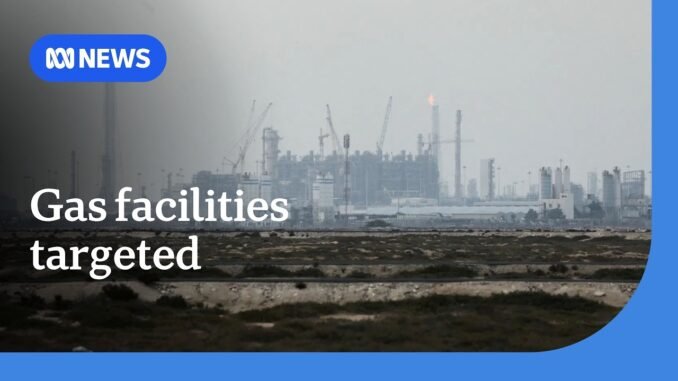

Summary: Israel strikes Iran’s South Pars—the world’s largest gas field. Oil prices surge 5% as tensions escalate. What this means for Nigeria’s fuel costs and economy.
The Middle East crisis has taken a dramatic turn as Israeli airstrikes hit Iran’s South Pars gas field—the world’s largest natural gas reserve. The attack has sent shockwaves through global energy markets and raised serious concerns about fuel prices that could directly impact Nigerians already grappling with petrol costs.
What Happened?
Iranian state media confirmed that explosions rocked the South Pars facility following what Tehran described as an Israeli military strike. This gas field is no small matter—it produces roughly three-quarters of Iran’s entire gas supply and is shared with Qatar, making it a cornerstone of global energy infrastructure.
Qatar was quick to condemn the attack. Foreign Ministry spokesman Majed Al Ansari called it “dangerous and irresponsible,” noting that the South Pars field connects directly to Qatar’s North Field, which supplies liquefied natural gas (LNG) to countries worldwide, including Nigeria’s regional neighbours.
Iran’s Strong Warning
Iran didn’t waste time issuing a fierce response. The country’s military warned that any attacks on its energy infrastructure would trigger immediate retaliation—not just against Israel, but potentially against energy facilities in countries perceived as supporting the strikes.
“If the fuel, energy, gas, and economic infrastructures of our country are attacked by the American-Zionist enemy… we will severely strike the origin of that aggression,” the Iranian military stated in an official warning.
Iran went further, issuing evacuation notices for major oil and gas installations across the Gulf region, including facilities in Saudi Arabia, the United Arab Emirates, and Qatar. The warning indicated these sites could become targets “in the coming hours.”
Nuclear Concerns Add to the Tension
Adding another layer of danger, reports emerged that a projectile struck Iran’s Bushehr Nuclear Power Plant—the country’s only operational nuclear facility. While the International Atomic Energy Agency (IAEA) confirmed the incident, it stated there was no damage to the plant or injuries to staff.
Still, IAEA Director General Rafael Grossi called for immediate restraint, warning of “any risk of a nuclear accident”—a prospect that would have catastrophic consequences far beyond the Middle East.
What This Means for Global Oil Markets
The immediate market reaction was swift and predictable. Global oil prices jumped by approximately 5%, reaching $108 per barrel as traders worried about potential disruptions to supplies through the Strait of Hormuz—a narrow waterway that handles about one-fifth of the world’s oil exports.
For context, any sustained disruption in this region could push prices even higher, potentially affecting the cost of petrol at Nigerian filling stations. We’ve already seen how international oil prices directly impact fuel costs locally, often triggering increases that squeeze household budgets across the country.
The Nigerian Connection
While Nigeria is Africa’s largest oil producer, we remain heavily dependent on imported refined petroleum products. When global oil prices spike due to Middle Eastern conflicts, the effects ripple through our economy—from transport costs to food prices.
The South Pars attack is particularly concerning because it targets production infrastructure rather than just military sites. If the conflict escalates to widespread attacks on Gulf energy facilities, as Iran has threatened, we could see sustained fuel price increases that would put additional pressure on President Tinubu’s administration as it navigates ongoing subsidy reforms.
Regional Implications
Israel also reportedly struck fuel infrastructure in southern Lebanon linked to Hezbollah, Iran’s ally, indicating this conflict is expanding beyond just Iran and Israel. Meanwhile, reports suggest that former US President Donald Trump authorized strikes on Iranian missile infrastructure—a move that further complicates an already volatile situation.
Gulf states now find themselves in a precarious position. Many have been working to normalize relations with Israel while maintaining economic ties with Iran. The threat to their own energy facilities puts them squarely in the crossfire of a conflict they’ve tried to avoid.
What Happens Next?
Security analysts warn that we may be entering a new phase where energy infrastructure becomes a primary target in Middle Eastern conflicts. This represents a significant escalation from previous patterns and poses enormous risks to global economic stability.
For Nigerians, the situation demands attention. Our economy, already fragile from currency challenges and inflation, cannot afford another external shock in the form of sustained high oil prices.
As tensions continue to mount in the Gulf, with evacuation warnings issued and retaliatory strikes promised, the coming days will be critical in determining whether this conflict remains contained or expands into a broader regional war with global economic consequences.
Check buzzUp9ja for more updates
Be the first to comment