

—
The Northeast is bleeding again.
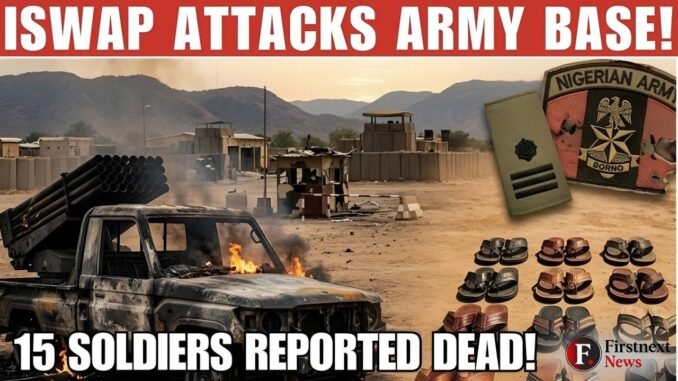
Eight brave Nigerian soldiers have paid the ultimate price after an Army patrol vehicle ran over a landmine planted by ISWAP — the Islamic State West Africa Province — in Borno State, close to the border with Cameroon.
The tragic incident adds yet another painful chapter to Nigeria’s long and brutal battle against insurgency in the Lake Chad Basin region, where communities have endured over a decade of terror, displacement, and unimaginable loss.
What Happened?
According to reports, a Nigerian Army patrol van was on routine operations in the border areas of Borno State when it struck an improvised explosive device (IED) — a landmine deliberately planted by ISWAP fighters along a known military route.
The explosion was devastating. Eight soldiers — fathers, sons, brothers, and heroes — lost their lives on the spot.
ISWAP’s Deadly Landmine Tactics
This is far from the first time ISWAP has deployed landmines and IEDs to target Nigerian security forces. The group, which split from Boko Haram in 2016 and has since grown into one of the most dangerous terrorist organisations on the African continent, has increasingly relied on buried explosives as a weapon of choice.
Unlike conventional warfare, landmines are cowardly tools of terror — silent, invisible, and indiscriminate. They are designed to frustrate military movements, demoralise troops, and claim lives long after fighters have retreated into the shadows of the Sambisa Forest or the fringes of Lake Chad.
The Human Cost of the Northeast Insurgency
For many Nigerians — especially those in Borno, Yobe, and Adamawa States — this kind of news is not new. It is a reality they have lived with since 2009 when Boko Haram first declared war on the Nigerian state.
Thousands of soldiers have made the supreme sacrifice. Millions of civilians have been displaced. Entire communities have been wiped off the map. And yet, the resilience of the Nigerian people — particularly the people of the Northeast — remains unbroken.
Every soldier killed in action leaves behind a family shattered by grief. The Nigerian Army and the Federal Government owe it to these families, and to all Nigerians, to ensure that their sacrifices are never in vain.
The Broader Security Picture
The Borno-Cameroon border area remains one of the most volatile flashpoints in the entire insurgency. ISWAP operates fluidly across national boundaries, taking advantage of porous borders, dense terrain, and limited surveillance infrastructure.
Nigeria’s military, operating under the Multinational Joint Task Force (MNJTF) alongside troops from Niger, Chad, Cameroon, and Benin Republic, continues to mount operations against the group. However, as this latest tragedy shows, the enemy remains dangerous, adaptive, and deeply embedded in the region.
A Call for Reflection and Action
As Nigerians, we must never allow ourselves to become numb to the loss of our soldiers. Behind every statistic is a human being — someone who wore the green-white-green with pride and walked into danger so that the rest of us could sleep at night.
We honour the eight soldiers who died in Borno State. We stand with their families. And we call on the Federal Government, the Nigerian Army, and all relevant security agencies to intensify efforts to rid our beloved Northeast of this scourge once and for all.
Enough blood has been shed. It is time for decisive action.
—
Stay with buzzUp9ja for updates as this story develops.
Be the first to comment