
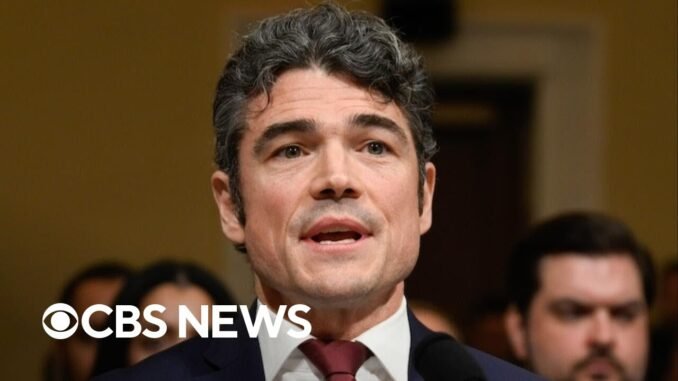

Summary: Joseph Kent, head of the US National Counterterrorism Center, has resigned over the Iran war, stating Tehran posed no imminent threat and accusing Israel’s lobby of pressuring America into conflict.
In a dramatic development that has sent shockwaves through Washington, the head of America’s National Counterterrorism Center has resigned from his position, citing deep concerns about the ongoing war with Iran. Joseph Kent’s resignation marks him as the first and most senior official in President Donald Trump’s administration to step down over the controversial conflict.
Breaking His Silence
In a strongly-worded resignation letter addressed to President Trump and shared on X (formerly Twitter), Kent made his position crystal clear: “I cannot in good conscience support the ongoing war in Iran. Iran posed no imminent threat to our nation, and it is clear that we started this war due to pressure from Israel and its powerful lobby.”
This bombshell statement raises serious questions about the justification for American military action. For many Nigerians watching global events unfold, Kent’s words echo familiar concerns about powerful nations going to war without proper justification – a scenario that often leads to devastating consequences for ordinary citizens and regional stability.
The Legal Question of “Imminent Threat”
Kent’s emphasis on the absence of an “imminent threat” is particularly significant. According to international law experts and US constitutional scholars, American presidents require evidence of an imminent threat to justify launching military action without explicit congressional approval. Kent’s statement suggests this threshold was not met.
This legal dimension matters not just for Americans, but for the entire international community. When superpowers engage in military conflicts without clear justification, it sets dangerous precedents that can affect global peace and security.
Influence and Lobbying Concerns
Perhaps the most controversial aspect of Kent’s resignation letter is his direct reference to “pressure from Israel and its powerful lobby.” This statement touches on the long-debated influence of foreign policy lobbying in Washington – a reality that shapes American military engagements in the Middle East and beyond.
For Nigerian observers familiar with our own complex relationships with international powers, Kent’s candour about external pressure influencing major military decisions offers a rare glimpse into how global power dynamics actually work behind closed doors.
A Close Ally of Tulsi Gabbard
Kent’s resignation takes on additional significance given his close relationship with Director of National Intelligence Tulsi Gabbard. Notably, Gabbard – known for her anti-interventionist stance during her time as a congresswoman – has maintained an unusually low profile since the Iran conflict began.
According to reports, Gabbard has issued no public statements about the war and has only appeared publicly during the dignified transfer ceremony for American soldiers killed in the early stages of the conflict. Her silence, combined with Kent’s resignation, raises questions about potential disagreements within Trump’s national security team.
The Office of the Director of National Intelligence has not yet responded to requests for comment on Kent’s departure.
What This Means for the Conflict
Kent’s resignation as a top counterterrorism official – someone who would typically be deeply involved in assessing threats to American national security – carries substantial weight. His insider assessment that Iran posed “no imminent threat” contradicts the administration’s public justification for military action.
As the conflict continues, this high-profile resignation may embolden other critics of the war and increase pressure on the Trump administration to justify its military engagement with Iran.
A Global Perspective
For Nigerians and other observers across Africa, this development serves as a reminder of how internal dissent within powerful nations can sometimes offer the clearest window into the truth about controversial conflicts. Kent’s principled stand – risking his career to speak what he believes is the truth – demonstrates that even within government institutions, individual conscience can prevail.
As this story continues to develop, the world will be watching to see whether Kent’s resignation sparks further departures or policy changes regarding America’s engagement in yet another Middle Eastern conflict.
Visit buzzUp9ja for more updates
Be the first to comment