

A sobering reminder of the price some women pay for artistic expression in certain parts of the world
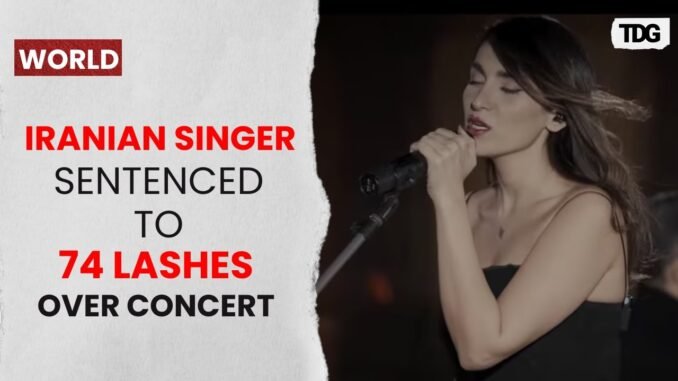
An appeals court in Iran has upheld a brutal sentence of 74 lashes against popular Iranian singer, Parastoo Ahmadi, after she performed publicly without the mandatory hijab — the compulsory Islamic headscarf that women in Iran are legally required to wear.
What Happened?
Parastoo Ahmadi, a well-known figure in Iran’s music scene, performed on stage without covering her hair — an act that, while seemingly ordinary to many people around the world, is considered a criminal offence under Iran’s strict Islamic laws.
After being tried and initially sentenced, Ahmadi challenged the ruling. However, an Iranian appeals court stood firm, confirming the original sentence of 74 lashes — a punishment that has shocked and outraged many people globally, including human rights advocates and lovers of freedom of expression everywhere.
Why This Matters to Nigerians
Here in Nigeria, we understand the powerful role music plays in culture, resistance, and identity. From Fela Kuti — who used his music to boldly challenge oppressive systems and paid dearly for it — to countless contemporary Nigerian artists who use their platforms to speak truth to power, we know what it means when governments attempt to silence artistic voices.
The story of Parastoo Ahmadi is not just an Iranian story. It is a universal story about freedom — the freedom to create, to express, and to simply be yourself without fear of physical punishment.
The Hijab Controversy in Iran
Since the 1979 Islamic Revolution, Iranian law has made the hijab compulsory for all women in public spaces. In recent years however, a growing wave of Iranian women have been boldly pushing back against this law, sparked massively by the #MahsaAmini protests in 2022, after 22-year-old Mahsa Amini died in the custody of Iran’s morality police for allegedly wearing her hijab “improperly.”
That movement sent shockwaves across the world, with millions of women — and men — standing in solidarity with Iranian women’s right to choose.
Ahmadi’s performance appears to be part of this broader wave of resistance, and her sentence is widely seen as the Iranian government doubling down on enforcement.
Global Reactions
Human rights organisations around the world have condemned the sentence, describing it as cruel, inhumane, and a gross violation of basic human rights. Many are calling on the international community to mount pressure on the Iranian government to reverse the decision and repeal laws that criminalise women for their appearance.
The Bigger Picture
As Nigerians, we live in a country where conversations around religion, dress codes, and women’s rights are not entirely foreign. In various parts of our nation, women navigate complex social and religious expectations daily. While our legal system does not prescribe lashes for removing a headscarf, the underlying tension between personal freedom and religious or cultural expectation is something many of us can reflect on.
Stories like Parastoo Ahmadi’s challenge all of us — regardless of nationality or religion — to ask the hard question: How much freedom should any government have over a woman’s body and her choices?
Our hearts go out to Parastoo Ahmadi and all women around the world who continue to fight — often at great personal cost — for the simple right to live freely and authentically.
What are your thoughts on this story? Share your views in the comments section below.
Uncover more details on buzzUp9ja
Be the first to comment