

The death toll continues to rise as authorities scramble for answers in what has become one of the most disturbing crime sprees in recent South African history.
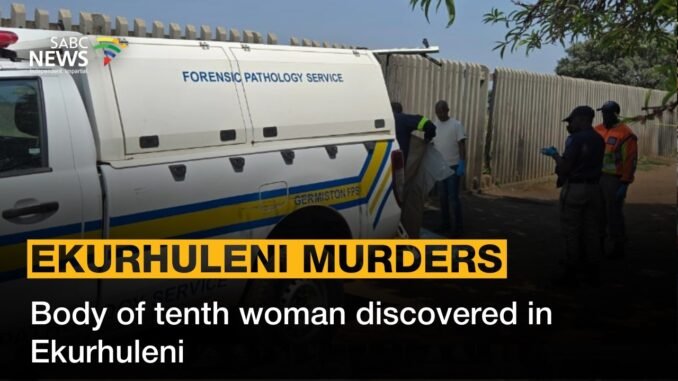
South African police made yet another grim discovery on Saturday, recovering the body of a woman in Ekurhuleni, a municipality located east of Johannesburg. This latest find brings the total number of women found dead in the area over the past two months to a staggering 10 — a figure that has sent shockwaves not just across South Africa, but across the entire African continent.
A Crisis That Cannot Be Ignored
For many Nigerians, this news hits close to home. Gender-based violence remains a painful and persistent reality across Africa, and the situation unfolding in Ekurhuleni is a chilling reminder of just how vulnerable women continue to be — even in urban, seemingly well-connected communities.
Ekurhuleni, home to OR Tambo International Airport and one of South Africa’s major economic hubs, is not a remote or forgotten corner of the country. The fact that ten women have lost their lives there within just two months raises serious and urgent questions about the safety of women in public and private spaces.
What We Know So Far
– Ten women* have been found dead in Ekurhuleni within a *two-month period
– The latest body was discovered on Saturday by South African police
– Authorities are actively investigating the deaths
– The pattern of killings has drawn widespread concern from human rights groups and the public
South African law enforcement has yet to make definitive public statements connecting all ten deaths, but the clustering of cases within the same municipality over such a short timeframe has naturally alarmed residents and activists alike.
The Bigger Picture: Femicide in Africa
South Africa consistently ranks among the countries with the highest rates of femicide in the world*. According to previous United Nations data, a woman is killed every *three hours in South Africa — a statistic so horrifying it bears repeating.
For Nigeria, where gender-based violence has also been a growing conversation — from the #ArewaMeToo* movement to ongoing advocacy by organisations like **Mirabel Centre** and *Stand To End Rape (STER) — the events in Ekurhuleni serve as both a warning and a call to action.
Our sisters across the border deserve justice. And so do ours at home.
Calls for Action
Women’s rights groups in South Africa have been vocal, demanding that the government treat femicide as the national emergency it truly is. Protests, candlelight vigils, and social media campaigns have previously forced the South African government to respond — but activists argue that words without action are simply not enough.
As Nigerians, we understand that struggle well.
Final Thoughts
The deaths of these ten women in Ekurhuleni are not just statistics. They were daughters, mothers, sisters, and friends — women with dreams, stories, and futures that were violently taken from them. Their lives mattered.
As the investigation continues, the world watches and waits — hoping that justice will be served, and that no more names will be added to this heartbreaking list.
Stay with us for updates as this story develops.
If you or someone you know is experiencing gender-based violence in Nigeria, reach out to the WARIF Helpline: 0800-726-0000** (toll-free) or contact the **Nigeria Police Force** on **112.
Visit buzzUp9ja for the full story
Be the first to comment