

Summary: US President Donald Trump has rejected Iran’s proposal to reopen the Strait of Hormuz within seven days. Find out what this means for global oil markets and Nigeria’s economy.
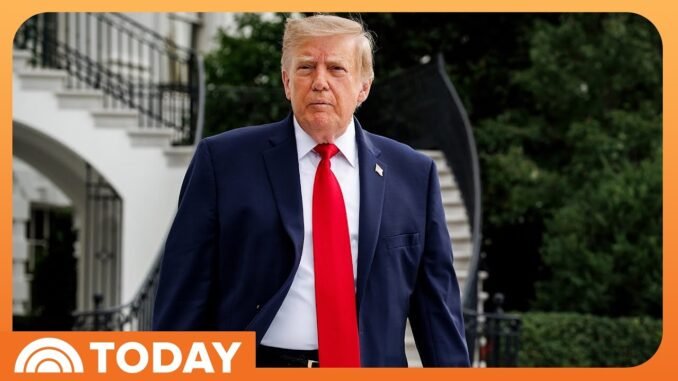
United States President Donald Trump has thrown cold water on a truce offer from Iran, rejecting a proposal that would have seen the strategically critical Strait of Hormuz reopened to maritime shipping within seven days.
The rejection, which came on Saturday, September 26, signals that tensions between Washington and Tehran are far from cooling down — and for Nigeria, a country whose fortunes are deeply tied to global oil dynamics, this is news worth paying close attention to.
What Exactly Is the Strait of Hormuz?
For those who may be wondering what all the fuss is about, the Strait of Hormuz is essentially the jugular vein of the global oil market. This narrow waterway, sitting between Iran and Oman, is the passage through which roughly 20% of the world’s oil supply flows every single day. Think of it as the Apapa Port of the entire global energy trade — except the consequences of any blockage are felt from Lagos to London to Los Angeles.
When this strait is threatened or blocked, oil prices spike almost immediately. And when oil prices spike globally, Nigeria — both as a producer and a consumer — feels the heat from both sides.
Iran Made an Offer, Trump Said No
According to reports, Iran put forward a proposal that would have led to the reopening of the Strait of Hormuz to international shipping within seven days, likely in exchange for some form of diplomatic concession or easing of sanctions. It appeared to be a window of opportunity for de-escalation.
However, Trump flatly rejected the offer, doubling down on what has been a consistently hardline posture towards the Iranian government. The US administration has shown little appetite for negotiation on terms it considers unfavourable, and this latest development confirms that the standoff between the two nations is set to continue for the foreseeable future.
Why Should Nigerians Care?
Now, some people might be asking — “What does trouble between America and Iran have to do with me in Owerri, Kano, or Port Harcourt?” The honest answer is: quite a lot, and here is why.
1. Oil Prices Will Likely Rise
Nigeria is an oil-producing nation, and higher crude prices can mean more revenue for the federal government — at least on paper. If the Strait of Hormuz remains under threat, expect crude oil benchmarks like Brent to climb. This could temporarily boost Nigeria’s foreign exchange earnings.
2. But Fuel Prices May Also Bite Harder
Here is the bitter irony that Nigerians know all too well. Even as a major oil producer, Nigeria still imports a significant portion of its refined petroleum products. When global oil prices rise, the cost of importing petrol, diesel, and kerosene goes up. With the subsidy removal already stretching the wallets of everyday Nigerians, any further spike in pump prices will be felt directly in markets from Balogun to Wuse.
3. Shipping Costs and Imported Goods
The Strait of Hormuz is not just about oil. It is a major corridor for global trade. Any disruption to shipping in that region raises freight costs worldwide — and that cost eventually shows up in the price of everything from electronics to food items on Nigerian shelves.
4. The Naira Feels the Pressure
Global uncertainty tends to strengthen the US dollar as investors rush to safe-haven assets. A stronger dollar typically means more pressure on the Naira, making imports even more expensive and adding to the inflationary burden that ordinary Nigerians are already carrying.
The Bigger Picture
This latest development is a reminder that in today’s interconnected world, a political decision made in Washington or Tehran does not stay there. Its ripple effects travel across oceans and deserts, eventually landing on the shelves of your neighbourhood supermarket or the fuel station down your street.
As Nigeria continues to navigate its own economic challenges — from inflation to currency pressures to the ongoing push for economic diversification — global flashpoints like the US-Iran standoff remain critical factors to monitor.
For now, the Strait of Hormuz remains a ticking time bomb in the global energy conversation, and with Trump showing no interest in diplomacy, the world — and Nigeria — should brace for continued volatility.
Stay with us for more updates on global developments and their impact on the Nigerian economy.
Check buzzUp9ja for breaking news
Be the first to comment