
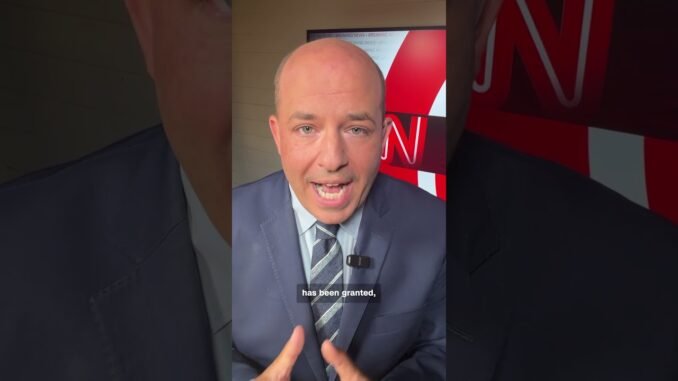

The Trump administration is doubling down on its decision to block major news outlets from the White House, with the Justice Department now arguing that press access is a privilege, not a right.
—
The United States Justice Department has thrown its full weight behind President Donald Trump’s controversial decision to ban CNN, MSNBC, and Politico from accessing the White House, insisting that admission to restricted presidential spaces is a privilege — not a constitutional right.
In what many press freedom advocates are calling a dangerous precedent, the Justice Department argued that the banned news organisations had effectively posed a threat to national security, providing legal cover for what critics describe as a direct assault on the freedom of the press.
What Exactly Is Happening?
The Trump administration moved to restrict access for several major media outlets — organisations that have historically been critical of the president and his policies. Rather than allowing these journalists into press briefings and other White House events, the administration has been selectively granting access, favouring outlets it considers more favourable in their coverage.
Now, with the Justice Department stepping in to back this decision legally, the move carries far more weight. The government’s argument is straightforward but deeply contentious: the White House is a restricted, secure government facility, and no journalist — regardless of their outlet — is automatically entitled to enter it.
Why Should Nigerians Care About This?
You might be wondering — this is an American matter, why should it concern us here in Nigeria?
Here is the thing: the United States has long positioned itself as the global standard-bearer for democracy and press freedom. When Washington starts behaving like it is taking pages from the playbook of governments that routinely silence inconvenient journalists, the entire world should sit up and pay attention.
Back home in Nigeria, we understand too well what it looks like when powerful governments decide which journalists deserve access and which ones do not. From the suspension of broadcast licences to the harassment of investigative reporters, media freedom in Nigeria has always been a hard-fought battle. Seeing the world’s most powerful democracy inch in that direction is deeply unsettling.
“Threatened National Security” — A Familiar Excuse
The claim that CNN, MSNBC, and Politico somehow threatened national security has raised more than a few eyebrows — even among conservatives in America. Critics have been quick to point out that this is precisely the kind of language authoritarian governments use to justify silencing the press.
In Nigeria, we have seen this script before. Label a journalist or outlet a “threat,” dress it up in legal language, and suddenly the crackdown looks official and legitimate. The language may change, but the tactic remains the same.
The Bigger Picture: Press Freedom Under Pressure
This development is part of a broader pattern under the Trump administration of pushing back aggressively against media organisations deemed hostile. From calling journalists “enemies of the people” to pulling press credentials, the administration has consistently tested the boundaries of what a democratic government can do to manage — or manipulate — its media coverage.
Press freedom organisations worldwide have condemned the move, warning that normalising this kind of selective access sets a dangerous precedent not just for America, but for democracies globally.
The Bottom Line
Whether you are a media professional in Lagos, a student of political science in Abuja, or simply a Nigerian who values the truth, this story matters. A free press is the backbone of any functioning democracy — and when governments begin deciding who qualifies as a “legitimate” journalist, everyone loses.
The battle for press freedom is not just an American story. It is a universal one — and right now, it is being fought in the corridors of the White House.
—
What do you think? Should governments have the right to restrict journalist access based on their coverage? Drop your thoughts in the comments below.
Get more news on buzzUp9ja
Be the first to comment