
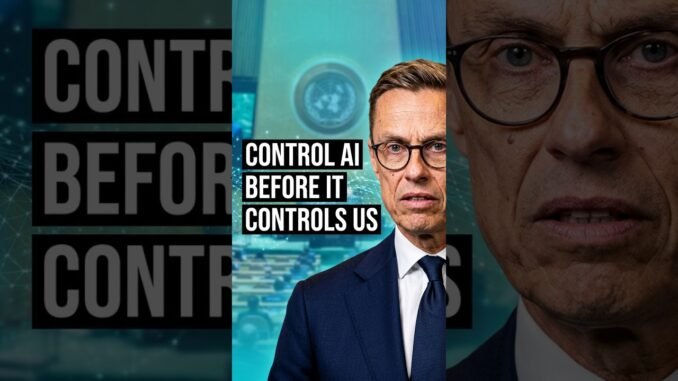

The biggest names in artificial intelligence have walked into the United Nations Security Council chambers and said what many tech watchers have feared for years — that without proper global regulation, AI could become a serious danger to all of humanity.
This is not a Nollywood script. This is real life.
In a landmark session that brought together some of the most powerful minds in the technology industry, AI executives and researchers stood before world leaders and issued a stark warning: the window to get this right is closing fast, and governments — including those on the African continent — cannot afford to sleep on this matter.
So, What Exactly Did They Say?
The executives, speaking before the UN Security Council, made it crystal clear that artificial intelligence is no longer the stuff of science fiction movies or Silicon Valley boardrooms alone. AI is evolving at a pace that even its own creators admit they struggle to keep up with. And without international guardrails, the consequences could be catastrophic.
They called for:
– Global cooperation among governments to develop binding frameworks for AI safety
– Oversight mechanisms that ensure powerful AI systems are tested and monitored before deployment
– International treaties similar to those governing nuclear weapons or chemical warfare
– Inclusive dialogue that brings developing nations to the table — not just the tech giants of America, China, and Europe
The message was simple but weighty: no single country can solve this alone.
Why Should Nigerians Care?
You might be wondering — what does this have to do with me in Lagos, Abuja, Kano, or Port Harcourt?
Everything.
Nigeria is already one of the fastest-growing technology markets on the African continent. From fintech startups in Victoria Island to agritech innovators in Ibadan, Nigerians are not just consumers of technology — we are builders. Our young people are learning to code, building AI-powered apps, and competing on the global stage.
But here is the honest truth: if the world’s most powerful nations create AI regulations without African voices at the table, we will end up with rules written for* us, not *by us. That is a pattern Africans know too well from history.
The decisions being made in those UN chambers today will determine how AI is deployed in our hospitals, our schools, our financial systems, and our government institutions tomorrow.
The Double-Edged Sword of AI
Let us not paint a completely dark picture. AI holds tremendous promise for a country like Nigeria.
Imagine AI systems that can help diagnose diseases in rural communities where doctors are scarce. Picture smart agricultural tools that can help farmers in Benue or Kebbi predict rainfall patterns and improve their harvest. Think about AI-powered translation tools that can bridge the gap between Nigeria’s over 500 languages and connect our communities like never before.
These are not fantasies. They are possibilities already being explored.
But the same technology that can save lives can also be weaponised. AI can be used to spread dangerous misinformation — something Nigeria has already experienced painfully during elections. It can automate jobs and displace millions of workers. In the wrong hands, it can be used for mass surveillance, manipulation, and control.
This is precisely why regulation matters.
What Are World Leaders Saying?
The fact that this conversation is happening at the UN Security Council — a body typically reserved for matters of war, peace, and existential threats — tells you everything about how seriously the international community is beginning to take AI.
Some world leaders have expressed openness to establishing a global AI watchdog body, similar to the International Atomic Energy Agency (IAEA) that oversees nuclear technology. Others have called for more immediate voluntary commitments from technology companies.
The debate is far from settled. But the alarm has been sounded, and loudly too.
Nigeria and Africa Must Find Their Voice
The African Union has begun conversations around an African AI strategy, and Nigeria’s National Information Technology Development Agency (NITDA) has also been working on a national AI policy framework. These are encouraging steps.
But policy documents gathering dust on shelves will not protect us. We need:
1. Funded and empowered regulatory institutions that can keep pace with rapidly changing technology
2. Nigerian and African representation at global AI governance tables
3. Public education campaigns so that everyday Nigerians understand what AI is and how it affects their lives
4. Collaboration between government, academia, and the private sector to build AI that reflects our values and serves our needs
The Bottom Line
When the smartest people building the most powerful technology in human history walk into the United Nations and say “we need help regulating what we are creating” — that is a moment to pay very close attention.
AI is not coming. AI is already here — in your WhatsApp spam filters, your bank’s fraud detection system, your social media algorithm, and the customer service chatbot that greets you when you visit a website.
The question is no longer whether AI will shape Nigeria’s future. The question is whether Nigerians will have a hand in shaping how AI does it.
The world is having that conversation right now. Nigeria must pull up a chair.
What do you think about AI regulation? Should Nigeria be pushing harder for a seat at the global tech governance table? Drop your thoughts in the comments below.
Visit buzzUp9ja for more headlines
Be the first to comment