
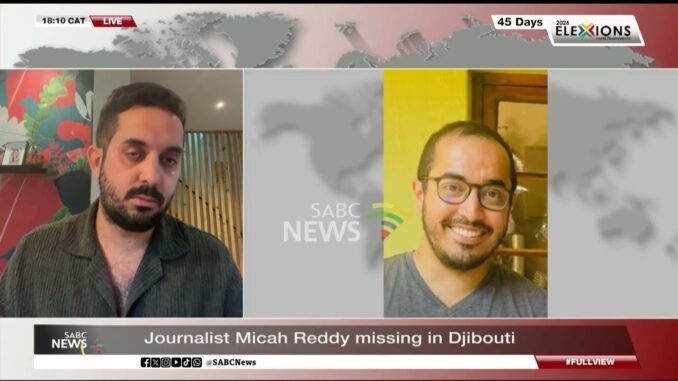

A press freedom scare that had the global journalism community on edge has finally ended — but the questions it raises remain very much alive.
South African investigative journalist Micah Reddy is finally a free man after being detained by authorities in Djibouti over the weekend. The International Consortium of Investigative Journalists (ICIJ) confirmed his release, bringing relief to press freedom advocates across Africa and beyond.
Who Is Micah Reddy?
Micah Reddy is no ordinary journalist. He is a respected South African investigative reporter known for digging deep into stories that powerful people would rather keep buried. His work with the ICIJ — the same global network behind landmark exposés like the Panama Papers and Pandora Papers — has earned him a reputation as one of Africa’s sharp investigative voices.
What Happened in Djibouti?
The details surrounding his detention remain somewhat murky, but what is clear is that Reddy was held by Djiboutian authorities over the weekend before eventually being released. The ICIJ moved swiftly to confirm the news of his freedom, signalling just how seriously the international journalism community took this incident.
Djibouti, the small but strategically significant Horn of Africa nation, has not always had the warmest relationship with press freedom. The country regularly features poorly on global press freedom indices, making the detention of a foreign journalist — particularly one working on investigative stories — a serious red flag.
Why This Matters for Africa
For Nigerians and Africans at large, this story hits close to home. Across the continent, journalists continue to face intimidation, detention, and worse, simply for doing their jobs. From Lagos to Lusaka, Nairobi to Niamey, the story of a journalist being locked up for asking hard questions is tragically familiar.
Nigeria itself has seen its share of press freedom battles. Journalists investigating corruption, insecurity, or government misconduct have faced harassment, unlawful detention, and even violence. Reddy’s ordeal is therefore not just a South African story — it is an African story.
The Bigger Picture
The fact that Reddy was released is a victory, but it should not be the end of the conversation. Questions still need to be answered: Why was he detained in the first place? Were his journalistic materials confiscated? Was he working on a story that powerful interests wanted suppressed?
Press freedom organisations including the ICIJ are expected to continue pushing for answers.
Final Thoughts
The release of Micah Reddy reminds us that investigative journalism — the kind that holds governments and powerful individuals accountable — remains a dangerous profession on this continent. Every journalist who risks their safety to chase the truth deserves not just our applause, but our active solidarity and protection.
As Nigerians who understand the value of a free press in the fight against corruption and impunity, we must continue to speak up whenever and wherever a journalist’s freedom is threatened.
Freedom of the press is not just a journalists’ issue — it is everybody’s issue.
Read the full story on buzzUp9ja
Be the first to comment