
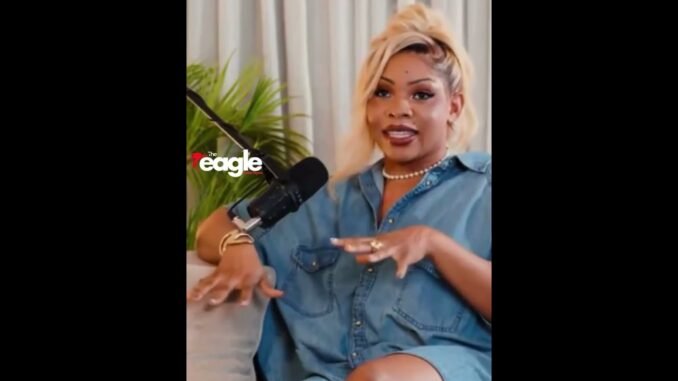

Singer Fave gets candid about the double standards holding women back in Afrobeats — and why the industry needs to do better
—
Nigerian singer Fave has done it again — and this time, she’s not serving us a banger. She’s serving us the raw, unfiltered truth about what it really means to be a woman trying to make it in Nigeria’s cutthroat music industry.
The Baby Riddim crooner recently opened up about the glaring double standards that female artistes continue to face, making a bold point that many of us already know but rarely hear said out loud: women in the Nigerian music industry are judged more by what they wear than by the music they actually make.
The Uncomfortable Truth Nobody Wants to Talk About
Let’s be honest — we’ve seen it play out time and time again. A male artiste can step on stage in a rumpled agbada or a plain white tee, spit bars, and walk away a legend. But the moment a female artiste shows too much skin? Twitter is on fire. The blogs are dragging her. Her family is trending for the wrong reasons. And somehow, her talent becomes the last thing anyone is discussing.
Fave, speaking on a recent platform, put it plainly: female artistes carry a burden that their male counterparts simply do not. Every outfit is a headline. Every fashion choice is a moral debate. Every stage performance is dissected not for the vocals or the energy, but for the hemline.
“It’s Harder for Us” — And the Numbers Don’t Lie
Think about the current landscape of Afrobeats and Nigerian pop. The male artistes dominating the charts — Burna Boy, Asake, Davido, Wizkid — are celebrated almost purely for their craft. When was the last time we spent a week debating what Asake wore to a concert?
Now think about female artistes like Tiwa Savage, Yemi Alade, Ayra Starr, or Fave herself. How much of the conversation around them gets hijacked by their looks, their relationships, or their fashion choices — rather than their discography?
The disparity is real, e dey pepper, and Fave is right to call it out.
The Pressure to Look a Certain Way
Beyond the criticism, there’s another layer to this conversation — the pressure female artistes feel to dress and present themselves in ways that satisfy public expectation. Too modest, and you’re not “marketable.” Too revealing, and you’re “wayward.” It’s a lose-lose situation that male artistes never have to navigate.
This impossible standard doesn’t just affect their public image — it chips away at their creative freedom. How can you fully express yourself as an artist when half your energy is going into managing how the public perceives your body?
Nigeria, We Need to Do Better
Fave’s comments are a mirror held up to all of us — the fans, the bloggers, the music executives, and the industry gatekeepers. The Nigerian music industry has produced some of the most talented women in the world. From Onyeka Onwenu* in the golden era to *Tems breaking global records today, our women have always delivered.
They deserve to be celebrated for exactly that — their talent, their grind, their art.
The next time a female artiste drops a project, let’s lead with the music. Let’s talk about the production, the lyricism, the storytelling. Let’s give them the same energy we give the men.
Because if we keep reducing our female artistes to what they wear instead of what they create, we are the ones losing out — on great music, on authentic artistry, and on the full potential of what Nigerian music can be.
Fave said what she said. And e make sense.
What do you think? Are female artistes in Nigeria treated fairly by the industry and fans? Drop your thoughts in the comments.
For more information, check buzzUp9ja
Be the first to comment