
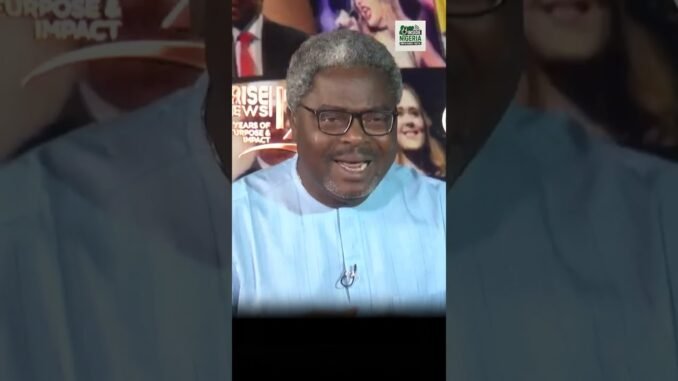

Summary: FCT Minister’s spokesperson, Lere Olayinka, has sparked a heated national conversation after calling for a review or outright ban of TikTok in Nigeria. Here’s everything you need to know.
The conversation around social media regulation in Nigeria just got louder. Lere Olayinka, the spokesperson for FCT Minister Nyesom Wike, has come out swinging — calling for either a serious review or a total ban of the wildly popular video-sharing platform, TikTok.
Olayinka made this bold declaration through his own social media handles, and as you can imagine, Nigerians on the internet did not keep quiet about it.
Who Is Lere Olayinka and Why Does His Opinion Matter?
As the official voice of Minister Nyesom Wike — one of Nigeria’s most powerful and outspoken political figures — Lere Olayinka’s statements carry significant weight. When he speaks, many Nigerians pay attention, whether they agree with him or not. His call for a TikTok ban is therefore not something that can be easily brushed aside.
The TikTok Debate: Why Now?
TikTok has become a cultural phenomenon in Nigeria. From Afrobeats dance challenges to political commentary, business promotions to comedy skits, millions of Nigerians — especially the youth — have embraced the platform as a daily staple.
However, concerns about TikTok are not new. Globally, governments from the United States to India have raised red flags over the platform’s data privacy practices, its Chinese ownership under ByteDance, and the type of content it promotes — particularly to younger users.
In Nigeria, critics have also pointed to the spread of misinformation, indecent content, and what some describe as a negative influence on the country’s youth as reasons to scrutinize the app more closely.
Nigerians React — And They Have Plenty to Say
As expected, the call stirred serious reactions online. Many Nigerians pushed back hard, arguing that banning TikTok would:
– Stifle creativity for content creators who earn a living on the platform
– Silence free expression at a time when digital voices matter more than ever
– Hurt small businesses that rely on TikTok marketing to reach customers
Others, however, sided with Olayinka, suggesting that stronger regulation — or even an outright ban — could protect Nigerian children and teenagers from harmful content.
Is a TikTok Ban Even Realistic in Nigeria?
Let’s be real — Nigeria has been here before. The Nigerian government previously suspended Twitter (now X) in 2021, proving that such actions are not entirely off the table. However, that suspension lasted over seven months and drew widespread criticism from civil society groups, businesses, and international organisations.
Banning TikTok would likely face similar — if not stronger — resistance, especially given how deeply the platform is woven into Nigerian youth culture and the growing creator economy.
The Bigger Question: Regulation vs. Outright Ban
Perhaps the more balanced conversation is not whether to ban TikTok entirely, but how to properly regulate it. Countries like the UK and Australia have moved to restrict TikTok on government devices, while pushing for stricter content moderation rather than a full shutdown.
Nigeria could explore similar middle-ground approaches — working with the platform to ensure local content standards are upheld, user data is protected, and harmful material is swiftly removed.
Final Thoughts
Lere Olayinka’s call has opened a necessary conversation that Nigerians must have honestly and without sentiment. Technology will always be a double-edged sword — it empowers, but it can also harm. The question is whether Nigeria’s response should be a heavy-handed ban or a smarter, more structured regulatory framework.
One thing is certain: this debate is far from over. And knowing Nigerians, the conversation will continue — most likely on TikTok itself.
What do you think? Should Nigeria ban TikTok or simply regulate it better? Drop your thoughts in the comments below.
Explore more stories on buzzUp9ja
Be the first to comment