
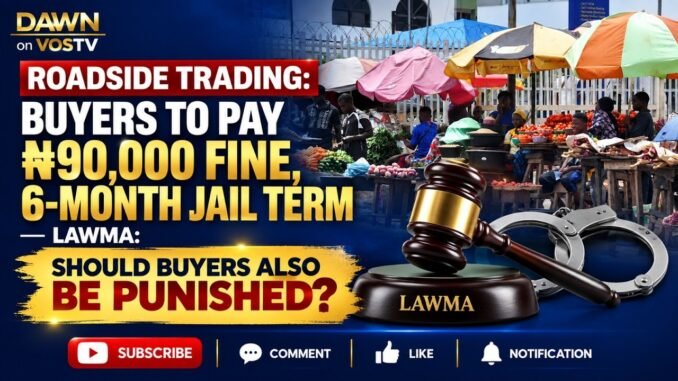

Summary: Lagos Waste Management Authority (LAWMA) has issued a stern warning to both street traders and their customers in Lagos. Find out what you need to know before your next roadside purchase lands you in serious trouble.
If you have ever wound down your car window on Third Mainland Bridge or slowed down at a red light on Lagos Island to buy pure water, suya, or phone accessories from a roadside hawker, this is your official wake-up call.
The Lagos Waste Management Authority (LAWMA) has made it crystal clear — starting from next week, buying goods from traders operating illegally on roads, medians, setbacks, walkways, and other unauthorised public spaces in Lagos will no longer be treated as a harmless habit. Both the sellers and the buyers will face consequences.
What Exactly Is LAWMA Saying?
LAWMA’s warning targets everyone involved in the street trading chain — not just the traders themselves. If you are the person handing over ₦500 for a sachet of cold water or ₦2,000 for a pair of socks at a traffic light, you are just as much in their crosshairs.
The authority is cracking down on trading activities on:
– Roads and highways
– Medians (those narrow strips dividing dual carriageways)
– Setbacks (the spaces between buildings and roads)
– Walkways and pedestrian paths
– Any other unauthorised public spaces
Why Should Lagos Residents Take This Seriously?
Let us be honest — street trading is deeply woven into the Lagos hustle culture. From Ojuelegba to Oshodi, from Mile 2 to Berger, roadside trading has fed millions of families and saved countless Lagosians the stress of hunting for items in markets. We understand the convenience.
But LAWMA’s position is rooted in real concerns:
– Traffic congestion: Roadside trading draws crowds and slows down already gridlocked Lagos traffic
– Safety risks: Both traders and drivers face serious accident risks during roadside transactions
– Environmental degradation: Street trading contributes significantly to littering and poor waste management
– Obstruction of walkways: Pedestrians, especially the elderly and persons with disabilities, are denied safe passage
What Happens If You Are Caught?
LAWMA has made it clear that enforcement will begin next week, and it will target both traders and customers found engaging in illegal roadside transactions. While the full details of penalties are still being communicated, Lagosians should expect:
– Fines and sanctions for buyers caught patronising illegal street traders
– Arrest and prosecution for traders operating in unauthorised spaces
– Confiscation of goods from traders found violating the directive
A Word to Lagosians
Yes, buying that agbalumo or groundnut from the hawker at the junction feels like a small, harmless thing. But Lagos is a city of over 20 million people, and small habits, multiplied by millions, create massive problems.
LAWMA’s crackdown is part of a broader Lagos State government effort to bring some sanity to the streets of one of Africa’s busiest cities. If we want cleaner roads, less traffic, and safer streets, the change truly does start with us.
The bottom line? Plan ahead. Shop at authorised markets, supermarkets, and designated trading areas. Do not let a ₦200 roadside purchase cost you something far more expensive.
Stay updated on Lagos State regulations and policies that affect your daily life. Share this post with a friend who needs to know.
For more information, check buzzUp9ja
Be the first to comment