
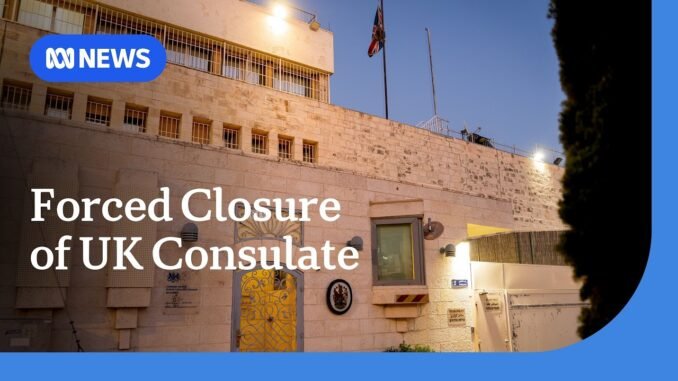

As diplomatic tensions between Israel and the United Kingdom reach a boiling point, Israel has issued a sharp warning — threatening to shut down Britain’s embassy in Jerusalem following fresh sanctions imposed by London over Israeli settlement activities in the occupied West Bank.
The relationship between Israel and the United Kingdom has taken a dramatic turn for the worse, with Israeli officials vowing to hit back hard after British Foreign Secretary Ed Miliband announced sweeping new sanctions targeting Israeli settlements in the occupied West Bank.
In what many international observers are calling one of the most serious diplomatic fallouts between the two historically close allies, Israel made clear it was not willing to take the British government’s latest move lying down — threatening to shut down the UK’s embassy in Jerusalem as a retaliatory measure.
What Sparked This Diplomatic Fire?
The trouble started when UK Foreign Secretary Ed Miliband stepped forward to announce new British sanctions specifically aimed at Israeli settlement activities in the occupied West Bank. For context, the West Bank is a Palestinian territory that has been under Israeli military occupation since 1967, and Israeli settlements there have long been considered illegal under international law — a position that Britain, like most of the international community, firmly holds.
Miliband went further, making pointed accusations against certain Israeli actors tied to settlement expansion — a move that did not sit well with the Israeli government at all.
Think of it this way: imagine the British government publicly calling out and sanctioning Nigerian businessmen operating in a disputed territory, then announcing it at a press conference. You can imagine the kind of reaction that would follow from Abuja. That is essentially the energy Israel is bringing to this situation.
Israel Fires Back — Hard
Israel wasted no time in responding. Officials in Tel Aviv made it crystal clear that they viewed the British sanctions as an unfriendly, politically motivated act, and threatened serious consequences — including the dramatic step of shutting down the United Kingdom’s embassy in Jerusalem.
This is no small threat. Embassy closures represent one of the most extreme steps a country can take in diplomatic relations — short of an outright severance of ties. It signals that a government is willing to completely freeze formal communication channels with another country.
For Britain, losing embassy access in Jerusalem would significantly complicate its ability to engage with Israeli authorities, protect British citizens in the country, and maintain any form of diplomatic influence in the volatile Middle East region.
Why Should Nigerians Care?
You might be wondering — why does this matter to us here in Nigeria?
Here is the thing: what happens between major world powers like the UK and Israel sends ripple effects across the globe, and Nigeria is not insulated from those waves.
Trade and economy: The UK remains one of Nigeria’s significant trading partners and a major source of foreign direct investment. Any instability in British foreign policy or diplomatic standing could affect the confidence of British investors looking towards Nigeria and other African markets.
The Middle East connection: Nigeria imports a significant portion of its crude oil refining inputs and petroleum products, and any escalation of conflict or instability in the Middle East — which these diplomatic tensions could potentially inflame — tends to push global oil prices into unpredictable territory. As a major oil-producing nation, Nigeria feels those swings acutely.
Diaspora Nigerians in the UK and Israel: There are hundreds of thousands of Nigerians living and working in the United Kingdom. Any major shift in British foreign policy or internal political instability stemming from controversies like this one can have real implications for immigration policies and the general environment that Nigerians in the UK navigate daily.
The Bigger Picture — A West Under Pressure
This latest clash between Israel and the UK is part of a growing global conversation about how Western nations should respond to the ongoing conflict in Gaza and Israeli policies in the West Bank.
Several European countries have been stepping up pressure on Israel through sanctions and diplomatic statements. Britain’s latest move under Foreign Secretary Miliband appears to signal that London is no longer willing to stay on the sidelines — a significant shift for a country that has traditionally been one of Israel’s steadfast supporters in Europe.
Israel, for its part, has made it abundantly clear that it will not accept what it sees as interference in its national security decisions — and is willing to make that displeasure felt in very tangible diplomatic ways.
What Happens Next?
The situation remains fluid and tense. Diplomatic back-channels between London and Jerusalem will almost certainly be working overtime to prevent a full-blown breakdown in relations. However, with both sides digging into their positions publicly, finding a face-saving middle ground will require serious political will from both governments.
The international community — including African nations and bodies like the African Union — will be watching closely to see how this plays out, as it sets important precedents for how the world handles Israel’s continued settlement expansion and the broader Israeli-Palestinian conflict.
As always, the world remains a complicated place, and the decisions made in far-off capitals have a way of finding their path to our doorsteps here in Nigeria. Staying informed is the first step to understanding how these global shifts affect us at home and abroad.
More stories await you on buzzUp9ja
Be the first to comment