
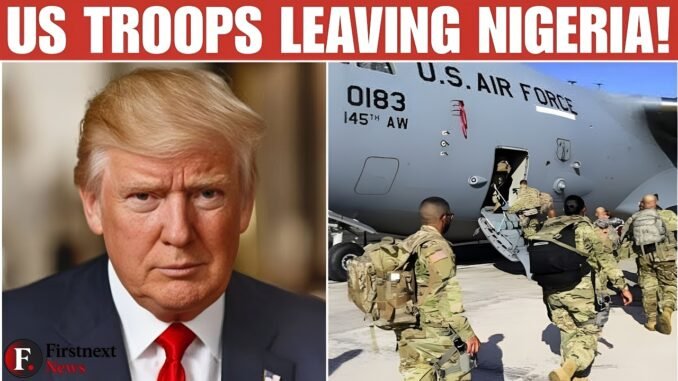

Summary: The United States is set to withdraw approximately 200 troops deployed to Nigeria earlier this year to support the fight against Islamist militants. Here’s what Nigerians need to know about this development and its implications for national security.
The United States is making moves to recall about 200 of its military personnel currently stationed in Nigeria, according to a report by the New York Times. These troops had been deployed earlier this year to support Nigeria’s ongoing battle against Islamist militant groups — a fight that has cost this nation dearly in lives, livelihoods, and tears, particularly across the North-East.
So, What Exactly Is Happening?
Washington is reportedly putting plans in motion to withdraw the approximately 200 American soldiers who were sent to Nigeria as part of broader US counterterrorism cooperation efforts on the continent. The pullout is expected to be completed before the end of the year.
While the details surrounding the exact reasons for this decision remain limited, it forms part of what analysts describe as a shifting American military posture across Africa — one that raises serious questions for countries like Nigeria that have leaned on such partnerships in the battle against groups like Boko Haram and ISWAP.
Why This Matters to Every Nigerian
Make no mistake — this is not just a foreign policy story happening far away in Washington. This development lands right in our backyard.
For years, communities in Borno, Yobe, Adamawa, and surrounding states have borne the brunt of brutal insurgent attacks. Thousands of Nigerians have been displaced, families torn apart, and entire villages wiped off the map. Any shift in the support structures helping our military tackle this menace deserves serious attention from every Nigerian — from Lagos Island to Maiduguri.
The American troops were not just boots on the ground. They brought with them intelligence-sharing capabilities, training expertise, and logistical support that complemented the Nigerian military’s operations. Losing that partnership — even partially — could create gaps that insurgents are always eager to exploit.
What Happens to Nigeria’s Fight Against Boko Haram and ISWAP?
This is the big question on every concerned Nigerian’s mind. Our gallant soldiers in the Nigerian Army, alongside the Multinational Joint Task Force (MNJTF), have made significant strides against Boko Haram and the Islamic State West Africa Province (ISWAP) in recent times. But the fight is far from over.
Security experts have long emphasised that defeating insurgency requires more than military firepower — it demands robust intelligence networks, training pipelines, and international cooperation. The withdrawal of US troops could potentially affect all three areas.
Nigeria’s government will need to:
– Strengthen domestic intelligence capacity within the DSS and military intelligence units
– Deepen cooperation with regional partners like Niger, Chad, and Cameroon under the MNJTF framework
– Explore alternative partnerships with other allies who have counterterrorism expertise
– Accelerate investment in the welfare and equipment of frontline troops
The Bigger Picture — America’s Shifting Africa Strategy
This move is consistent with a pattern of the United States reassessing its military footprint across Africa. Similar withdrawals and reductions have been discussed in countries like Chad and Niger, signalling that Washington may be recalibrating how it engages with security challenges on the continent.
For Nigeria, Africa’s most populous nation and largest economy, this is a reminder that we cannot afford to outsource our security to foreign powers indefinitely. As much as international partnerships are valuable, the ultimate responsibility for protecting Nigerian lives rests with Nigerian institutions.
A Wake-Up Call, Not a Death Sentence
Let’s be clear — the withdrawal of 200 troops does not mean Nigeria is being abandoned. Diplomatic and security ties between Abuja and Washington remain intact, and intelligence-sharing arrangements are likely to continue in various forms.
However, this development should serve as a wake-up call for our policymakers. Nigeria must invest more seriously in building self-sufficient counterterrorism capabilities. Our defence budget, the welfare of our soldiers, and the modernisation of our armed forces must remain national priorities — not political talking points.
The people of the North-East have waited long enough for lasting peace. As America steps back, Nigeria must step up.
What are your thoughts on this development? Do you think Nigeria’s military can hold the line without US support? Drop your comments below.
Uncover more updates on buzzUp9ja
Be the first to comment