
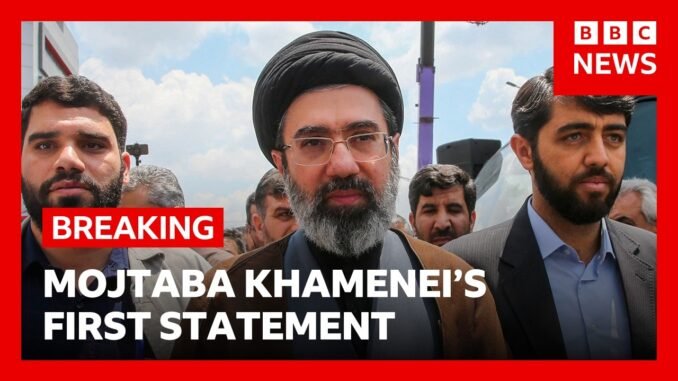

Summary: Iran’s new leader Ayatollah Mojtaba Khamenei has ordered the closure of the Strait of Hormuz despite Trump’s warnings, threatening global oil supplies and sending prices above $100 per barrel.
The tension in the Middle East has reached a dangerous new level as Iran’s newly appointed supreme leader, Ayatollah Mojtaba Khamenei, has ordered the continued shutdown of the Strait of Hormuz—one of the world’s most critical oil shipping routes.
A New Leader Takes Hard Stance
Speaking through a state television newscaster on Thursday, March 12, Khamenei made his position crystal clear: the Strait of Hormuz will remain closed. This marked his first major policy statement since being nominated as supreme leader last Sunday, following reports that he was injured in an airstrike.
“The lever of blocking the Strait of Hormuz must definitely be used,” Khamenei declared, referring to the narrow waterway that normally carries about a quarter of the world’s oil and liquefied natural gas (LNG).
For Nigerians, this development carries serious implications. As a major oil-producing nation ourselves, we understand how global oil prices directly affect our economy, from fuel costs at filling stations to the exchange rate of the naira.
The Personal Tragedy Behind the Politics
Khamenei’s hardline stance comes with deep personal motivation. His father, Ali Khamenei, was killed in the first wave of US-Israeli military strikes that sparked this latest phase of the Middle East conflict. The younger Khamenei has now inherited both leadership and a mission of revenge.
In his message, he called on Gulf countries to close US military bases on their soil and warned that Iran’s retaliation has only just begun. “A limited amount of our revenge for US and Israeli strikes has taken concrete form, but until it is fully achieved, this case will remain among our priorities,” he stated.
Oil Prices Spike Above $100
The immediate impact was felt in global energy markets. On Thursday, March 12, Iran launched fresh attacks against Gulf energy targets, sending oil prices briefly soaring above $100 per barrel—a critical psychological threshold that hasn’t been seen in years.
Energy analysts are now warning that this could trigger “the largest supply disruption” in history. For Nigeria, where petrol prices and dollar availability are already pressing concerns for everyday citizens, this could mean even tougher times ahead.
Trump’s Response: Nuclear Weapons the Real Threat
Despite growing global anxiety about the oil crisis, former US President Donald Trump appeared dismissive of the immediate concerns. In a social media post, he wrote: “Of far greater interest and importance to me, as President, is stopping an evil Empire, Iran, from having Nuclear Weapons, and destroying the Middle East and, indeed, the World.”
Trump’s statement suggests that the US administration remains focused on Iran’s nuclear ambitions rather than the immediate economic fallout from the Strait of Hormuz closure.
What This Means for Nigeria
The Strait of Hormuz crisis creates a complex situation for Nigeria:
The Good News: Higher global oil prices could mean increased revenue for our oil exports, potentially boosting government earnings.
The Bad News: As an oil importer (yes, we export crude but import refined products), higher prices will likely push up the cost of petrol, diesel, and kerosene at home. This ripple effect touches everything from transportation costs to food prices.
A Leader Yet to Show His Face
Interestingly, Ayatollah Mojtaba Khamenei has not made any public appearance since assuming the role of supreme leader. His message was delivered through a television presenter, fueling speculation about the extent of his injuries from the reported airstrike.
This absence adds another layer of uncertainty to an already volatile situation. In Nigerian politics, we know the importance of a leader’s physical presence in times of crisis—their visibility often determines public confidence.
The Global Stakes
The Strait of Hormuz is just 21 miles wide at its narrowest point, yet it serves as the jugular vein of global energy supply. Any prolonged closure could:
– Trigger worldwide recession
– Cause energy shortages across continents
– Destabilize economies already struggling with post-pandemic recovery
– Force major shifts in international alliances and trade routes
What Happens Next?
As this crisis unfolds, the world watches anxiously. Will diplomatic efforts prevail, or are we headed toward a larger military confrontation? Can alternative shipping routes compensate for the closure? How long can Iran maintain this blockade under international pressure?
For Nigerians, the immediate concern is practical: brace for potential increases in fuel prices and general inflation. The government may need to consider subsidy measures or alternative supply arrangements to cushion the impact on citizens.
The coming days will be critical. As we’ve learned from previous Middle East conflicts, what happens in the Gulf doesn’t stay in the Gulf—it reaches our shores through the price we pay at the pump and in the market.
Stay informed, plan wisely, and prepare for potential economic shifts as this geopolitical drama continues to unfold.
This is a developing story. Check back for updates as the situation evolves.
For more information, check buzzUp9ja
Be the first to comment