
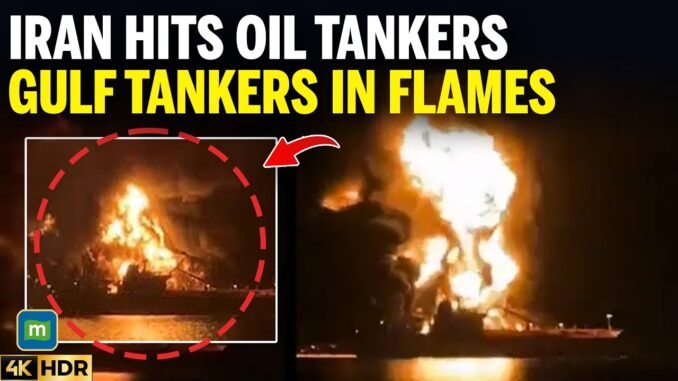

Summary: Two oil tankers burst into flames after attack near Iraqi coast. One dead, 38 rescued as Iran-linked incident threatens global oil supply through Strait of Hormuz.
The global oil market is once again on edge following a dramatic attack on two oil tankers off the coast of Iraq, an incident that has been linked to the escalating tensions involving Iran. The attacks, which left both vessels engulfed in flames, have raised fresh concerns about the security of vital shipping routes that supply Nigeria and the rest of the world with crude oil.
What Happened?
In the early hours of the morning—around 1:30 a.m. local time—two oil tankers, the Marshall Islands-flagged Safesea Vishnu* and *Zefyros, were struck by what authorities are calling “unknown projectiles” while sailing in waters near southern Iraq.
According to the UK Maritime Trade Operations, the vessels were likely hit by unmanned explosive boats—essentially water-based drones designed to ram into ships and detonate. The attack resulted in both tankers catching fire immediately.
Iraqi media reports indicate that 38 crew members were successfully rescued from the burning vessels, but tragically, one person lost their life in the incident.
Farhan al-Fartousi, the head of the General Company for Ports of Iraq, confirmed that both ships were transporting Iraqi fuel oil when they were attacked inside Iraqi territorial waters.
Iraq Shuts Down Key Ports
In response to the attack, Iraqi authorities took swift action by temporarily halting operations at ports handling oil imports and exports. However, container shipping facilities for general commercial trade remain open, ensuring that other goods can still move through the region.
The situation became even more alarming when another container vessel was also hit overnight off the coast of the United Arab Emirates. While that ship also caught fire, all crew members aboard survived.
Why Should Nigerians Care?
For Nigeria—a major oil-producing nation and Africa’s largest economy—these developments are more than just international news. They carry serious implications for global oil prices, which directly affect our economy, fuel costs, and the price of goods and services.
The attacks took place near the Strait of Hormuz, a narrow waterway that connects the Persian Gulf to the Indian Ocean. This strait is one of the world’s most critical oil chokepoints—roughly one-fifth of the world’s crude oil shipments pass through it daily, with around 80 oil and gas tankers making the journey each day.
Any disruption in this region can send shockwaves through global energy markets, potentially affecting Nigeria’s own oil exports and the prices Nigerians pay at the pump.
Rising Tensions and US-Iran Standoff
Earlier this week, the United States announced that it had destroyed ten Iranian boats allegedly deploying naval mines in the shipping corridor. Iran has long asserted its control over the Strait of Hormuz and is believed to possess thousands of naval mines that can be deployed from small boats, submarines, or even disguised civilian vessels.
Following the latest attacks, a spokesperson for Iran’s military command issued a stark warning: if the regional security situation continues to deteriorate, global oil prices could skyrocket to as much as $200 per barrel. That’s more than double the current price—a scenario that would send shockwaves through Nigeria’s economy and household budgets.
Global Response: Emergency Oil Reserves Released
The crisis has already rattled energy markets worldwide. In an unprecedented move, the International Energy Agency (IEA) announced a massive 400 million-barrel release from strategic reserves in an effort to stabilise global oil supplies.
The United Kingdom has pledged to contribute 13.5 million barrels from its own reserves to support this emergency release.
Despite these efforts, Brent crude prices—the global benchmark that influences Nigeria’s oil export revenues—rose by approximately 3.5 percent to $90.87 per barrel following the attacks. While prices remain below the peak levels seen earlier in the week, analysts warn that further escalation could push them even higher.
What This Means for Nigeria
As an oil-dependent economy, Nigeria stands to be affected by these developments in several ways:
1. Revenue Impact: Higher global oil prices could boost government revenue from oil exports, but sustained instability threatens supply chains and market confidence.
2. Fuel Costs: Any significant spike in global crude prices will likely translate to higher petrol and diesel costs for Nigerian consumers, affecting transportation and the cost of goods.
3. Economic Stability: Prolonged tensions in the Middle East could disrupt Nigeria’s own export routes and affect investor confidence in the region’s energy sector.
4. Inflation Pressure: Rising energy costs globally often lead to increased inflation, which Nigeria has been battling in recent years.
Looking Ahead
The situation in the Middle East remains fluid and highly volatile. With Iran warning of potential price surges, the US maintaining a military presence in the region, and Iraq temporarily shutting down key oil ports, the coming days and weeks will be critical.
For Nigeria and other oil-dependent nations, the message is clear: the stability of global energy markets hangs in a delicate balance, and any further escalation could have far-reaching consequences for economies around the world.
As we monitor these developments, Nigerians should prepare for potential impacts on fuel prices and the broader economy while hoping that diplomatic solutions can prevent further violence in this strategically vital region.
What are your thoughts on this developing situation? How do you think it will affect Nigeria’s economy? Share your views in the comments below.
For more details, check buzzUp9ja
Be the first to comment