
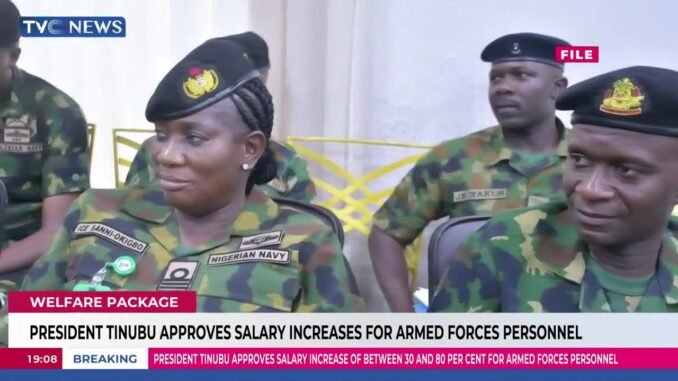

Nigerian soldiers, sailors, and airmen are set to smile to the bank as President Tinubu signs off on a landmark pay raise for the armed forces.
President Bola Tinubu has approved a significant salary increase ranging from 30 to 80 percent* for personnel of the Nigerian Armed Forces — covering an estimated *250,000 military men and women serving across the country.
What Exactly Was Approved?
The new pay package, which is set to take effect from September 1, 2026, promises to put more naira in the pockets of soldiers, sailors, airmen, and other defence personnel who daily risk their lives to keep Nigeria secure — from the insurgency-ravaged North East to the creeks of the Niger Delta and beyond.
Why This Matters for Nigerian Military Families
For many military families scattered across barracks from Abuja to Enugu, Lagos to Maiduguri, this announcement brings long-awaited relief. The cost of living in Nigeria has risen sharply in recent times, with the naira facing significant pressure and the prices of everyday essentials — from garri to petrol — hitting record highs.
A salary increase of up to 80 percent could make a meaningful difference in the lives of junior enlisted personnel who have often been among the lowest-paid workers in the public sector, despite operating in some of the most dangerous conditions imaginable.
Boosting Morale on the Front Lines
Nigeria’s military is currently engaged in active operations across multiple theatres — battling Boko Haram and ISWAP terrorists in Borno State, tackling banditry in the North West, and addressing separatist tensions in the South East. A well-compensated soldier is, arguably, a more motivated and committed one.
Defence analysts and veteran military officers have long argued that competitive pay is critical to maintaining discipline, reducing desertion, and attracting quality recruits into the armed forces.
What Comes Next?
With the implementation date set for September 2026, there is still time for the relevant authorities — including the Ministry of Defence and the office of the Accountant General of the Federation — to put the necessary budgetary frameworks in place.
Nigerians will be watching closely to ensure that this approval does not go the way of many government pronouncements — announced with fanfare but slow to materialise on the ground.
For now, however, it is a moment worth acknowledging. Our men and women in uniform deserve to be well-rewarded for their service, sacrifice, and dedication to one Nigeria.
Stay with us for more updates as this story develops.
Check buzzUp9ja for more information
Be the first to comment