
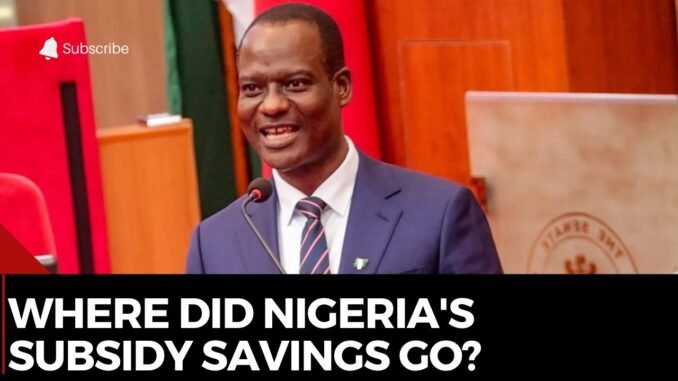

If you’ve been wondering where all that money from the fuel subsidy removal has been going, you’re not alone. Since President Bola Tinubu declared “subsidy is gone” on his inauguration day, millions of Nigerians have been feeling the heat — from sky-high petrol prices to a naira that seems to lose value faster than we can count. So the big question on everyone’s lips remains: where exactly is the money going?
Well, the Chairman of the Presidential Committee on Fiscal Policy and Tax Reforms, Taiwo Oyedele, has stepped forward to break it all down — and here’s everything you need to know.
The Man Behind the Numbers
Taiwo Oyedele isn’t just another government official throwing figures around. As the head of the Presidential Fiscal Policy and Tax Reforms Committee, he sits right at the heart of Nigeria’s economic restructuring. When he speaks on how government money moves, Nigerians should pay attention.
So, Where Is the Subsidy Money Going?
According to Oyedele, the Federal Government has been directing savings from the removal of both fuel subsidies* and *foreign exchange subsidies into key areas of the economy. These are not funds sitting in someone’s pocket — at least, that’s what the government wants us to believe.
The savings have reportedly been channelled into:
– Infrastructure development — Roads, bridges, and other critical projects that have long suffered from funding gaps
– Social intervention programmes — Direct support to vulnerable Nigerians who are bearing the brunt of the subsidy removal
– Debt servicing — Clearing Nigeria’s mounting debt obligations to free up future revenue
– Funding for key government sectors — Including education, health, and security
Why This Matters for the Average Nigerian
Make no mistake — removing fuel subsidy was not a small thing. For decades, Nigerians enjoyed artificially cheap petrol, even when the rest of the economy was struggling. The subsidy was costing the government trillions of naira annually — money that critics argued was being largely consumed by corruption and elite capture rather than benefiting ordinary Nigerians.
Now that the subsidy is gone, the cost of living has shot up dramatically. From transport fares in Lagos to the price of garri in Kano markets, Nigerians across the country are feeling the squeeze. This is exactly why transparency around how these savings are being used matters so much.
The Forex Subsidy — The One Many Nigerians Overlooked
Beyond petrol, Oyedele also addressed savings from the removal of the foreign exchange subsidy — a policy that previously allowed certain individuals and businesses to access dollars at official rates far below the market price. This system, many economists argued, was a goldmine for a privileged few while draining Nigeria’s foreign reserves.
With the unification of the exchange rate, the government says it has also freed up significant resources that are now being redirected into the economy.
Nigerians Are Still Asking Hard Questions
Of course, government explanations don’t automatically translate to trust — especially in Nigeria, where many citizens have seen promises of reinvestment evaporate into thin air over the years. Many Nigerians on social media and on the streets continue to ask:
– “Why are we not feeling the impact of these savings?”
– “Why is the cost of living still rising?”
– “How can we verify that the money is actually going where they say it is?”
These are legitimate concerns that the government must address with more than just press statements.
The Road Ahead
Oyedele and the fiscal policy committee have a tough job on their hands — not just reforming Nigeria’s tax and fiscal systems, but convincing everyday Nigerians that the pain of subsidy removal will eventually yield tangible gains. Whether that conviction materialises into reality will depend on transparency, accountability, and — most importantly — results that people can see and feel in their daily lives.
For now, the government’s message is clear: the savings are being put to work. The burden of proof, however, remains firmly on their shoulders.
What do you think? Are you seeing any improvements in your community from the subsidy removal savings? Drop your thoughts in the comments below.
Visit buzzUp9ja for more details
Be the first to comment