
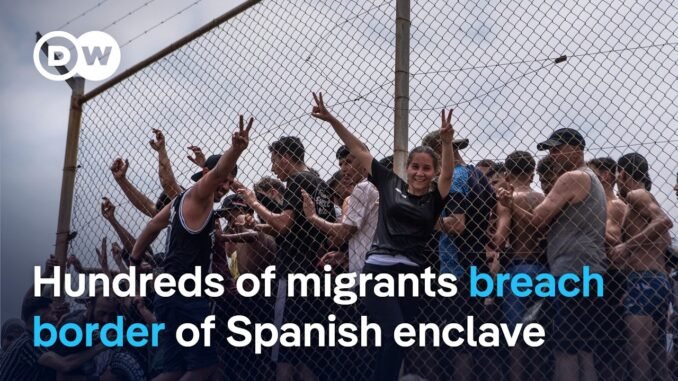

Summary: Spanish authorities in Ceuta have declared a humanitarian emergency after thousands of migrants crossed over from Morocco in an unprecedented surge. Here’s everything you need to know.
The North African enclave of Ceuta is currently in the grip of a serious humanitarian crisis, after Spanish authorities were forced to declare a state of emergency following a massive and unprecedented influx of migrants crossing over from neighbouring Morocco.
What Exactly Happened?
In what can only be described as a jaw-dropping development, thousands of migrants — many of them swimming through open waters — made their way from Moroccan shores into Ceuta, a small Spanish territory sitting on the northern tip of Africa. The sheer number of arrivals overwhelmed local authorities, forcing Spain’s national government to step in and declare a full humanitarian emergency.
Videos circulating online showed migrants wading and swimming through the sea, some holding their belongings above their heads, desperately trying to reach the European territory. The scenes were both heartbreaking and alarming, sparking intense debate across Europe and beyond.
Why Does This Matter?
For those wondering why this is a big deal — Ceuta, despite being geographically located in Africa, is a fully recognized Spanish territory and therefore part of the European Union. Crossing into Ceuta effectively means stepping onto European soil, which is why the enclave has long been a hotspot for migrants seeking a better life in Europe.
This latest surge is being described as one of the largest single-day crossings ever recorded in the area, putting enormous pressure on Spanish border forces, local infrastructure, and humanitarian services.
The Human Side of the Story
Among those who made the dangerous crossing were men, women, and — heartbreakingly — unaccompanied minors. Many arrived exhausted, soaked to the bone, and in desperate need of food, water, and medical attention. Spanish Red Cross workers and emergency responders were deployed to assist those in need, but the sheer volume of arrivals made the situation incredibly difficult to manage.
Make no mistake — this is not just a political or security story. Behind every number is a human being who risked their life hoping for something better. Many of these migrants are fleeing poverty, conflict, or persecution — circumstances that, unfortunately, many Nigerians and other Africans can relate to on some level.
Spain and Morocco: A Tense Relationship
It is worth noting that this mass crossing did not happen in a vacuum. The sudden surge is widely believed to be connected to a diplomatic row between Spain and Morocco. Relations between the two countries had been strained recently, and analysts suggest that Morocco may have deliberately relaxed its border controls, effectively allowing — or even encouraging — the mass movement of migrants as a form of political pressure on Madrid.
This kind of migration-as-leverage tactic is not new in global politics, but it places ordinary people — already vulnerable — right in the middle of a geopolitical chess game.
What Happens Next?
Spanish authorities have vowed to manage the crisis firmly, with Prime Minister Pedro Sánchez describing the situation as a “serious challenge” to Spain’s territorial integrity. Thousands of migrants have already been returned to Morocco, though human rights organisations have raised concerns about the conditions and legality of those returns.
The European Union has also been called upon to show solidarity with Spain and help manage the crisis, with some EU officials condemning what they described as Morocco’s “instrumentalisation” of migrants for political purposes.
A Broader African Conversation
This crisis once again shines a light on the desperate lengths to which Africans — from Morocco, sub-Saharan Africa, and beyond — are willing to go in search of opportunities that their home countries have failed to provide. Nigeria, as Africa’s most populous nation and largest economy, is not immune to this conversation.
Every year, thousands of Nigerians undertake similarly dangerous journeys — through the Sahara Desert, across the Mediterranean Sea — all in search of greener pastures. The Ceuta crisis is a stark reminder of why it is critical for African governments to invest in their people, create real opportunities at home, and stop forcing their citizens to gamble with their lives at Europe’s doorstep.
Until that happens, scenes like the ones we witnessed in Ceuta will continue to play out — and the human cost will keep climbing.
What are your thoughts on the Ceuta migration crisis? Drop your comments below and let’s have the conversation.
Uncover more details on buzzUp9ja
Be the first to comment