
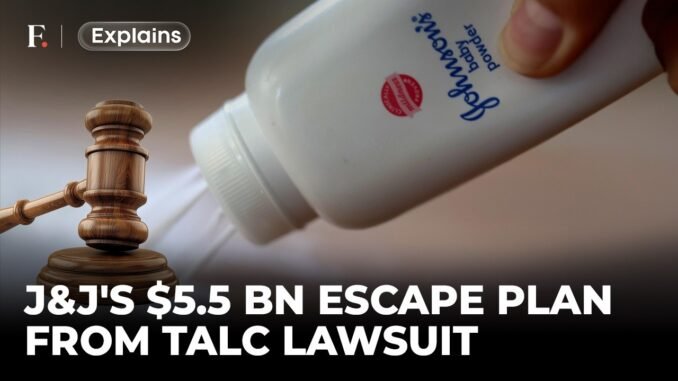

If you grew up in a Nigerian household, chances are Johnson & Johnson baby powder was practically a staple — sitting proudly on the dressing table, dusted generously on babies after a bath, and even used by many adults for that fresh, clean feeling. The iconic white tin with its familiar scent was as common in Nigerian homes as Omo detergent or Peak milk.
But that trusted brand is now at the centre of one of the biggest legal battles in corporate history — and the latest development is nothing short of shocking.
The Gist: J&J to Pay a Whopping $5.5 Billion
American pharmaceutical and consumer goods giant, Johnson & Johnson (J&J), has tabled an offer of up to $5.5 billion (roughly ₦8.5 trillion at current exchange rates)* to settle approximately **76,000 lawsuits** filed in the United States. These lawsuits allege that the company’s famous baby powder and other talcum-based products caused cancer — specifically *ovarian cancer and mesothelioma — in thousands of users.
To put that figure in perspective, that is more than Nigeria’s entire annual education budget. The sheer scale of this settlement tells you just how serious this matter truly is.
How Did We Get Here?
For decades, Johnson & Johnson marketed its baby powder as safe, gentle, and ideal for everyday use. The product became a global bestseller — beloved by mothers across Nigeria, Africa, and the rest of the world.
However, over time, thousands of people — mostly women — began to come forward with claims that regular use of the talcum powder had led to them developing ovarian cancer*. Scientists and legal experts argued that talc, the mineral used to make the powder silky-smooth, could be contaminated with *asbestos, a well-known cancer-causing substance.
What made matters worse was evidence suggesting that J&J may have known about potential risks far earlier than they publicly admitted — yet continued to sell the product without adequate warnings. This is what truly opened the floodgates of litigation.
Thousands of Lives Affected
The 76,000-plus claimants are not just statistics. These are real people — mostly women — who used a product they trusted completely, only to later receive devastating cancer diagnoses. Many have already lost their lives. Their families are now seeking justice and compensation.
In Nigeria, while our legal system may not easily allow for this kind of mass litigation against a multinational corporation, this case is a powerful reminder that consumer protection matters, and that no brand — no matter how popular or trusted — is above accountability.
J&J’s Position: A Company on the Defensive
Johnson & Johnson has consistently denied that its baby powder causes cancer. The company has argued that the product is safe and that science does not support the claims being made against them.
However, facing an avalanche of lawsuits and mounting legal costs, the company made a controversial move — it created a separate subsidiary* and pushed it into *bankruptcy in an attempt to limit its financial exposure to the claims. This legal manoeuvre, known as the “Texas Two-Step,” was widely criticised as an attempt to dodge full responsibility.
Courts have pushed back on this strategy, which is part of why J&J has now returned with this multi-billion dollar settlement offer.
What Does This Mean for Nigerians?
Many Nigerians are asking the right question: “We have been using this product for years — should we be worried?”
Here are a few important points to note:
– J&J discontinued its talc-based baby powder globally in 2023, replacing it with a cornstarch-based formula. So if you have old tins of the original talc powder at home, it may be worth discarding them.
– Regulatory agencies in Nigeria — including NAFDAC — should be pressured to review the safety standards of cosmetic and personal care products more rigorously. Nigerians deserve the same level of consumer protection as anyone else in the world.
– Always research products before long-term use, especially those applied directly to the skin of babies and young children.
The Bigger Lesson: Know Your Consumer Rights
This case is a watershed moment in consumer rights history. It shows that even the most powerful multinational companies can be held accountable for the harm their products cause — when enough people stand together and demand justice.
In Nigeria, consumer rights advocacy is still growing. Bodies like the Consumer Protection Council (CPC)*, now operating under the *Federal Competition and Consumer Protection Commission (FCCPC), exist to protect Nigerians from harmful products. If you ever suspect a product has caused you harm, do not stay silent — report it.
Final Thoughts
The Johnson & Johnson baby powder saga is far from over — the $5.5 billion offer still needs to be approved by the courts and accepted by the claimants. But it marks a significant moment of reckoning for a company that built decades of trust on the promise of being gentle, safe, and caring.
For Nigerian consumers, let this be a reminder: ask questions, stay informed, and never assume that a popular brand automatically means a safe product.
Your health — and the health of your children — is worth more than any brand loyalty.
Share this article with friends and family who use or have used Johnson & Johnson baby powder. Awareness is the first step to protection.
Discover more on buzzUp9ja
Be the first to comment