
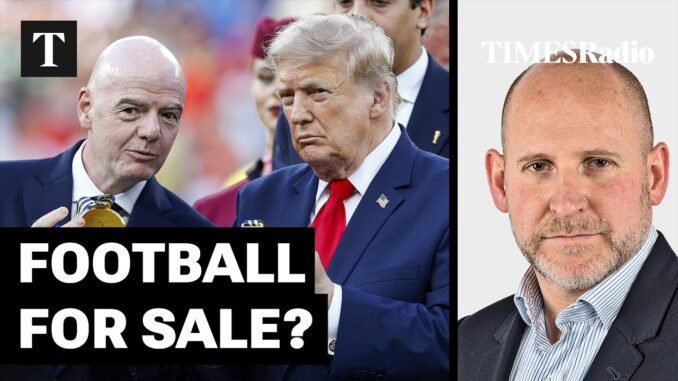

The beautiful game may be heading for a boardroom takeover — and football stakeholders are not happy about it.
FIFA president Gianni Infantino is walking into a storm after reports emerged that he is seriously considering a proposal to sell minority stakes in the commercial rights of both the FIFA World Cup and the Club World Cup to private investors. For football lovers across Nigeria and the rest of the world, this news is raising serious eyebrows — and plenty of alarm bells.
What Is Infantino Planning?
According to reports, Infantino is exploring a deal that would hand private investors a slice of the commercial pie that comes with the FIFA World Cup — arguably the biggest sporting event on the planet. The proposal would see outside investors acquire minority stakes in the commercial rights of both the flagship World Cup tournament and the newly expanded Club World Cup.
In plain terms, FIFA — the body that is supposed to hold football’s most sacred competitions in trust for the world — may be about to invite money men in suits to co-own a piece of the action.
Why Nigerians Should Care
For us in Nigeria, where football is practically a religion, this is not abstract boardroom drama. The World Cup is that one time every four years when the entire country pauses — offices go quiet, generators roar to life at midnight, and pepper soup joints become makeshift viewing centres. It belongs to us, the fans.
Any move that puts profit-driven private investors in a position of influence over how the World Cup is packaged, sold, or even structured should concern every Nigerian football lover from Lagos Island to Maiduguri.
We have seen what private investor influence can do to football. The European Super League saga of 2021 showed us clearly how quickly billionaires and hedge funds can attempt to hijack the sport for maximum financial returns, completely disregarding the passion and traditions of ordinary fans.
The Backlash Is Already Building
Infantino has not exactly been a stranger to controversy. From his handling of the expanded 48-team World Cup format to the controversial scheduling of the Club World Cup, critics have long accused him of prioritising revenue generation over the integrity of the game.
This latest move has drawn sharp criticism from football stakeholders who argue that commercialising the World Cup through private equity stakes could compromise FIFA’s independence and ultimately damage the tournament’s credibility. The concern is straightforward — once private investors hold a financial stake, their appetite for returns could begin to influence decisions about hosting rights, broadcast deals, sponsorships, and even the format of competitions.
The Bigger Picture
African football, in particular, has a lot at stake here. The continent has been fighting for greater representation and fairer treatment within FIFA’s structures for decades. If private investors — who are primarily motivated by profits from lucrative Western and Asian markets — gain influence over World Cup commercial decisions, the interests of African nations and fans could easily be pushed further to the margins.
Nigeria and other African football powerhouses deserve a World Cup that remains a truly global celebration, not a product optimised for investor returns.
What Happens Next?
As of now, no final decision has been announced, and it remains to be seen whether Infantino will push ahead with the proposal in the face of growing opposition. FIFA’s Congress and member associations would likely need to weigh in on any such significant structural change.
But one thing is clear — the football world is watching closely, and fans, administrators, and player unions are not about to let this slide without a fight.
For the sake of the game we love, let us hope that the beautiful game stays beautiful — and stays ours.
—
What do you think about private investors buying into World Cup commercial rights? Drop your thoughts in the comments below.
Stay tuned on buzzUp9ja for sport news
Be the first to comment