
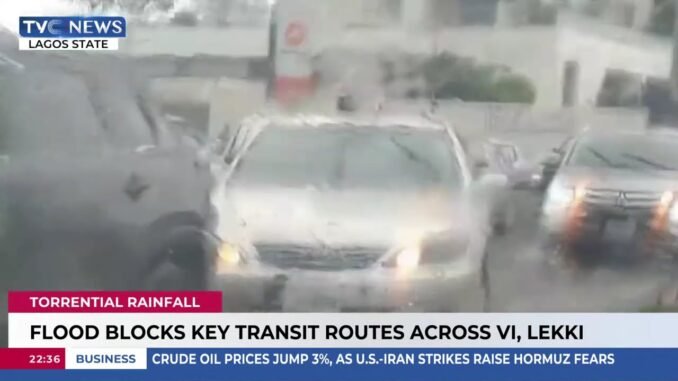

Summary: Nigerian actor and rapper Ikechukwu Onunaku has sparked conversation online after calling out Lagosians for acting shocked about the recurring flooding in Victoria Island and other parts of Lagos. Here’s what he had to say.
If you’ve been on Nigerian Twitter — sorry, X — or scrolling through your Instagram reels lately, you’ve probably seen the videos. Cars submerged like submarines. Streets looking like the Lagos Lagoon decided to extend its territory. Residents wading through muddy water in what should have been perfectly normal neighbourhoods.
And just like clockwork, the outrage followed.
But one person is not here for the collective amnesia. Nigerian actor and rapper Ikechukwu Onunaku has stepped forward to say what many old-school Lagosians have been thinking — this is not new, so why are we forming surprised?
—
“I Don’t Understand the Shock” — Ikechukwu Speaks His Mind
In a video that has been making the rounds online, Ikechukwu was blunt and unapologetic in his assessment of the flooding situation currently affecting several parts of Lagos. According to him, areas like Victoria Island have been dealing with flooding for decades, and the sudden wave of public outrage feels a little performative to him.
The actor, who has been a prominent figure in Nigerian entertainment for years, essentially called out Lagosians — and Nigerians at large — for acting as though this is a brand new problem that just fell from the sky.
And honestly? He has a point.
—
Lagos Flooding Is Not a 2024 Problem
Let’s be real for a moment. Anyone who has lived in Lagos long enough knows that when the rain comes down heavy, certain areas will go under. It is almost as predictable as NEPA taking light during a Champions League final.
Victoria Island, Lekki, Ajah, parts of the Mainland — these are areas where flooding has been a recurring conversation for as long as many residents can remember. The question has never really been if* it would flood. The question has always been *how bad it would get.
Yet every rainy season, we act like we are seeing this for the first time. We share the videos, we trend the hashtags, we curse the government — and then by the time the dry season arrives, we have forgotten everything until the next downpour.
—
The Bigger Problem Nobody Wants to Address
Ikechukwu’s reaction, while blunt, opens the door to a much deeper conversation about urban planning, drainage infrastructure, and accountability in Lagos State.
The reality is that Lagos is one of the fastest-growing cities in the world, with a population that some estimates put at over 15 million people. Building and development have continued at a rapid pace, but the drainage systems and flood management infrastructure have simply not kept up.
Reclaimed land, blocked canals, unchecked construction in waterways, and poor waste disposal — these are all factors that have made flooding in Lagos worse over the years. And while residents have a role to play in keeping drainage channels clear, the bulk of the responsibility sits squarely on the shoulders of government authorities and urban planners.
—
So What Should We Do With This Frustration?
Ikechukwu’s point is not that we should simply accept flooding as our fate and move on. Rather, the energy behind the outrage needs to be consistent and directed — not just a rainy season ritual.
Here’s what that could look like:
– Hold elected officials accountable beyond social media trends. Attend town halls. Ask questions during election seasons.
– Stop blocking drainage channels with refuse. This one is on all of us.
– Support and amplify organisations working on environmental and urban planning advocacy in Lagos.
– Demand transparency on budgets allocated for drainage and flood management infrastructure.
—
Final Thoughts
Ikechukwu Onunaku might have ruffled a few feathers with his comments, but the conversation he has ignited is a necessary one. Lagos is a city of incredible energy, resilience, and potential — but it deserves better than seasonal flooding that displaces families and destroys livelihoods.
The surprise needs to turn into sustained action. Because if we are still having this same conversation ten years from now, na we go explain am.
What do you think about Ikechukwu’s comments? Is he right, or do you think the outrage is still valid regardless of how long the problem has existed? Drop your thoughts in the comments below.
For more information, check buzzUp9ja
Be the first to comment