
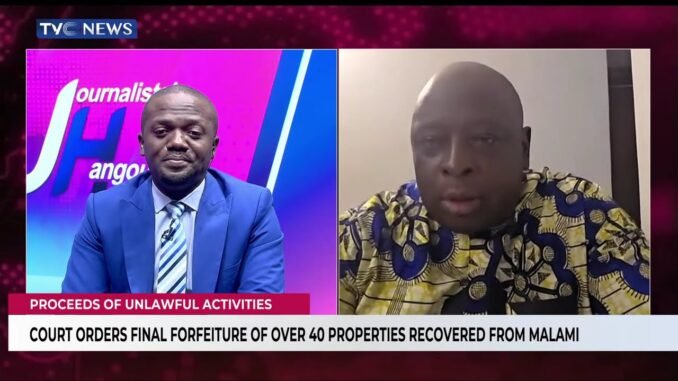

A Federal High Court in Abuja has ordered the permanent seizure of 48 properties linked to former Attorney-General of the Federation, Abubakar Malami — here’s the full breakdown of what was confiscated and why it matters for Nigeria’s anti-corruption fight.
—
In a landmark ruling that has sent shockwaves through Nigeria’s political establishment, the Federal High Court sitting in Abuja on Wednesday, July 15, ordered the final forfeiture of 48 properties* allegedly linked to *Abubakar Malami (SAN), the immediate past Attorney-General of the Federation (AGF) and Minister of Justice under former President Muhammadu Buhari.
This is not small talk, people. We are discussing 48 properties — the kind of real estate portfolio that would make a serious property developer jealous — allegedly acquired through means that the court has found sufficient reason to sanction.
—
Who Is Abubakar Malami?
For those who may need a quick refresher, Abubakar Malami served as Nigeria’s Attorney-General of the Federation and Minister of Justice* from 2015 to 2023 — a full eight years under the Buhari administration. As AGF, he was essentially the *chief law officer of the federation, the same person responsible for prosecuting corruption cases and upholding the rule of law in Nigeria. The irony of this situation is not lost on anyone.
—
What the Court Decided
The Federal High Court in Abuja delivered a ruling ordering the permanent confiscation* of the 48 properties tied to the former minister. This final forfeiture order means the properties now revert to the *Federal Government of Nigeria — no going back, no appeals on the forfeiture itself at this stage.
This ruling follows earlier interim forfeiture orders, meaning the court had been watching this matter closely before arriving at this decisive conclusion.
—
Why This Matter Is Significant for Nigerians
Let’s be honest — Nigerians have seen plenty of anti-corruption drama over the years. From EFCC raids to court orders that somehow never lead anywhere, many citizens have become understandably cynical. But this case carries a different kind of weight for several reasons:
– The accused held the highest legal office in the land. This wasn’t a local government chairman or a junior civil servant. This was the man who supervised anti-corruption prosecutions.
– 48 properties is not a small number. On a civil servant’s or even a minister’s legitimate salary, accumulating such a portfolio raises serious questions about the source of funds.
– It sends a message — or at least, it should — that no position is too powerful to shield anyone from accountability.
—
The Bigger Picture: Nigeria’s War Against Corruption
This ruling comes at a time when President Bola Tinubu’s administration has been making noise about economic reforms and financial discipline. Whether this forfeiture translates into real recovery of assets for the Nigerian people — funding schools, hospitals, or infrastructure — remains to be seen.
As Nigerians, we know too well that court orders and actual implementation can be two very different things. The properties have been ordered confiscated. The next question is: what happens to them now?
—
What Do You Think?
Should former public officials face criminal prosecution beyond asset forfeiture? Is the Nigerian judicial system doing enough to hold the powerful accountable? Drop your thoughts in the comments section below.
—
Stay with buzzUp9ja for updates as this story develops. Share this article with your network — Nigerians deserve to know where their resources went.
Be the first to comment