

A chilling story of personal sacrifice, iron will, and the fight against banditry in Nigeria’s Northwest
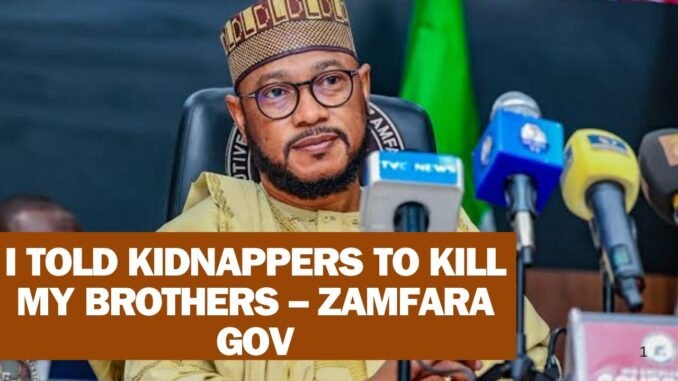
In a revelation that has left many Nigerians stunned, Zamfara State Governor Dauda Lawal has disclosed one of the most harrowing decisions of his life — refusing to pay a staggering N300 million ransom to kidnappers who abducted his own brothers back in 2019.
The governor, known for his tough stance against banditry and criminal elements in Zamfara, made this jaw-dropping confession publicly, stating plainly that he chose not to negotiate with criminals — even when the lives of his own flesh and blood hung in the balance.
“I Would Not Give Criminals a Single Kobo”
For most Nigerians, the thought of a family member being held captive by dangerous bandits is the stuff of nightmares. The pressure to “do anything” to bring them home safely is something every parent, sibling, or child understands deeply. But Governor Lawal made a calculated, painful, and deeply principled decision — he would not fund the criminal enterprise that was tearing his state apart.
Rather than quietly arranging payment the way many wealthy Nigerians have been known to do, he stood his ground. His message to the kidnappers was as direct as it was shocking: kill them if you want, but you will not see a kobo from me.
This is the kind of story that forces us to ask hard questions about how Nigeria tackles the kidnapping epidemic — particularly in the Northwest, where Zamfara has long been ground zero for bandit activity.
The Kidnapping Crisis in Zamfara: Understanding the Context
To truly appreciate the weight of the governor’s decision, you need to understand what Zamfara has been through. The state has suffered years of brutal bandit attacks — mass abductions, village raids, and killings that have displaced hundreds of thousands of people.
Zamfara has essentially become a symbol of Nigeria’s security crisis in the North. Bandits in the region operate sophisticated networks, and ransom payments — often running into tens or hundreds of millions of naira — have historically been their primary source of funding. Every ransom paid, security experts argue, is money that goes back into buying weapons, recruiting more foot soldiers, and sponsoring further attacks.
Governor Lawal clearly understood this equation.
A Decision No Man Should Have to Make
Let’s be honest — this was not an easy call. These were his brothers. Not political associates, not distant acquaintances. His own blood relatives, seized by armed criminals who clearly believed their high-profile family connection would guarantee a massive payout.
The emotional and psychological burden of such a decision is almost unimaginable. In Nigerian culture, where family ties run incredibly deep and the concept of “ẹbí” — kinship and communal responsibility — is sacred, choosing principle over family feels like a betrayal to many. Yet Lawal did it anyway.
Whether his brothers ultimately survived or what became of them following his refusal is a detail that adds even more weight to this story — one that Nigerians across the country are still processing.
What This Means for Nigeria’s Ransom Culture
Nigeria has a serious ransom problem. From the oil-rich South-South to the conflict-ridden Northwest, kidnapping for ransom has become an industry — one reportedly worth billions of naira annually.
Security analysts have long argued that the culture of paying ransoms, while understandable from a family’s perspective, is ultimately counterproductive. It incentivises more kidnappings, emboldens criminal networks, and makes every wealthy family, government official, and business owner a potential target.
Governor Lawal’s stance — whether you agree with it or not — sends a strong message: paying criminals does not make you safer. It makes everyone less safe.
Reactions From Nigerians
Since the revelation, Nigerians on social media have been sharply divided.
Many have praised the governor’s courage, calling him a man of principle who put the greater good above personal pain. “This man has shown what real leadership looks like,” one X (formerly Twitter) user wrote. “How many politicians would do this?”
Others, however, have been more critical — arguing that no political principle is worth a human life, especially that of a family member. “Easy to talk tough when you’re the one making the decision,” another commenter noted. “Those were real people with families.”
It is a debate that cuts to the heart of how Nigeria must confront its security crisis — and there are no easy answers.
The Bigger Picture: Ending the Banditry Business Model
What Governor Lawal’s story ultimately highlights is the urgent need for Nigeria to disrupt the financial model of banditry and kidnapping. This means:
– Stronger intelligence-led security operations that rescue victims without ransom payments
– Legal frameworks that criminalise ransom payments, as exists in several other countries
– Community engagement to cut off the local support networks that bandits rely on
– Economic investment in vulnerable communities across the Northwest to reduce recruitment into criminal gangs
The federal and state governments must work together to ensure that Nigerians — particularly those in conflict-affected zones — have genuine alternatives to the desperate survival strategies that have allowed banditry to thrive.
Final Thoughts
Governor Dauda Lawal’s story is not a comfortable one. It challenges us, provokes us, and forces us to sit with an incredibly difficult moral question: what would you do?
But beyond the personal drama, his account shines a light on a broader truth that Nigeria can no longer afford to ignore — the ransom economy is fuelling the insecurity crisis, and breaking that cycle may require sacrifices that none of us ever want to make.
Whether history will judge him as a hero or a cold pragmatist, one thing is certain: Dauda Lawal made a choice that most people would never dare to make. And he made it in one of the most dangerous security environments in the country.
That, at the very least, demands our attention.
What do you think about Governor Lawal’s decision? Should public officials refuse to pay ransoms even when family members are involved? Share your thoughts in the comments below.
Check buzzUp9ja for more headlines
Be the first to comment