
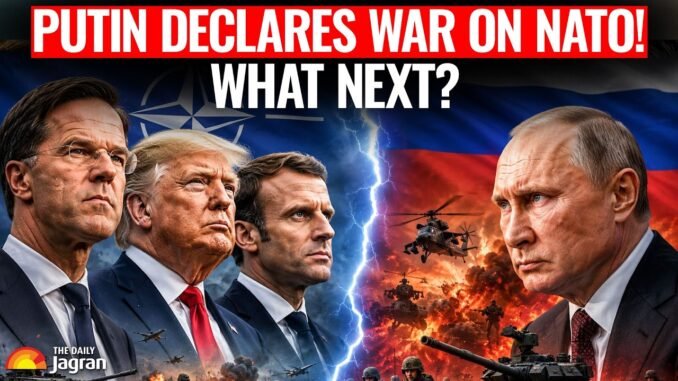

As Russia-Ukraine war escalates, global tension rises — and Nigeria must pay attention
—
The fear of a third World War is no longer just the stuff of Hollywood movies and end-times prophecy — it is becoming a real conversation in international circles. According to recent reports, Russian President Vladimir Putin may be preparing to launch a major new mobilisation of troops within the coming months, as Ukraine continues to intensify its attacks on Russian military and energy infrastructure.
Yes, you heard that right. Things are heating up again — and this time, the stakes could be higher than ever.
So, What Is Happening?
Russia’s military campaign in Ukraine, which began in February 2022, has dragged on far longer than Putin likely anticipated. Rather than a quick takeover, Moscow has found itself locked in a brutal, grinding war — and Ukraine is not backing down. In fact, Kyiv has been striking back hard, targeting Russian military positions and energy infrastructure in moves that have clearly rattled the Kremlin.
Now, intelligence sources and analysts are suggesting that Putin could be gearing up to call up a fresh wave of soldiers — a large-scale mobilisation that would signal a significant escalation in the conflict.
Why Should Nigerians Care?
Some of us might be wondering, “Na Russian and Ukrainian wahala — wetin concern us?” But e concern us well well, and here is why:
1. Oil Prices and Your Pocket
Russia is one of the world’s biggest oil and gas producers. Any major escalation in the war directly affects global oil prices. Nigeria, as an oil-dependent economy, feels the ripple effect — both as a producer and as a country that still imports refined petroleum products. Fuel prices at the pump, cost of transportation, and inflation are all connected to what happens in Eastern Europe.
2. Food Security
Both Russia and Ukraine are major exporters of wheat, fertiliser, and sunflower oil — commodities that many Nigerian food producers and importers rely on. Remember the bread price hikes? A lot of that had roots in the disruption of Ukrainian grain exports. Another round of escalation could mean more hardship on Nigerian tables.
3. The Naira and Global Markets
A wider conflict would send shockwaves through global financial markets, further weakening currencies like the Naira as investors flee to “safe haven” assets like the US dollar. That means your savings, your business costs, and your cost of living could all take another hit.
4. Nigerian Students and Diaspora Abroad
Thousands of Nigerians live, work, and study across Europe. Any expansion of the conflict — even through cyber warfare, economic sanctions, or NATO involvement — could directly affect their safety and livelihoods.
The Mobilisation Gist
Military analysts note that Russia has struggled with troop numbers throughout this war. A new mobilisation would likely involve conscripting hundreds of thousands of additional soldiers — a move that would be deeply unpopular domestically in Russia but one that Putin may feel is necessary to sustain his campaign.
Previous mobilisation attempts in 2022 caused significant panic within Russia, with many Russian men reportedly fleeing the country to avoid being drafted. A fresh round could trigger similar unrest — or worse, it could signal that Putin is prepared to go all in, regardless of the consequences.
Is World War 3 Really Coming?
Let us not fan unnecessary panic, but we also should not bury our heads in the sand. NATO countries have been increasingly involved in supporting Ukraine — supplying weapons, intelligence, and financial aid. Russia has repeatedly warned that such involvement risks direct confrontation with Western powers.
The nightmare scenario — a direct clash between Russia and NATO — would drag in nuclear-armed states and could spiral into something the world has not seen since 1945.
That said, most experts still believe such a full-scale global war remains unlikely. Diplomacy, deterrence, and the sheer mutual destruction that nuclear war would bring continue to act as guardrails.
What Can Nigeria Do?
Nigeria’s foreign policy has historically leaned on non-alignment and African solidarity. At the United Nations, Nigeria has walked a careful line on the Russia-Ukraine war. But as the economic consequences of prolonged conflict continue to bite, Abuja may need to be more vocal in calling for peace negotiations.
Beyond government, ordinary Nigerians can stay informed, diversify their sources of income where possible, and support policies that reduce the country’s vulnerability to global supply chain shocks — including faster investment in local food production and energy refining.
—
The Bottom Line
Whether or not a full mobilisation happens, the Russia-Ukraine war is far from over — and its effects on Nigeria are very real. From fuel prices to food costs, from the Naira’s value to the safety of Nigerians abroad, this is not a distant story. It is our story too.
Make una stay informed. The world na one big village — and what happens in Moscow or Kyiv does not stay there.
—
Stay connected for more global news decoded for the Nigerian reader.
For more information, check buzzUp9ja
Be the first to comment