
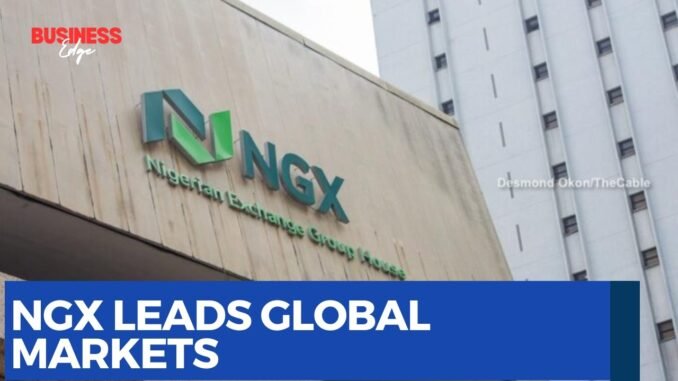

Big news from the world of global finance, and this one hits close to home — Nigeria’s capital market has just received a major shot in the arm.
S&P Dow Jones Indices (S&P DJI), one of the most respected financial index providers in the world, has placed Nigeria on its 2027 Country Classification Watchlist* for a possible upgrade from a **Standalone Market** to a *Frontier Market status. If you’ve been following developments at the Nigerian Exchange Group (NGX), you already know this is no small thing.
So, What Does This Actually Mean?
Think of it this way — in the world of global investing, markets are ranked like leagues. You have your Developed Markets (the Premier League, if you will), Emerging Markets (Championship level), and then Frontier Markets. Below all of that sits the Standalone Market category, which is essentially where Nigeria currently stands.
Being placed on a watchlist for a Frontier Market upgrade means that international investors and institutions are beginning to take a serious, fresh look at Nigeria. S&P DJI doesn’t hand out these recognitions like jollof rice at a party — this is earned through demonstrated improvements in market accessibility, liquidity, and overall investor experience.
Why Now? What Changed?
Nigeria’s capital market has been going through some serious reforms in recent times. From improvements in foreign exchange accessibility to upgraded trading infrastructure at the NGX, the groundwork has clearly been laid. International investors who previously hesitated due to FX repatriation concerns are now finding a more welcoming environment.
The Central Bank of Nigeria’s moves to liberalise the foreign exchange market have played a significant role in restoring confidence. When foreign portfolio investors know they can bring money in — and take their returns out without wahala — they’re far more likely to engage.
What a Frontier Market Tag Could Mean for Nigerians
This potential upgrade carries real-world implications for everyday Nigerians and the broader economy:
– More foreign investment inflows: Frontier Market status means Nigeria gets included in more global investment indices, attracting institutional money from pension funds, hedge funds, and asset managers worldwide.
– Boost for listed companies: More investor interest means more liquidity for companies listed on the NGX, potentially driving up stock valuations.
– Stronger naira support: Increased foreign portfolio investment means more dollar inflows, which could help ease pressure on the naira.
– Job creation and economic growth: A more vibrant capital market supports business expansion, which ultimately translates to jobs and economic activity on the ground.
The Road to 2027
Being placed on the watchlist doesn’t mean the upgrade is automatic — Nigeria will need to continue demonstrating progress and meeting S&P DJI’s criteria over the coming period. The 2027 timeline gives regulators, the NGX, and policymakers a clear window to consolidate gains and address any remaining concerns.
The Securities and Exchange Commission (SEC) and NGX leadership will no doubt be under pressure — the good kind — to keep the momentum going. Reforms must be sustained, transparency must be prioritised, and the ease of doing business in Nigeria’s capital market must keep improving.
The Bottom Line
This is the kind of recognition that doesn’t just look good on paper — it has the potential to reshape Nigeria’s economic trajectory. From the trader on the floor of the NGX to the average Nigerian with a stock portfolio on their phone, a Frontier Market upgrade could unlock a new era of growth and opportunity.
As Nigerians, we’ve heard plenty of promising news that didn’t quite deliver. But this one comes backed by one of the world’s most credible financial institutions. The work now is to make sure we don’t fumble the opportunity.
Watch this space — 2027 might just be a landmark year for Nigerian finance.
For more information, check buzzUp9ja
Be the first to comment