
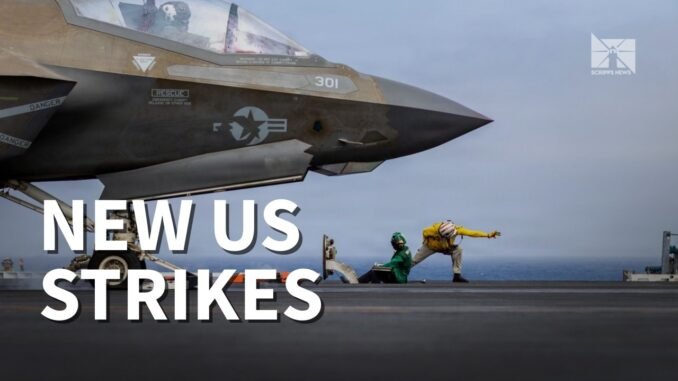

Summary: The United States military has launched retaliatory strikes against Iran following attacks on commercial vessels. Here is everything Nigerians need to know about this developing global crisis.
The United States military has launched a series of strikes against Iran, according to an announcement made by the U.S. Central Command on Tuesday. The military operation was carried out as a direct response to Iranian attacks on three commercial vessels — a move that has sent shockwaves across the international community and is already raising concerns about global oil prices and economic stability.
What Exactly Happened?
According to U.S. Central Command, American forces carried out coordinated military strikes targeting Iranian positions. The strikes were described as retaliatory in nature, coming after Iran allegedly launched attacks on commercial ships — the kind of vessels that carry goods, including crude oil, across some of the world’s busiest waterways.
For context, these waters — particularly around the Persian Gulf and the Red Sea — are critical shipping routes that affect global trade, including the movement of petroleum products that Nigeria and other African nations depend on.
Why Should Nigerians Care?
As a major oil-producing nation, Nigeria understands better than most how conflict in the Middle East can shake global energy markets. When tension rises in that region, crude oil prices tend to spike — and that cuts both ways for Nigeria.
On one hand, higher oil prices could mean more revenue for the Nigerian government. On the other hand, increased fuel costs and supply chain disruptions could worsen the already difficult economic conditions facing everyday Nigerians, from Lagos to Kano to Port Harcourt.
In a country where the naira is already under serious pressure and the cost of living continues to climb, any further disruption to global trade could hit Nigerian households hard.
The Bigger Picture
This latest escalation between Washington and Tehran is not happening in isolation. It is part of a broader pattern of tensions that has been building in the Middle East, with various factions launching attacks on shipping lanes that are vital to global commerce.
The United States has made it clear that it will not tolerate threats to freedom of navigation on international waters. Iran, for its part, has consistently pushed back against what it describes as American aggression in the region.
What Happens Next?
As this situation continues to develop, the international community — including the African Union and Nigeria’s foreign policy establishment — will be watching closely. Diplomatic channels are being explored, but with military action already underway, de-escalation will require serious effort from all parties involved.
For now, Nigerians are advised to stay informed as this story develops. The ripple effects of conflict thousands of kilometres away can — and often do — reach our shores in very real and tangible ways.
Stay with us for updates as this story continues to unfold.
Get more headlines on buzzUp9ja
Be the first to comment