

The Middle East is once again sitting on a keg of gunpowder, and this time, the fuse has been lit from both ends.
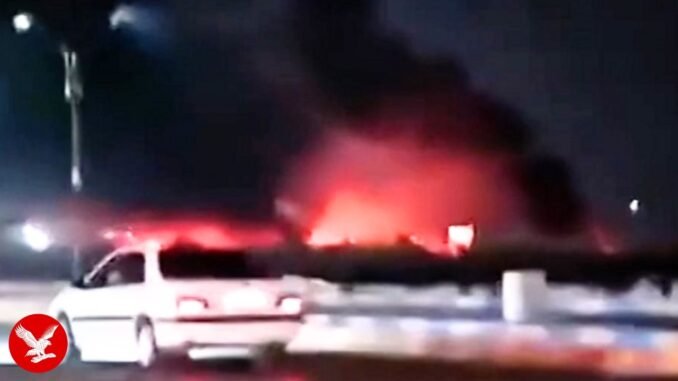
Iran has boldly announced that it launched coordinated attacks on no fewer than 85 United States military installations spread across Bahrain and Kuwait — and this did not happen in a vacuum. The move came as a direct response after the United States Central Command (CENTCOM) ordered fresh strikes on commercial ships navigating the strategically critical Strait of Hormuz.
How Did We Get Here?
For those who may be wondering what the Strait of Hormuz has to do with anything — think of it as one of the world’s most important “checkpoints” for crude oil. Nearly 20% of the world’s oil supply passes through this narrow waterway daily. When tension flares up there, the ripple effects are felt everywhere — including at petrol stations in Lagos, Abuja, and Port Harcourt.
The latest round of hostilities began when American forces under CENTCOM carried out strikes on commercial vessels operating in the Strait, a move Iran described as an act of aggression that demanded an immediate and forceful response.
Tehran wasted no time.
Iran’s Response: Swift and Sweeping
Iranian military officials confirmed that their forces targeted 85 US military sites across two of America’s key Gulf allies — Bahrain* and *Kuwait. Both countries host significant US military presence in the region, making them strategic targets in Iran’s calculation.
This is not a small-scale skirmish. Attacking 85 locations simultaneously — if confirmed — would represent one of the most significant Iranian military operations ever directed at American interests in the Gulf region.
What the United States Is Saying
CENTCOM has been tight-lipped about the full extent of what is happening on the ground. As is often the case in military conflicts of this nature, both sides are telling different versions of the same story, and the truth — as Nigerians say — “dey for middle.”
What is clear, however, is that the situation has escalated rapidly, moving from diplomatic posturing into what appears to be open military confrontation.
Why Should Nigerians Care?
Some may ask, “This na their wahala, why e concern us?” But here is the reality:
– Oil prices will spike. Nigeria, despite being a major oil producer, still imports refined petroleum products. A disruption in the Strait of Hormuz directly affects global oil supply chains and pushes prices up.
– Global economy impact. When the world’s biggest economies are rattling sabres, financial markets shake, and currencies in developing nations — including the Naira — often bear the brunt.
– Regional stability matters. Nigeria has interests, citizens, and trade ties across the Middle East. Any full-scale conflict affects Nigerians living and working in the Gulf region.
The Bigger Picture
This confrontation did not begin today. The United States and Iran have been locked in a dangerous dance of threats, sanctions, and military posturing for decades. What has changed under the current American administration is the willingness to move from threats to action — and Iran appears equally determined not to blink.
Whether this escalates into a full-blown conflict or both sides find a way to step back from the edge remains to be seen. Diplomats, world leaders, and international organisations are watching with deep concern.
One thing is certain — the Strait of Hormuz, that narrow strip of water thousands of kilometres away from Nigeria’s shores, has the power to reshape our daily lives whether we like it or not.
Stay with us for updates as this story continues to develop. Drop your thoughts in the comments — do you think this crisis will escalate further, or will cooler heads prevail?
Discover more updates on buzzUp9ja
Be the first to comment