
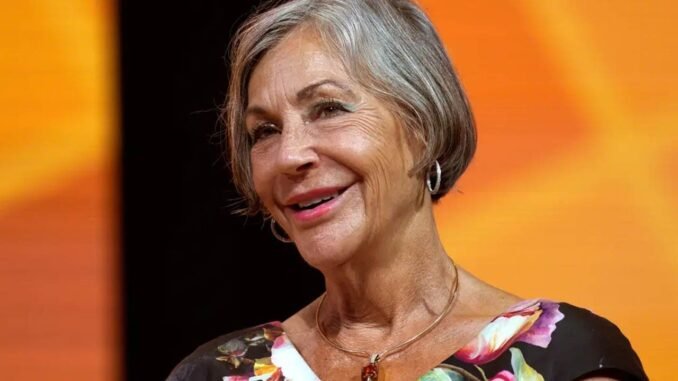

Summary: Alice Walton, Walmart heiress, retains her position as the world’s richest woman with $134 billion. Find out who else made Forbes’ latest billionaire women ranking and the inspiring self-made billionaires on the list.
For the second year running, Alice Walton has secured her position as the world’s wealthiest woman, according to Forbes’ latest World’s Billionaires list. The Walmart heiress now boasts an estimated fortune of $134 billion, a figure that would make anyone’s head spin.
Walton, whose father Sam Walton founded the retail empire Walmart, first claimed the coveted title in September 2024 after surpassing France’s Francoise Bettencourt Meyers. The L’Oréal heiress now holds the number two position with a still-impressive $100 billion to her name.
The Top Women Shaping Global Wealth
Coming in third is Julia Koch, widow of American industrialist David Koch, whose wealth stands at $81.2 billion. The top five is rounded out by Chile’s Iris Fontbona with $52.6 billion and Jacqueline Mars, heiress to the Mars Inc. confectionery fortune, with $49.1 billion.
While these numbers might seem astronomical to the average Nigerian – where many hustle daily to make ends meet – they represent the reality of global wealth concentration. What’s particularly striking is how few women feature among the ultra-wealthy elite.
Women Still Underrepresented Among Billionaires
Of the 3,428 billionaires worldwide, only 481 are women – representing just 14 percent of the total. This is a marginal increase from the previous year’s 13.4 percent (406 women). The numbers tell a clear story: despite progress, massive wealth inequality persists along gender lines.
Self-Made Success Stories
Among the top 10 richest women globally, only one built her fortune from scratch: Swiss shipping entrepreneur Rafaela Aponte-Diamant, whose wealth is valued at $44.5 billion. Overall, just 122 of the 481 female billionaires are self-made – up slightly from 113 the previous year.
This reality resonates with many Nigerians who understand that generational wealth often creates advantages that self-made entrepreneurs must work exponentially harder to achieve.
Celebrity Billionaires Making Waves
The list also features some familiar faces from the entertainment world. Music icon Beyoncé made her billionaire debut with an estimated net worth of $1 billion. She joins fellow superstar Rihanna, whose Fenty empire has earned her approximately $1 billion.
Fashion mogul Taylor Swift appears higher on the list with around $2 billion, built largely through her music catalogue and record-breaking tours. Sara Blakely, founder of Spanx, rounds out the celebrity billionaires with $1.4 billion.
For Nigerian women entrepreneurs grinding in Lagos, Abuja, or Port Harcourt, these success stories – particularly the self-made ones – offer both inspiration and a reminder that building wealth from scratch is possible, even if the journey is challenging.
The Youngest Self-Made Female Billionaire
At just 29 years old, Luana Lopes Lara has become the youngest self-made female billionaire after co-founding prediction market firm Kalshi. She surpassed 31-year-old Lucy Guo, the entrepreneur behind Scale AI, to claim this distinction.
Their achievements prove that age is no barrier to extraordinary success – a message that resonates strongly with Nigeria’s young, ambitious population.
What This Means for African Women
While no Nigerian women feature among the world’s top female billionaires, the country boasts several successful businesswomen making their mark. From Folorunso Alakija to Hajia Bola Shagaya, Nigerian women continue to break barriers in business, even if they haven’t yet reached the stratospheric wealth levels of their global counterparts.
The Forbes list serves as both inspiration and a challenge: to create systems and opportunities that allow more women – particularly in developing economies like Nigeria – to build generational wealth and economic influence.
As we celebrate these achievements, the question remains: when will we see more African women, and specifically Nigerian women, joining the ranks of the world’s wealthiest? With the resilience, creativity, and entrepreneurial spirit Nigerian women display daily, that day may be closer than we think.
What are your thoughts on the wealth gap among female billionaires? Share your views in the comments below.
For more details, check buzzUp9ja
Be the first to comment