
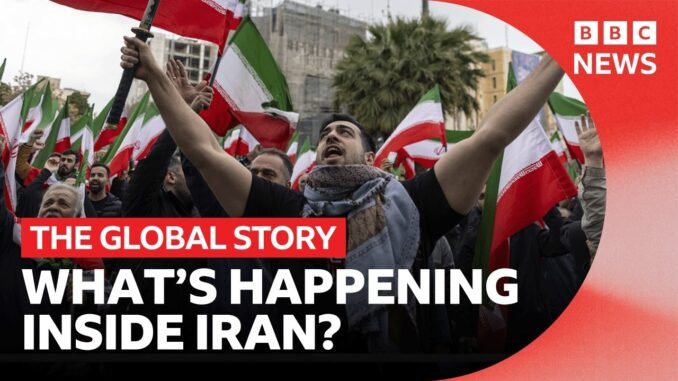

As tensions rise in the Middle East, ordinary Iranians describe a capital city gripped by fear, smoke, and an eerie silence
Life in Iran has become increasingly difficult and uncertain as the United States and Israel continue their military operations against the country. Residents of Tehran, the nation’s capital, paint a grim picture of daily existence marked by fear, disruption, and the constant threat of airstrikes.
The situation has grown more complicated following the recent death of Ayatollah Ali Khamenei, Iran’s supreme leader, during the early stages of the attacks. His son, Mojtaba Khamenei, has now been appointed to replace him—a development that has sparked mixed reactions among the Iranian population.
Smoke, Fire, and Empty Streets
Over the weekend, Israeli airstrikes targeted several oil depots across Tehran, triggering massive explosions and fires that blanketed the city in thick black smoke. Witnesses describe these attacks as some of the heaviest bombardments since the conflict began late last month.
On Monday, residents reported unusually quiet streets. Many Tehranis have either fled the city or chosen to remain indoors, afraid of becoming casualties in the next wave of strikes.
“The city is almost emptied out,” said a resident who gave his name as Amir. “Shops are open hoping against hope for customers. But many have left Tehran. It’s mostly silence unless there’s an attack.”
Although recent rainfall helped clear some of the smoke from the burning oil facilities, the smell of fuel and burning metal still hangs heavy in the air. One woman described the atmosphere on social media: “Tehran smells of smoke, of metal and fuel and a city trapped under a giant glass dome. The streets are emptier than ever, but the city isn’t calm.”
Daily Life Under Siege
Getting information from inside Iran has become increasingly challenging. The government has imposed strict internet restrictions, cutting off many residents from the outside world. However, some Iranians have managed to briefly connect using satellite internet and virtual private networks (VPNs) to share their experiences.
Reports from those still in the capital reveal a city struggling to maintain normal routines. Bakeries have long queues as people stock up on essentials. Checkpoints and security patrols have multiplied across Tehran, with paramilitary units, plainclothes officers, and anti-riot forces deployed at strategic locations.
The increased security presence reflects the government’s concern about both external attacks and potential internal unrest.
A Controversial New Leader
The appointment of Mojtaba Khamenei as Iran’s new supreme leader has added another layer of uncertainty to an already volatile situation. The decision, made by Iran’s Assembly of Experts—a body of senior clerics responsible for selecting the country’s highest authority—has not been universally welcomed.
Many Iranians who spoke anonymously expressed shock and concern about the succession. Mojtaba Khamenei is widely seen as a hardline figure, and critics worry he will continue or even intensify his father’s strict policies and confrontational approach to the West.
“Most of us feel entrapped between an oppressive regime and warmonger nutters in Israel and the U.S.,” Amir said. “The hardliners have succeeded in putting their own man in power at a time when civil society has little influence.”
Despite this criticism, the new leader still enjoys support among Iran’s conservative base. Thousands gathered in several cities to celebrate his appointment, demonstrating that the government retains significant backing among certain segments of the population.
The Human Cost
The war has already exacted a terrible price. Iranian officials report that more than 1,000 people have been killed since the US and Israel began their bombing campaign on February 28.
Among the most tragic incidents was a missile strike on a school in the southern city of Minab, which killed over 160 schoolgirls. Several media investigations have suggested that an American weapon may have been responsible, though US President Donald Trump has blamed Iran for the deaths.
Caught Between Hope and Fear
The situation has created a complex emotional landscape for Iranians. While many fear further destruction, some see the conflict as a potential catalyst for change.
“Everyone in Iran rejoiced over Khamenei’s death, especially families whose children were killed in protests,” one woman said, expressing hope that the conflict might weaken the Islamic Republic and create space for political reform.
However, analysts warn of a potentially devastating outcome: a prolonged war that destroys infrastructure and claims countless lives while leaving the current government still in power.
What This Means for the Region
The escalating conflict in Iran has implications far beyond the country’s borders. As a major oil producer and influential regional power, instability in Iran could affect global energy markets and security across the Middle East.
For ordinary Iranians, though, the immediate concern is survival. As one resident put it, the city feels like it’s “trapped under a giant glass dome”—isolated, vulnerable, and waiting anxiously to see what comes next.
As the world watches this crisis unfold, the voices of everyday Iranians remind us that behind every headline are real people facing impossible choices in extraordinarily difficult circumstances.
Check buzzUp9ja for more updates
Be the first to comment