
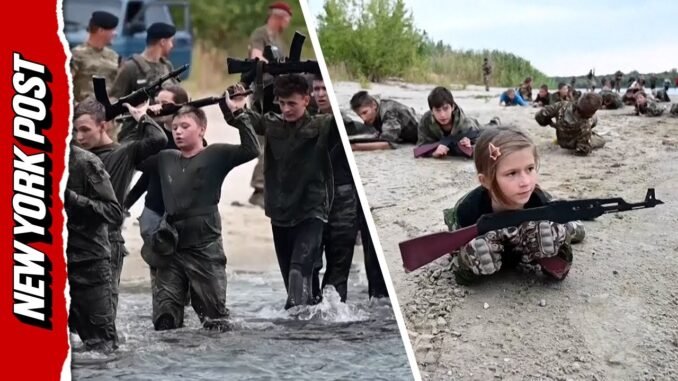

Russia has stepped up the amount of required military training for schoolchildren between ages 11 and 17. According to reports, the courses now include lessons on drones, field exercises, and firearm training.
For context, that’s roughly the JSS1 to SS3 age range in Nigeria—kids who, here at home, are usually focused on BECE, WAEC prep, and extracurriculars like sports, coding clubs, and debate. The Russian update raises big questions globally, and Nigerians are already drawing comparisons with our own approach to civic and security education.
What’s changing in Russia
– Increased volume of required military instruction for ages 11–17
– New modules reportedly cover drones, field exercises, and firearm training
How does this compare with Nigeria?
– Nigerian schools typically emphasise civic education, first aid through clubs, and community service—not formal weapons training.
– Tech-focused activities (robotics, coding, drone mapping for agriculture) are growing in some schools and hubs, but with a civilian, skills-first orientation.
– Security awareness in Nigeria often leans toward safety, conflict resolution, and community policing partnerships, rather than military drills for minors.
The big questions Nigerians are asking
– Childhood and safety: Should teenagers be exposed to firearm training in school, even under supervision?
– Education priorities: Where do STEM, arts, entrepreneurship, and digital skills fit when military-style training is on the timetable?
– Mental health and wellbeing: What’s the impact of militarised schooling on young minds?
– Drones and dual-use tech: How do we teach cutting-edge technology responsibly?
What Nigeria can prioritise instead
Without copying Russia’s playbook, Nigeria can still strengthen youth preparedness and skills in ways that fit our realities:
– Tech for development: Encourage drone literacy for agriculture, disaster mapping, and environmental monitoring—no weapons context.
– Safety and resilience: Scale first aid, emergency response, and disaster preparedness in schools and NYSC.
– Digital citizenship: Teach cybersecurity, online safety, misinformation spotting, and privacy from JSS upwards.
– Peace education: Build conflict resolution, mediation, and teamwork into civic education and community projects.
– Pathways to service: Promote cadet-style discipline through sports, scouts, Man O’ War, and volunteer programmes—without firearms.
Why this matters to Nigerians
In an era where global trends travel fast, Russia’s move is a reminder that education systems can shift quickly—sometimes toward militarisation. For Nigeria, the question isn’t just “Should we follow?” It’s “What kind of future are we training our children for?” A future-ready Nigerian curriculum can blend discipline, patriotism, and resilience with creativity, tech fluency, and peace-building—keeping schools as safe spaces for growth, not barracks.
Final thought: The conversation belongs to all of us—parents, teachers, students, policymakers, and community leaders. What would you like to see added to Nigerian classrooms to build confident, capable, and compassionate young citizens?
Get more headlines on buzzUp9ja
Be the first to comment