

Summary: A teenage herder faces arrest in Plateau State following farmland destruction in Barkin Ladi LGA, reigniting concerns about farmer-herder conflicts in Nigeria’s Middle Belt.
The age-old tension between farmers and herders in Nigeria’s Middle Belt has claimed another victim – this time, a 15-year-old boy who now finds himself in the custody of security operatives.
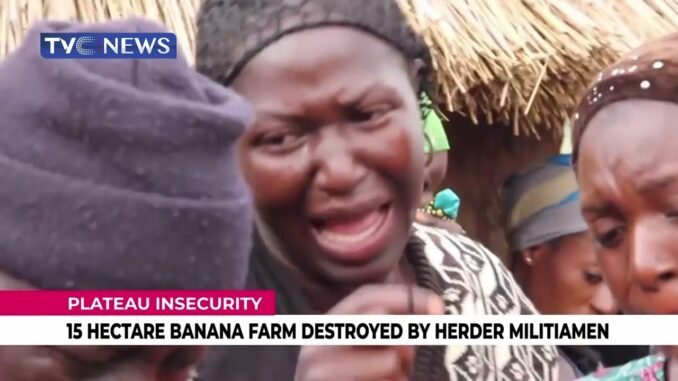
The teenager was arrested in Barkin Ladi Local Government Area of Plateau State after his cattle allegedly destroyed a farmland, according to reports reaching security analyst Zagazola Makama.
Another Chapter in a Familiar Story
For those living in Plateau State and across Nigeria’s Middle Belt, this incident represents yet another flashpoint in the ongoing farmer-herder crisis that has plagued the region for years. Barkin Ladi, in particular, has witnessed numerous clashes between farming communities and herders, often resulting in loss of lives, property destruction, and deep-seated communal mistrust.
The arrest of a minor in this case raises important questions about how we address these conflicts. While the destruction of farmland represents a serious economic loss to farmers who depend on their harvests for survival, the involvement of a teenager also highlights the complex realities of pastoral life in Nigeria.
The Broader Context
Farmer-herder conflicts in Plateau State have become increasingly common, driven by factors including:
– Climate change forcing herders to migrate further south in search of grazing land
– Population growth reducing available land for both farming and grazing
– Breakdown of traditional conflict resolution mechanisms
– Competition for increasingly scarce resources
For farmers, their land represents their livelihood, their inheritance, and their future. A destroyed farm means lost income, food insecurity, and months of wasted labor. For herders, their cattle are equally precious – representing wealth, tradition, and survival in an increasingly difficult economic landscape.
What Happens Next?
The arrest of the young herder will likely follow standard legal procedures, though his age may influence how the case is handled. Nigerian law provides special protections for minors, even when they’re accused of criminal activities.
However, beyond this individual case lies a larger question: How do we move forward as a nation to address these recurring conflicts?
The Way Forward
Experts have long called for comprehensive solutions including:
– Establishment of grazing reserves and cattle routes
– Revitalization of traditional conflict resolution methods
– Investment in modern ranching systems
– Strengthening community dialogue and trust-building initiatives
– Youth engagement programs that provide alternatives to both farming and herding
Until systemic solutions are implemented, incidents like this one in Barkin Ladi will continue to occur, leaving communities divided and young people like this 15-year-old caught in cycles of conflict not entirely of their making.
As Nigerians, we must ask ourselves: Is arresting teenage herders truly solving the problem, or are we merely treating the symptoms while the disease continues to spread?
The farmland may be destroyed, but what’s also being destroyed – slowly but surely – is the fabric of communal harmony that once characterized these regions. And that, perhaps, is the greatest loss of all.
What are your thoughts on farmer-herder conflicts in Nigeria? How can we better protect both farmers’ livelihoods and herders’ rights? Share your views in the comments below.
For more information, check buzzUp9ja
Be the first to comment