

Summary: Sokoto State Governor Ahmed Aliyu reveals shocking statistics linking drug abuse to insecurity, calling for urgent intervention to address the menace affecting youth and communities.
The Governor of Sokoto State, Ahmed Aliyu, has made a startling revelation about the root cause of insecurity plaguing the northwestern state. Speaking at a public lecture on Thursday, the governor disclosed that drug and substance abuse accounts for approximately 80 per cent of security challenges facing Sokoto State.
This alarming statistic sheds new light on the multifaceted nature of Nigeria’s security crisis, particularly in the Northwest region where banditry, kidnapping, and violent crimes have disrupted lives and livelihoods.
The Hidden Enemy: Substance Abuse and Crime
Governor Aliyu’s statement highlights a critical but often overlooked dimension of Nigeria’s security challenges. While discussions around insecurity typically focus on poverty, unemployment, and ethnic tensions, the role of drug abuse as a catalyst for criminal behavior deserves equal attention.
The connection between substance abuse and crime is well-documented globally. When young people fall prey to drug addiction, they often engage in criminal activities to fund their habits or commit violent acts while under the influence of these substances.
A Wake-Up Call for Sokoto and Beyond
For Sokoto State residents, this revelation is both concerning and enlightening. It means that addressing insecurity requires more than just military intervention—it demands a comprehensive approach that includes drug prevention, rehabilitation, and youth empowerment programs.
The governor’s statement also raises important questions:
– How did drug abuse become so widespread in Sokoto State?
– What types of substances are most commonly abused?
– Are there sufficient rehabilitation facilities for addicts?
– What preventive measures are being put in place to protect vulnerable youth?
The Broader Nigerian Context
Sokoto State’s situation mirrors a growing national crisis. From Lagos to Kano, from Port Harcourt to Abuja, drug abuse has become a silent epidemic destroying the lives of Nigerian youth. Substances like tramadol, codeine, cannabis, and other illicit drugs have found their way into communities, schools, and even rural areas.
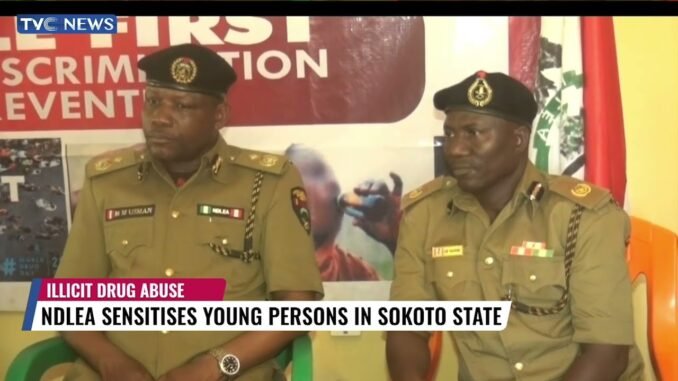
The National Drug Law Enforcement Agency (NDLEA) has repeatedly warned about the scale of drug abuse in Nigeria, with millions of Nigerians, particularly young people, affected by substance addiction.
The Path Forward
Governor Aliyu’s acknowledgment of this problem is a crucial first step. However, words must translate into concrete action. Stakeholders are calling for:
1. Increased awareness campaigns in schools, communities, and religious centers
2. Establishment of rehabilitation centers across the state
3. Stricter enforcement against drug trafficking and peddling
4. Youth empowerment programs that provide alternatives to drug abuse
5. Collaboration between government, religious leaders, traditional rulers, and civil society organizations
Community Responsibility
While government intervention is essential, addressing drug abuse requires collective action. Parents must be vigilant about their children’s associations and behavior. Religious and community leaders should speak openly about the dangers of substance abuse. Schools must incorporate drug education into their curricula.
Conclusion
Governor Ahmed Aliyu’s revelation about the link between drug abuse and insecurity in Sokoto State is a sobering reminder that Nigeria’s security challenges are complex and interconnected. As the state government develops strategies to combat this menace, the involvement of every stakeholder—from parents to security agencies—will be crucial in reclaiming communities from the grip of drugs and violence.
The fight against insecurity in Sokoto and across Nigeria must include a determined war against drug abuse. Only through this holistic approach can we hope to build safer, more prosperous communities for current and future generations.
What are your thoughts on the connection between drug abuse and insecurity? Share your views and experiences in the comments below.
For more information, check buzzUp9ja
Be the first to comment