
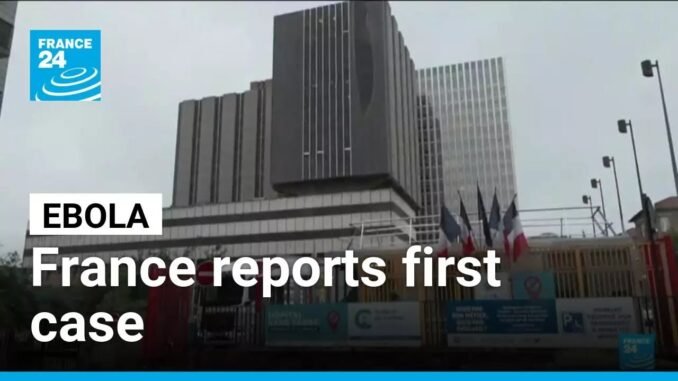

France has confirmed its first case of Ebola virus on European soil, marking a significant development in the ongoing outbreak that has ravaged parts of Central Africa. The infected individual, a medical doctor who recently returned from the Democratic Republic of Congo (DRC), tested positive for the deadly virus on Wednesday, June 24.
What This Means for Global Health Security
The confirmation of this case outside African borders has raised fresh concerns about the potential spread of Ebola beyond the continent. Health authorities in France immediately activated emergency protocols to contain any possible transmission and trace all contacts of the affected doctor.
The medical professional had been working in DRC, where health workers have been battling one of the most severe Ebola outbreaks in recent history. Despite rigorous screening measures at international borders, this case demonstrates the ongoing challenge of preventing the cross-border movement of infectious diseases.
The DRC Outbreak Context
The Democratic Republic of Congo has been grappling with a major Ebola epidemic that has claimed numerous lives and stretched the country’s healthcare system to its limits. Healthcare workers, including international volunteers and doctors, have been at the forefront of the response efforts, often putting their own lives at risk.
This latest development serves as a stark reminder of the sacrifices medical professionals make in combating deadly diseases in conflict-affected and resource-limited settings.
Implications for Nigeria and West Africa
For Nigerians, this news carries particular significance. Our country successfully contained an Ebola outbreak in 2014 through swift action, contact tracing, and public cooperation. That experience demonstrated that with proper preparation and response mechanisms, even resource-constrained nations can effectively manage infectious disease threats.
Health experts are urging West African nations, including Nigeria, to remain vigilant and ensure that screening protocols at airports and borders remain robust. The Nigeria Centre for Disease Control (NCDC) has consistently maintained surveillance systems developed during previous outbreaks.
What Nigerians Should Know
While there is no immediate cause for alarm, this case underscores several important points:
– Screening works but isn’t foolproof: Despite exit and entry screening, some cases may slip through, especially during incubation periods
– Healthcare workers face high risk: Medical professionals treating Ebola patients require extensive protective equipment and training
– Global connectivity means local outbreaks can become international concerns: In our interconnected world, a disease outbreak anywhere is a potential threat everywhere
Staying Prepared
Nigerian health authorities continue to monitor the situation closely. The country’s experience in 2014 has left us better prepared, with trained rapid response teams and improved laboratory capacity for detecting hemorrhagic fevers.
Citizens are advised to:
– Stay informed through official health channels
– Report any unusual symptoms after international travel
– Support healthcare workers and infection prevention measures
– Avoid spreading unverified information that could cause unnecessary panic
As the situation in France develops, international health organizations will be watching closely to ensure proper containment measures are implemented and maintained.
—
This is a developing story. Stay tuned on buzzUp9ja to reliable news sources for updates.
Be the first to comment