
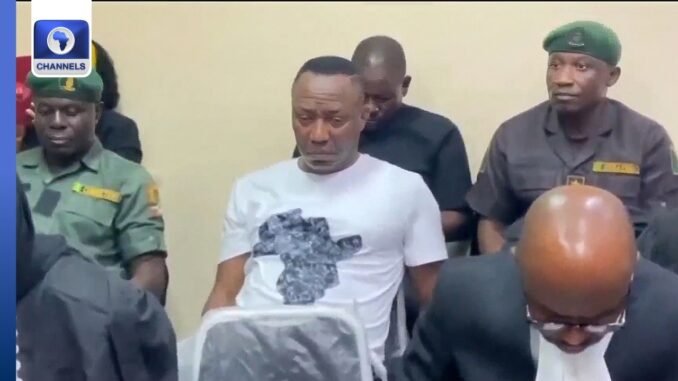

Summary: The DSS has distanced itself from Omoyele Sowore’s detention at Kuje Custodial Centre, stating that the court, not the agency, ordered his remand. Get the full details of this clarification.
The Department of State Services (DSS) has made it clear that it had no hand in sending activist and publisher Omoyele Sowore to Kuje Custodial Centre. The security agency stated on Wednesday, June 24, that Sowore’s remand was strictly a court order, not a decision made by the DSS.
DSS Sets the Record Straight
In what appears to be a move to clear its name from public criticism, the DSS emphasized that it was merely following judicial directives in the matter involving the convener of the #RevolutionNow movement and founder of Sahara Reporters.
The clarification comes amid growing concerns from Nigerians about the treatment of activists and government critics in the country. Many citizens have been vocal on social media, questioning the circumstances surrounding Sowore’s detention and the role of security agencies in such matters.
Understanding the Distinction
The DSS’s statement highlights an important distinction in Nigeria’s justice system: the difference between arrest by security agencies and remand orders issued by the courts. While security agencies like the DSS, police, or EFCC may arrest and investigate suspects, only a court of law has the authority to order that someone be remanded in a custodial centre.
This clarification suggests that after Sowore’s arrest and investigation by the DSS, it was a magistrate or judge who determined that he should be kept at Kuje Custodial Centre pending further legal proceedings.
The Bigger Picture
For many Nigerians, this development raises questions about accountability and transparency in how activists and critics are treated by both security agencies and the judiciary. The case of Omoyele Sowore has become a flashpoint in discussions about freedom of expression and the right to peaceful protest in Nigeria.
As this matter continues to unfold, Nigerians will be watching closely to see how the courts handle the case and whether the distinction drawn by the DSS holds up under public scrutiny.
The situation serves as a reminder of the complex relationship between security agencies, the courts, and citizens’ rights in Nigeria’s democratic system.
Stay tuned on buzzUp9ja for more updates
Be the first to comment