
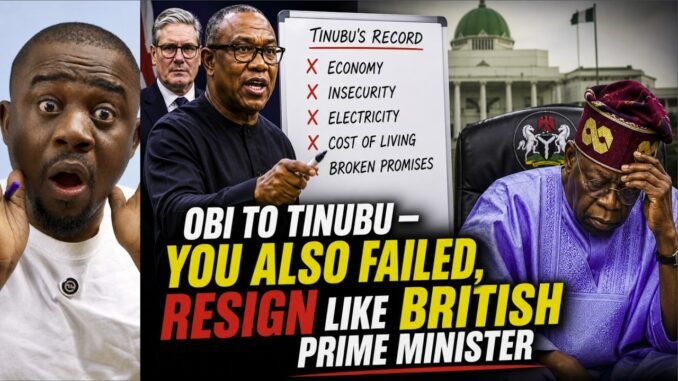

Summary: Peter Obi demands President Tinubu’s resignation, drawing parallels with UK PM Keir Starmer’s exit. The former Labour Party candidate says Tinubu has failed on all campaign promises amid Nigeria’s worsening economy.
The political temperature in Nigeria has risen significantly as former presidential candidate Peter Obi has issued a bold call for President Bola Ahmed Tinubu to step down from office, citing total failure to deliver on campaign promises.
Drawing Parallels with UK Leadership
Obi’s demand comes on the heels of UK Prime Minister Keir Starmer’s resignation announcement this morning, which was prompted by Britain’s deteriorating economic situation. The former Anambra State Governor argues that if a leader in a developed nation like the United Kingdom can take responsibility for economic failures by resigning, Nigerian leadership should demonstrate similar accountability.
“If Prime Minister Starmer can honourably resign over the UK’s economic challenges, why should President Tinubu continue to preside over Nigeria’s worse economic crisis?” Obi reportedly stated.
The Weight of Broken Promises
Since assuming office, President Tinubu’s administration has faced mounting criticism from various quarters. The removal of fuel subsidy, the floating of the naira, and other economic policies have led to unprecedented hardship for ordinary Nigerians.
Peter Obi, who ran on the Labour Party platform during the 2023 presidential election, has consistently positioned himself as the voice of the suffering masses. His call for Tinubu’s resignation reflects the growing frustration among millions of Nigerians who are grappling with:
– Skyrocketing inflation rates that have pushed basic commodities beyond the reach of average citizens
– Fuel prices that have more than tripled, crippling transportation and businesses
– Naira devaluation that has eroded purchasing power
– Widespread insecurity across multiple regions
– Massive unemployment, particularly among youth
A Question of Accountability
Obi’s statement raises fundamental questions about leadership accountability in Nigeria. While resignation is a common practice in established democracies when leaders fail to meet expectations, it remains relatively rare in Nigerian political culture, where leaders often cling to power despite public dissatisfaction.
The former presidential candidate has been vocal about what he describes as the “complete failure” of the current administration to address the concerns of everyday Nigerians. From market women struggling to afford basic ingredients to young graduates without job prospects, the economic pain is palpable across the nation.
The Political Implications
This call for resignation is likely to intensify the already charged political atmosphere in Nigeria. Obi’s supporters, particularly the “Obidient” movement that gained significant traction during the last election, may see this as validation of their concerns about the current administration.
However, analysts note that resignation calls, while dramatic, rarely result in actual departures in Nigerian politics. The ruling All Progressives Congress (APC) has consistently defended Tinubu’s policies as necessary reforms that will yield long-term benefits, despite the current short-term pain.
What Nigerians Are Saying
On social media platforms and in marketplaces across Nigeria, citizens have expressed mixed reactions. While many share Obi’s frustration with the current economic situation, others argue that political stability requires allowing elected leaders to complete their tenure, regardless of performance.
The question remains: Will this call for resignation gain traction beyond political rhetoric, or will it simply add to the growing chorus of dissatisfaction that has characterized much of Tinubu’s presidency so far?
The Road Ahead
As Nigeria navigates these challenging times, the demand for accountability from leadership has never been louder. Whether through resignation, policy reversal, or renewed commitment to campaign promises, Nigerians are increasingly insistent that their leaders must answer for the state of the nation.
Peter Obi’s statement, while politically charged, reflects a broader sentiment that many Nigerians share: the current trajectory is unsustainable, and something must change.
What are your thoughts? Should leaders resign when they fail to deliver on promises, or should they be given time to implement their policies? Share your views in the comments below.
This is a developing story. Stay tuned for updates.
Visit buzzUp9ja for more details
Be the first to comment