
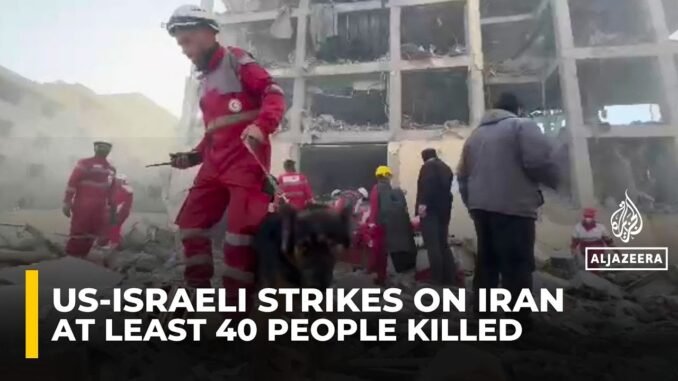

Summary: Iran’s Deputy Health Minister reveals devastating toll of ongoing US-Israeli attacks, with 1,255 deaths reported including 200 children, as healthcare facilities across the country suffer damage.
The Deputy Health Minister of Iran, Ali Jafarian, has disclosed shocking casualty figures from the ongoing military strikes by the United States and Israel, painting a grim picture of civilian suffering in the Persian nation.
Speaking with Al Jazeera on Monday, Jafarian revealed that at least 1,255 people have lost their lives since the attacks commenced, with the majority being ordinary civilians going about their daily lives. Among the dead are approximately 200 children and 11 healthcare workers who were simply doing their jobs.
The victims, he noted, ranged from babies as young as eight months old to elderly persons of 88 years—a detail that underscores the indiscriminate nature of the casualties.
Healthcare System Under Siege
Beyond the death toll, over 12,000 people have sustained injuries, many suffering from severe burns and crush-related trauma from the bombardments. The attacks have not spared the country’s healthcare infrastructure either.
According to Jafarian, 29 medical facilities have been damaged across Iran, with 10 completely shut down. Additionally, 52 health centres, 18 emergency service locations, and 15 ambulances have been either damaged or destroyed—crippling the very system needed to treat the wounded.
Oil Facilities Targeted, Environmental Crisis Looms
The situation took an even more alarming turn over the weekend when strikes hit several of Iran’s oil facilities on Saturday night. The attacks sparked massive fires at fuel sites, sending thick black smoke billowing across Tehran, the nation’s capital.
“The whole city was dark until the afternoon yesterday,” Jafarian described, explaining how the dense smoke completely covered the sky over Tehran.
Iranian officials confirmed that major oil storage facilities were hit, including the Aghdasieh oil warehouse in northeastern Tehran, the Tehran refinery in the south, and the Shahran oil depot in western Tehran.
While Israel acknowledged targeting “a number of fuel storage facilities in Tehran,” claiming they supported military infrastructure, Jafarian strongly disputed this characterization.
“This is not a military issue… This is not a military target,” he insisted, maintaining that most affected areas were civilian locations.
Public Health Emergency Declared
The Deputy Health Minister has raised serious concerns about the health implications of the oil facility strikes. He warned that the resulting smoke and pollution could trigger severe respiratory problems, especially among children and elderly residents.
Authorities have advised Tehran residents to remain indoors and keep windows closed to minimize exposure to the toxic air.
Even more troubling is Jafarian’s warning about potential long-term environmental damage. He cautioned that acid rain resulting from the pollution could contaminate the soil, creating a health hazard that may persist long after the conflict ends.
Widespread Devastation Across Iran
The scale of the attacks extends far beyond Tehran. According to Jafarian, more than 200 cities across Iran have been struck since the military campaign began on February 28.
Fresh explosions were reported on Monday in the cities of Qom and Tehran, indicating that the air campaign shows no signs of abating.
Officials from both the United States and Israel have suggested the conflict could drag on for several more weeks, while analysts warn there is currently no clear pathway to de-escalation.
A Nation in Crisis
As the attacks continue, Iran finds itself grappling with a mounting humanitarian crisis. The combination of civilian casualties, damaged healthcare infrastructure, and environmental hazards paints a troubling picture for the country’s 85 million inhabitants.
For ordinary Iranians—from the baby in her mother’s arms to the elderly man in his twilight years—the conflict has brought death, injury, and uncertainty to their doorsteps. Healthcare workers, already stretched thin, now work in damaged facilities while mourning colleagues killed in the line of duty.
As the international community watches, questions remain about how this crisis will unfold and when—or if—the bombing will cease.
This is a developing story. Updates will be provided as more information becomes available.
For more information, check buzzUp9ja
Be the first to comment