

—
A senior Iranian government official has issued a stark warning that Tehran is fully prepared for an extended military confrontation with the United States, and indicated that the Islamic Republic will continue launching attacks on Gulf nations until economic pressures force American President Donald Trump to reconsider his position.
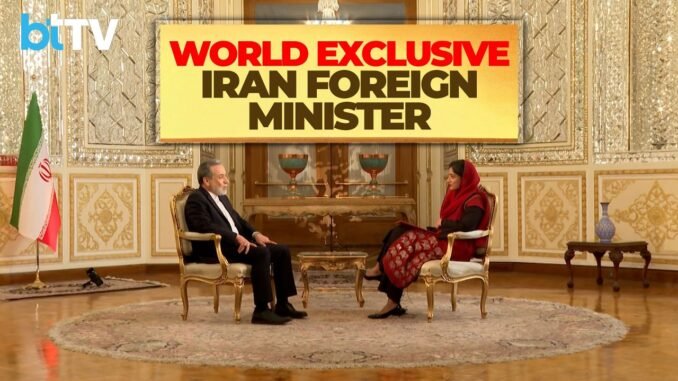
The alarming statement came during an exclusive interview with CNN in Tehran, where Kamal Kharazi, foreign policy adviser to Iran’s Supreme Leader, dismissed any immediate prospects for diplomatic resolution and suggested that only widespread economic suffering would bring the conflict to an end.
Diplomacy Off the Table, Official Declares
Speaking on Monday, Kharazi painted a grim picture of the current standoff, now entering its tenth day. According to him, past experiences have made Iran deeply skeptical of American promises.
“I don’t see any room for diplomacy anymore,” Kharazi told CNN bluntly. “Because Donald Trump had been deceiving others and not keeping with his promises, and we experienced this in two times of negotiations – that while we were engaged in negotiation, they struck us.”
The Iranian official’s comments reflect a hardening of Tehran’s position, signaling that the government believes only sustained economic damage—felt not just in Iran but across the global economy—will create the conditions necessary to end hostilities.
Strategy: Economic Pain as Leverage
Kharazi outlined what appears to be Iran’s strategic calculus for ending the conflict. Rather than seeking direct negotiations with Washington, Tehran is banking on third-party intervention driven by economic desperation.
“There’s no room unless the economic pressure would be built up to the extent that other countries would intervene to guarantee (the) termination of aggression of Americans and Israelis against Iran,” he explained, suggesting that Gulf Arab nations and other international players will eventually be forced to pressure the US into backing down.
“This war has been producing a lot of pressure, economic pressure – on others, in terms of inflation, in terms of lack of energy,” Kharazi continued. “And so if it will be continued, this pressure will be built up more, and therefore others have no choice (but) to intervene.”
Widespread Attacks Across the Middle East
Since the United States and Israel launched military operations against Iran, Tehran has responded by striking multiple countries throughout the Middle East region. While Iranian authorities claim they are targeting American military interests in Gulf nations, reports indicate that residential buildings and civilian airports have repeatedly come under bombardment.
The Iranian strikes have strategically exploited vulnerabilities in the global energy infrastructure, targeting critical transit routes and production facilities that the world economy depends upon.
Global Oil Markets in Turmoil
The economic impact Kharazi referenced is already being felt across the world. Maritime traffic through the strategic Strait of Hormuz—a vital chokepoint for global oil shipments—has virtually ground to a halt. This disruption has sent crude oil prices soaring past the $100 per barrel mark on Monday, causing anxiety among consumers and investors alike.
According to historical data from Rapidan Energy Group, an estimated 20% of the world’s oil supply has been disrupted by the ongoing conflict. This figure is roughly double the record set during the Suez Crisis of 1956-1957, making the current situation the most severe oil supply disruption in modern history.
For Nigerians already grappling with fuel scarcity and high petrol prices, this global crisis threatens to compound existing economic challenges. The ripple effects could mean even higher transportation costs, increased prices for goods and services, and additional strain on household budgets across the country.
Beyond the immediate supply disruption, the conflict has also eliminated what energy analysts call “spare capacity”—the additional oil production that can be quickly brought online during emergencies. This spare capacity typically acts as a shock absorber for energy markets, but it has been effectively wiped out by the current crisis.
Iran Using 60% of Military Firepower
A spokesperson for the Islamic Revolutionary Guard Corps (IRGC) revealed on Sunday that Iran is currently deploying 60% of its military firepower to strike American bases and what Tehran describes as “strategic interests” throughout the region.
This statement suggests that Iran retains significant additional military capability should the conflict escalate further—a sobering prospect for regional stability.
New Supreme Leader Signals Potential Escalation
Adding another layer of complexity to the situation, Mojtaba Khamenei, the second son of former Supreme Leader Ali Khamenei, was elevated to Iran’s highest leadership position over the weekend. Political analysts view this succession as an indication that further military escalation is likely.
When asked whether Iran’s military leadership and the Supreme Leader’s office are aligned in their approach to the conflict, Kharazi was unequivocal: “Yes, exactly.”
“The responsibility of the leader of Islamic Republic of Iran is to lead the defense capability of Iran, and therefore, as Ayatollah Khamenei was doing that, now the new leader would do that,” he explained.
President Trump stated last week that Mojtaba Khamenei’s appointment as his father’s successor would be “unacceptable” to him.
Kharazi’s response was dismissive: “That is not his business.”
What This Means for Nigeria and Africa
While this conflict is playing out thousands of kilometers away from Nigerian shores, its impact is already being felt across the continent. Rising oil prices could provide a temporary revenue boost for Nigeria’s oil-dependent economy, but the overall economic disruption threatens to undermine growth and increase the cost of living.
African nations heavily dependent on imported fuel and energy products will likely face severe economic pressure if the conflict continues, potentially triggering inflation, food insecurity, and social unrest.
As the situation continues to unfold, Nigerian policymakers and citizens alike will be watching closely, hoping for a swift resolution to a crisis that threatens to reshape the global economic landscape.
—
This is a developing story. More updates to follow on buzzUp9ja as the situation evolves
Be the first to comment