
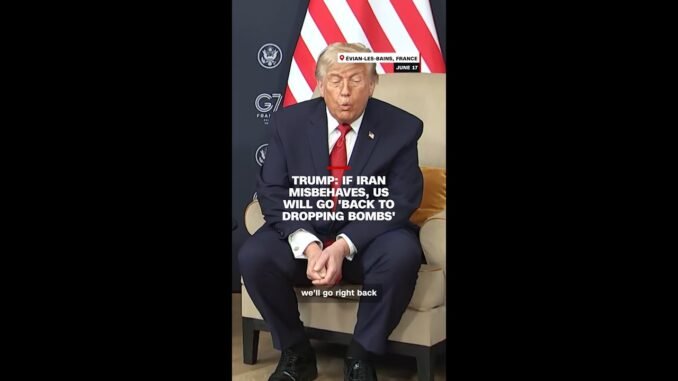

In a bold display of confidence that has sparked conversations across the globe, United States President Donald Trump has firmly rejected any notion that recent tensions with Iran have revealed weaknesses in his leadership or authority. The American leader doubled down on his characteristic assertiveness, insisting that his power remains boundless.
Trump’s Unshakeable Stance
President Trump’s declaration comes amid heightened scrutiny of his administration’s handling of the escalating situation with the Islamic Republic of Iran. Critics and political analysts have questioned whether the conflict exposed limitations in America’s ability to project military and diplomatic influence in the volatile Middle East region.
However, the billionaire-turned-president remains characteristically defiant. “There are no limits,” Trump reportedly stated, reinforcing his administration’s doctrine of maximum pressure and demonstrating the kind of strongman posture that has defined his presidency.
What This Means for Global Politics
For Nigerians watching this development from across the Atlantic, the implications are significant. Nigeria, as Africa’s largest economy and a major oil producer, has historically felt the ripple effects of Middle Eastern conflicts. When tensions rise between global superpowers and oil-rich nations like Iran, the impact on crude oil prices can affect Nigeria’s revenue and, by extension, the everyday Nigerian’s pocket.
The Trump administration’s approach to Iran—marked by economic sanctions, military threats, and diplomatic isolation—represents a high-stakes game that could reshape international relations. For a country like Nigeria that maintains diplomatic ties with both the United States and Iran, navigating these turbulent waters requires careful balancing.
The Bigger Picture
Trump’s assertion of unlimited power raises important questions about executive authority, international law, and the checks and balances that govern modern democracies. While the American constitution technically places constraints on presidential power, Trump’s rhetoric suggests a leader who sees few boundaries to his decision-making authority—particularly in matters of national security and foreign policy.
This mindset is not unfamiliar to Nigerians who have witnessed various leadership styles across Africa, from democratic to authoritarian. The question remains: in an interconnected world where actions have far-reaching consequences, can any leader truly claim unlimited power?
As this situation continues to develop, Nigerians and the rest of the world will be watching closely to see whether Trump’s confidence translates into effective policy or whether the complexities of international relations will prove more challenging than anticipated.
—
What are your thoughts on Trump’s claims of unlimited power? How do you think Nigeria should position itself amid rising global tensions? Share your views in the comments below.
For more information, check buzzUp9ja
Be the first to comment