
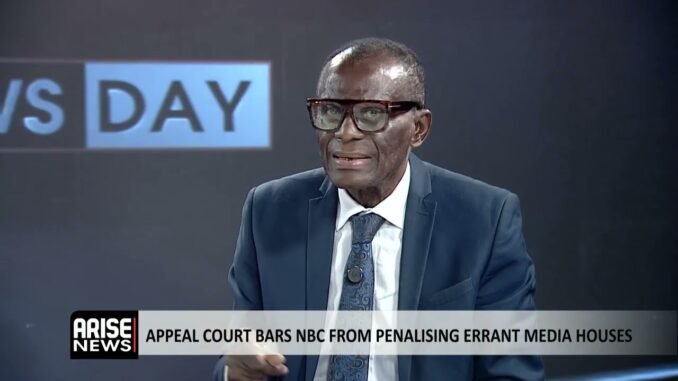

The Court of Appeal in Abuja has delivered a significant blow to the National Broadcasting Commission (NBC), dismissing the regulatory body’s appeal against a landmark Federal High Court judgment that prevents it from arbitrarily imposing fines on broadcasting stations across Nigeria.
This latest ruling reinforces the judiciary’s position on protecting media houses from what many have described as regulatory overreach by the NBC, a development that has been closely watched by stakeholders in Nigeria’s broadcasting industry.
Understanding the Legal Battle
The contentious issue stems from the NBC’s practice of slapping hefty fines on television and radio stations for alleged breaches of the broadcasting code. Over the years, many Nigerian media outlets have complained about what they consider excessive and sometimes arbitrary sanctions imposed by the commission.
The Federal High Court had previously ruled that the NBC lacks the legal authority to unilaterally impose fines on broadcast stations without following due process. This judgment was a major victory for press freedom advocates and broadcasting organizations who have long argued that the commission’s punitive measures often stifle free speech and independent journalism.
Why This Matters for Nigerian Media
For Nigerian broadcasters, this Court of Appeal decision represents more than just a legal victory—it’s a shield against potential harassment and financial intimidation. Broadcasting stations, particularly smaller independent outlets, have often found themselves at the mercy of NBC sanctions that could run into millions of naira.
The implications are far-reaching:
– Protection of Press Freedom: Media houses can now operate with greater confidence, knowing they’re protected from arbitrary penalties
– Due Process: Any disciplinary action must now follow proper legal procedures
– Financial Relief: Stations are spared from potentially crippling fines that could threaten their operations
– Editorial Independence: Journalists and broadcasters can report more freely without fear of immediate regulatory retaliation
The NBC’s Regulatory Powers Under Question
The National Broadcasting Commission was established to regulate and control the broadcasting industry in Nigeria. However, critics have long argued that some of its enforcement methods contradict constitutional provisions on press freedom and fair hearing.
This recent Court of Appeal decision adds to growing jurisprudence that seeks to balance regulatory oversight with the fundamental rights of media organizations and the public’s right to information.
What Happens Next?
With the Court of Appeal upholding the Federal High Court’s position, the NBC now faces a significant limitation on one of its primary enforcement tools. The commission will need to explore alternative compliance mechanisms that respect due process and the rule of law.
Legal experts suggest that the NBC may need to seek legislative amendments to clarify its powers or develop more transparent and fair procedures for handling alleged violations by broadcast stations.
A Win for Nigerian Democracy
Many civil society organizations and media advocacy groups have welcomed this development as a positive step for Nigerian democracy. A free and independent press is crucial for holding government and public institutions accountable, and protecting media houses from arbitrary sanctions strengthens this democratic pillar.
As Nigeria continues to grapple with challenges around press freedom, fake news, and responsible broadcasting, this judgment offers a framework for balancing regulation with constitutional rights—a balance that’s essential for any thriving democracy.
For more information, check buzzUp9ja
Be the first to comment