
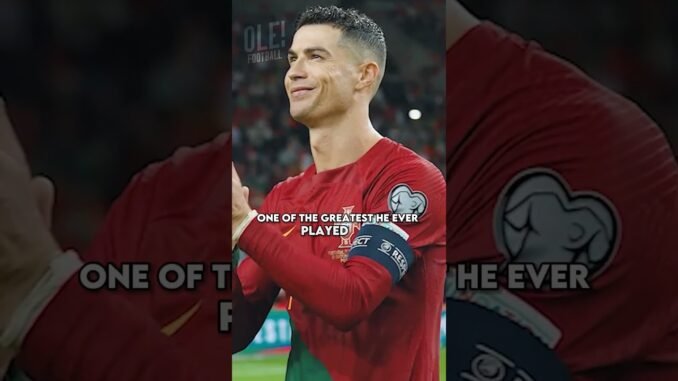

If you’ve been following football discussions in Lagos bars, Abuja viewing centres, or even WhatsApp group chats across Nigeria, one question keeps popping up: “Why is Cristiano Ronaldo still starting for Portugal at 41?”
Well, someone who knows CR7 better than most has finally settled the debate. Former Real Madrid midfield maestro Toni Kroos – who spent years threading passes to Ronaldo during their glory days at the Bernabéu – has shared his thoughts on why the Portuguese captain remains undroppable.
The Kroos Perspective: More Than Just Goals
Speaking recently, the retired German international didn’t mince words about his former teammate’s continued relevance to the Portuguese national team as they prepare for the 2026 FIFA World Cup.
According to Kroos, Ronaldo’s value goes far beyond what the statistics show. Yes, at 41, he might not have the blistering pace that once terrorized Premier League defenders during his Manchester United days or the jaw-dropping athleticism that made him a La Liga legend. But what he brings to the Seleção das Quinas is something money cannot buy – and something statistics cannot fully capture.
Leadership That Transcends Age
For those of us in Nigeria who grew up watching Ronaldo’s journey from a skinny teenager at Sporting Lisbon to becoming one of the greatest footballers ever, his longevity is nothing short of inspiring. Think about it: when Ronaldo made his Portugal debut in 2003, most of his current teammates weren’t even born!
Kroos emphasized that Ronaldo’s presence in the dressing room and on the pitch provides Portugal with an intangible advantage. His winning mentality, cultivated through five Champions League titles and numerous domestic honours, creates a psychological edge that young talents like João Félix and Rafael Leão can feed off.
“When you have someone like Cristiano in your team, the opposition already feels the pressure before kickoff,” Kroos noted – a sentiment any Super Eagles fan can appreciate when remembering how Jay-Jay Okocha’s mere presence once intimidated opponents.
The Numbers Don’t Lie
Despite his age, Ronaldo continues to deliver when it matters most. His goal-scoring record for Portugal remains phenomenal, and he’s shown no signs of slowing down in crucial qualifying matches. For a football-crazy nation like Nigeria, where we celebrate strikers who can deliver under pressure – from Rashidi Yekini to Victor Osimhen – Ronaldo’s continued productivity is worthy of respect.
Professionalism as a Masterclass
Kroos also highlighted Ronaldo’s legendary work ethic and professionalism – qualities that resonate deeply in Nigerian culture, where hard work and dedication are highly valued. The Portuguese forward’s commitment to fitness, diet, and preparation has become the stuff of legend.
“He takes care of his body like it’s a temple,” Kroos explained. This discipline has allowed Ronaldo to compete at the highest level well into his 40s, setting an example for younger players about what it takes to maintain excellence.
The Tactical Advantage
Beyond the inspirational stuff, there’s cold, hard tactical logic to Portugal manager Roberto Martínez’s continued faith in Ronaldo. His positioning, movement off the ball, and ability to create space for teammates remain world-class. Even when he’s not scoring, he’s dragging defenders out of position and creating opportunities for others.
For Nigerian football fans who appreciate tactical intelligence – the kind we saw from Austin Okocha and currently see in players like Alex Iwobi – Ronaldo’s football IQ is a reminder that the beautiful game is played with the mind as much as the feet.
A Lesson for African Football
As Nigeria and other African nations continue developing our football infrastructure and nurturing young talents, Ronaldo’s story offers valuable lessons. His longevity demonstrates that with proper planning, sports science, and unwavering dedication, players can extend their careers far beyond traditional retirement ages.
Imagine if our own legends like Mikel Obi, Vincent Enyeama, or Joseph Yobo had access to the same level of sports science and recovery methods throughout their careers. The possibilities would have been endless.
The 2026 World Cup Beckons
As the 2026 FIFA World Cup approaches – the first to be hosted across three countries (USA, Canada, and Mexico) – all eyes will be on whether Ronaldo can add one final, glorious chapter to his international career. For Portugal, having him in the squad isn’t just about sentiment; it’s a calculated decision backed by his continued contributions on and off the pitch.
Kroos’s insights remind us that in football, as in life, experience and leadership sometimes matter more than raw physical attributes. At 41, Ronaldo may not be the player who once scored that unforgettable header against us at the 2010 World Cup, but he’s evolved into something equally valuable – a complete footballer whose influence extends far beyond the 90 minutes.
Final Whistle
So the next time someone in your viewing centre questions why Ronaldo still starts for Portugal, you can share Kroos’s perspective: it’s not just about what he does with the ball at his feet, but what he brings to the entire team – the mentality, the standards, the winning culture, and yes, still some moments of magic that only a five-time Ballon d’Or winner can produce.
As we say in Nigeria, “Old soldiers never die” – and Cristiano Ronaldo is proving that on football’s biggest stage, old soldiers can still lead the charge.
What do you think? Should experience always trump youth in football? Drop your comments below and let’s discuss!
For more information, check buzzUp9ja
Be the first to comment