
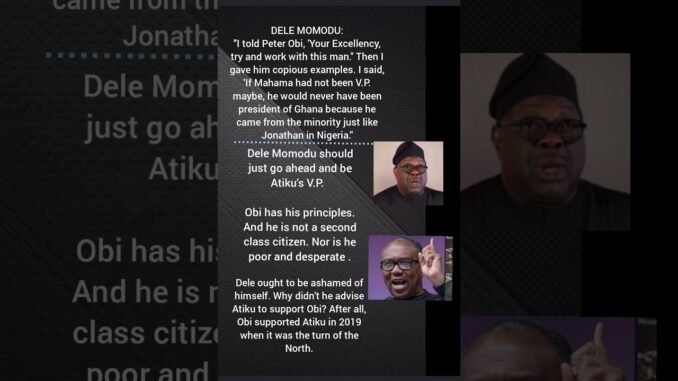

Summary: Media mogul Dele Momodu reveals Peter Obi’s stance on joining forces with Atiku Abubakar for 2027 elections, citing his belief in superior popularity among Nigerian voters.
In what could reshape Nigeria’s political landscape ahead of the 2027 general elections, renowned media entrepreneur and former presidential candidate, Chief Dele Momodu, has disclosed a telling conversation with Labour Party’s Peter Obi regarding potential political alignments.
The Revelation
Speaking candidly, Momodu revealed that Peter Obi has declined suggestions to form a political alliance with former Vice President Atiku Abubakar, with the former Anambra State governor expressing confidence in his own political standing among Nigerians.
According to Momodu, Obi made it clear during their discussions that he believes he commands greater popularity than the Peoples Democratic Party (PDP) presidential candidate, making any alliance unnecessary from his perspective.
What This Means for 2027
This revelation comes at a crucial time when opposition figures are expected to strategize and potentially unite against the ruling All Progressives Congress (APC) ahead of the next presidential election. Many political observers had anticipated that the major opposition figures would set aside personal ambitions to present a unified front.
Peter Obi’s performance in the 2023 presidential election, where he energized millions of young Nigerians through the “Obidient” movement, appears to have bolstered his confidence in going solo once again. His campaign broke traditional voting patterns, particularly in the Southeast and among Nigeria’s youth demographic.
The Popularity Question
The question of who is more popular between Obi and Atiku remains a subject of intense debate among Nigerian political watchers. While Atiku boasts decades of political experience and a formidable political machinery through the PDP, Obi’s grassroots appeal and social media dominance cannot be ignored.
Atiku, a former Vice President and serial presidential aspirant, has the backing of one of Nigeria’s largest political parties and extensive political networks across the country. However, Obi’s Labour Party movement demonstrated an unprecedented ability to mobilize young voters and create viral political engagement.
Implications for Opposition Unity
Momodu’s revelation suggests that building opposition unity ahead of 2027 may prove more challenging than anticipated. If major opposition figures like Obi and Atiku cannot find common ground, it could split the anti-incumbent vote and potentially benefit the ruling party.
Political analysts have long argued that Nigeria’s opposition must present a united front to stand any chance of unseating the APC. However, personal ambitions and differing assessments of political strength appear to be complicating such efforts.
What Nigerians Are Saying
The disclosure has sparked heated debates across social media platforms, with supporters of both political figures defending their preferred candidates. The “Obidient” movement has rallied around Obi’s confidence, while PDP loyalists point to Atiku’s extensive experience and party infrastructure.
As the 2027 elections draw closer, all eyes will be on how these political dynamics evolve and whether pragmatism will eventually trump pride in the quest for Nigeria’s highest office.
What do you think? Should Peter Obi and Atiku Abubakar join forces for 2027, or is Obi right to go it alone? Share your thoughts in the comments below.
For more information, check buzzUp9ja
Be the first to comment