
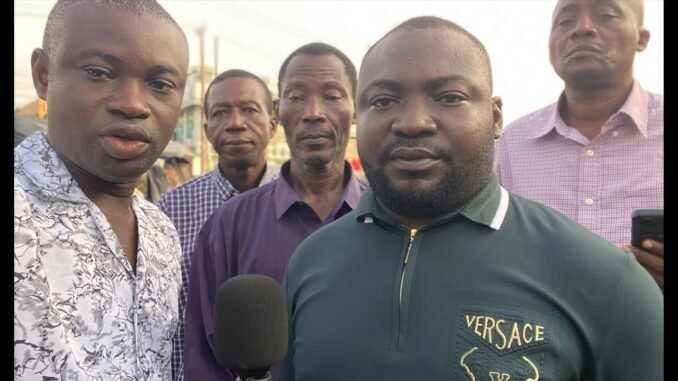

Former Sports Minister fires salvo at President ahead of 2027 polls, questioning his seriousness for re-election bid
—
As Nigeria inches closer to the 2027 presidential election, political temperatures are already rising, with former Minister of Youths and Sports, Solomon Dalung, launching a scathing attack on President Bola Ahmed Tinubu.
In a statement that has set tongues wagging across the political landscape, Dalung didn’t mince words, describing the current President as “the most unserious presidential candidate” as the nation looks ahead to the next electoral cycle.
A Minister Speaks His Mind
Solomon Dalung, who served under former President Muhammadu Buhari’s administration, has never been one to shy away from controversy or hold back his opinions. Known for his outspoken nature and sometimes controversial statements during his time in office, the Plateau State politician has now turned his critical eye toward President Tinubu’s potential re-election bid.
While the full details of Dalung’s statement are still emerging, his characterization of the President as “unserious” raises fundamental questions about leadership, governance, and the expectations Nigerians have for their leaders, especially as the country grapples with economic challenges, security concerns, and widespread hardship.
The Weight of His Words
Coming from someone who has been in the corridors of power, Dalung’s assessment carries significant weight. His description of President Tinubu as unserious suggests deep concerns about the current administration’s approach to governance and its readiness for another term in office.
For many Nigerians struggling with the removal of fuel subsidies, rising inflation, currency devaluation, and increased cost of living since President Tinubu assumed office in May 2023, such criticism may resonate deeply. The question on many lips is: What specific actions or inactions prompted such a harsh assessment from the former minister?
The Political Implications
As the 2027 election draws nearer, statements like Dalung’s signal the beginning of what promises to be a heated political season. Opposition voices are becoming bolder, and even former allies are not holding back their criticisms.
President Tinubu, who came into office with promises of “renewed hope,” has faced mounting criticism over economic policies that many Nigerians say have worsened their living conditions. From the controversial fuel subsidy removal to the floating of the naira, the administration’s reforms have been painful for the average Nigerian.
What This Means for 2027
Dalung’s statement is likely just the opening salvo in what will be an intense political battle leading up to 2027. With the President yet to officially declare his intention to seek re-election, political observers are watching closely to see how the administration responds to such criticisms.
For the opposition, statements from former government officials like Dalung provide ammunition and may embolden others to speak out. For President Tinubu’s supporters, the task of defending the administration’s record and convincing Nigerians to give him another term becomes even more challenging.
The Bigger Picture
Beyond the politics and personal attacks, Dalung’s statement forces a necessary conversation: What do Nigerians truly want from their leaders? What does “seriousness” in governance look like? And are our current political class delivering on the promises they made?
As we move toward 2027, these questions will become increasingly important. Nigerians are tired of empty promises and political theatrics. They want leaders who understand their pain, have workable solutions, and are genuinely committed to moving the nation forward.
Conclusion
Whether one agrees with Solomon Dalung’s assessment or not, his statement reflects a growing dissatisfaction among segments of the political class and, indeed, many ordinary Nigerians. As the political season heats up, expect more such criticisms and counter-criticisms.
The real question is: Will President Tinubu and his administration use such criticisms as an opportunity for reflection and course correction, or will they dismiss them as mere opposition politics?
Only time—and the verdict of Nigerian voters in 2027—will tell.
—
What do you think about Dalung’s statement? Is it a fair assessment or just political positioning? Share your thoughts in the comments below.
For more information,check buzzUp9ja
Be the first to comment