
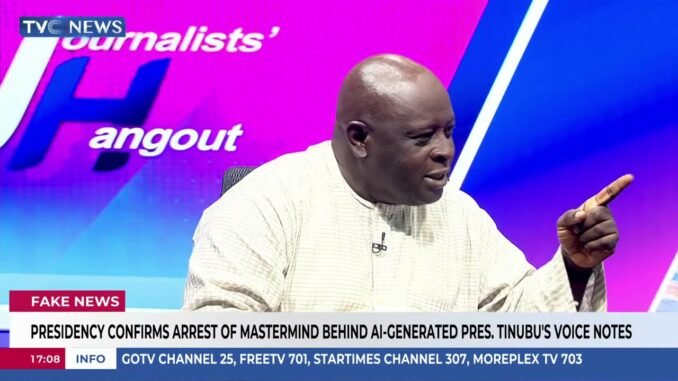

The Nigeria Police Force has apprehended Ifechukwu Dennis, the individual allegedly responsible for creating and circulating a deepfake audio recording that impersonated President Bola Ahmed Tinubu. The AI-generated voice note, which went viral across social media platforms, was falsely presented as a leaked conversation involving the President.
How the Fake Audio Spread Like Wildfire
The doctored voice recording rapidly gained traction on WhatsApp, Twitter (now X), Facebook, and other digital platforms, with many unsuspecting Nigerians sharing it as authentic. The audio contained controversial statements that never came from the President, causing confusion and raising concerns about the safety of public discourse in our increasingly digital age.
This incident highlights a growing problem not just in Nigeria, but globally: the use of artificial intelligence to create convincing fake content that can damage reputations, spread misinformation, and potentially destabilize society.
What Are Deepfakes and Why Should Nigerians Be Concerned?
Deepfakes are synthetic media created using artificial intelligence to manipulate or generate audio, video, or images that appear authentic. With readily available AI tools, virtually anyone with basic technical knowledge can now create fake recordings that sound remarkably like real people.
For Nigeria, a country where social media already plays a significant role in shaping political narratives and public opinion, deepfakes represent a serious threat. From election periods to everyday governance, fake content can:
– Damage the reputation of public figures
– Spread false information rapidly
– Create unnecessary panic or civil unrest
– Undermine trust in legitimate media and institutions
The Legal Consequences
The arrest of Ifechukwu Dennis sends a strong message about the legal repercussions of creating and sharing deepfake content. Under Nigerian law, such actions could constitute:
– Cybercrime: Violations under the Cybercrimes (Prohibition, Prevention, etc.) Act 2015
– Defamation: Civil and criminal liability for damaging someone’s reputation
– Misinformation: Spreading false information that could threaten public peace
Convictions for cybercrimes in Nigeria can carry severe penalties, including substantial fines and imprisonment.
How to Spot Fake Audio and Protect Yourself
As deepfake technology becomes more sophisticated, Nigerians must develop sharper critical thinking skills when consuming online content. Here are practical tips:
1. Verify the source: Always check if the information comes from official channels or credible news outlets
2. Listen carefully: AI-generated voices often have unnatural pauses, odd pronunciations, or inconsistent tone
3. Check multiple sources: If something seems explosive, see if reputable media houses are reporting it
4. Be skeptical of “leaked” content: Question why and how such recordings would become public
5. Don’t rush to share: Take time to verify before forwarding content to others
The Bigger Picture for Nigeria
This arrest comes at a crucial time when Nigeria is grappling with the challenges of digital transformation. While technology offers tremendous opportunities for development, it also presents new risks that our legal system, security agencies, and citizens must learn to navigate.
The Nigeria Police Force deserves commendation for acting swiftly on this matter. However, this case should serve as a wake-up call for:
– Lawmakers: To strengthen and update legislation around digital crimes
– Tech companies: To develop better detection tools for fake content
– Media organizations: To invest in fact-checking and verification
– Educational institutions: To teach digital literacy in schools
– Citizens: To become more discerning consumers of online information
What Happens Next?
Ifechukwu Dennis will face prosecution according to Nigerian law. The case will likely set an important precedent for how authorities handle deepfake-related offenses in the future.
Meanwhile, security experts are calling for increased investment in AI detection technologies and public awareness campaigns to help ordinary Nigerians identify and report fake content.
Final Thoughts
The arrest of the suspect behind President Tinubu’s fake voice note is a significant step in combating digital misinformation in Nigeria. However, it’s just one battle in a much larger war. As AI technology continues to evolve, so must our vigilance, our laws, and our collective commitment to truth.
The next time you receive a sensational audio clip, video, or image on your WhatsApp or social media, remember this case. Take a moment, verify the information, and think twice before hitting that share button. In the digital age, we’re all gatekeepers of truth—and that responsibility should not be taken lightly.
—
Stay informed, stay vigilant, and always verify before you share. Your digital literacy protects not just you, but the entire nation.
Follow for more updates on buzzUp9ja
Be the first to comment