
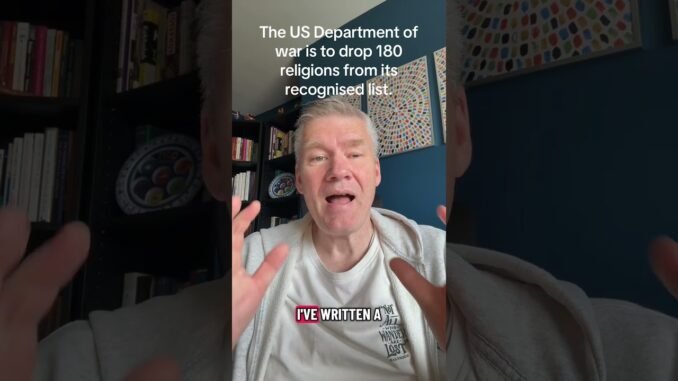

The United States Department of Defense has made a significant decision that’s sending ripples through religious communities worldwide. In a move that has sparked considerable debate, the US military has officially removed 180 faiths from its list of recognized religions for service members.
The Big Picture
The U.S. Military Chaplain Corps, which previously recognized over 200 different faith groups, has now drastically reduced that number. This sweeping change affects how religious accommodation and spiritual support are provided to American military personnel.
For those of us watching from Nigeria – a nation where religious diversity is part of our daily fabric – this development raises important questions about religious freedom, military policy, and the delicate balance between institutional structure and individual faith.
What Does “Recognition” Mean in the Military?
You might be wondering: what exactly does it mean for a religion to be “recognized” by the US military?
In practical terms, recognition determines:
– Whether chaplains from that faith tradition can be commissioned as military officers
– How service members can identify their religion on official records
– What religious accommodations (prayer times, dietary needs, worship services) are officially supported
– Access to faith-specific counseling and spiritual care during service
Why the Reduction?
While official statements cite the need to streamline administrative processes and focus resources on faiths with substantial military representation, critics argue this could marginalize minority religious groups within the armed forces.
The decision appears to prioritize larger, more established religious traditions while smaller faith communities may find themselves without dedicated spiritual support.
A Nigerian Perspective
Here in Nigeria, where we navigate the complexities of a multi-religious society daily, this news resonates differently. We understand both the practical challenges of accommodating numerous faith traditions and the fundamental importance of religious freedom.
Our Constitution guarantees freedom of religion, and despite our challenges, we’ve built a society where Christians, Muslims, traditional worshippers, and others coexist – sometimes peacefully, sometimes tensely, but always with their rights theoretically protected.
The American decision reminds us that even in established democracies, questions about religious accommodation in public institutions remain contentious.
The Broader Conversation
This policy shift opens up several important discussions:
Religious Freedom vs. Administrative Efficiency: Where’s the line between practical governance and protecting minority rights?
Representation Matters: Should recognition be based purely on numbers, or does every faith deserve equal institutional support?
Military Readiness: How do religious accommodations impact military cohesion and operational effectiveness?
What Happens Next?
Service members belonging to the delisted faiths won’t be prohibited from practicing their religion – that would violate constitutional protections. However, they may lack dedicated chaplains, official recognition on military records, and institutional support for their specific religious needs.
Religious freedom advocates and civil liberties organizations are already challenging this decision, arguing it creates a two-tiered system that privileges some beliefs over others.
The Takeaway
As Nigerians, we understand that managing religious diversity requires constant dialogue, compromise, and respect. Whether in military barracks or civilian life, the challenge remains the same: how do we honor individual faith while maintaining institutional cohesion?
The US military’s decision – whether ultimately upheld or reversed – reminds us that questions about religious freedom, recognition, and accommodation aren’t easily answered, even in societies with long democratic traditions.
What matters most is that the conversation continues, that minority voices are heard, and that the fundamental human right to worship according to one’s conscience remains protected.
What are your thoughts on this development? How should institutions balance practical considerations with religious freedom? Share your perspectives in the comments below.
Keep up with the latest news on buzzUp9ja
Be the first to comment